Production basics
Why Your Swim Shorts Lose Their Shape by August (And What the Fabric Spec Is Telling You Before It Happens)
Why cheap swim shorts lose shape after one summer comes down to fabric spec. Here's what elastane content, recovery rates, and liner construction actually do.
If you've ever had a customer complain that their swim shorts fit fine in June and look like a paper bag by August, you already know this problem. Why cheap swim shorts lose shape after one summer isn't a mystery — it's a predictable outcome of underspecified fabric, the wrong liner, and a waistband that was never going to survive repeated wet-dry cycles in the first place. Every one of those failures shows up in the material spec before a single yard gets cut. The question is whether anyone looked.
What 'losing shape' actually means at the fabric level
Shape loss in swimwear isn't one thing. It's three or four things happening simultaneously, and they compound. The shell fabric stretches out and stops recovering. The liner bags. The waistband goes slack. The drawcord sags. By the time a customer says the shorts "don't fit right anymore," the garment has been quietly failing at multiple points for weeks.
At the fabric level, what you're actually looking at is elastane fatigue. Elastane is the component that gives stretch fabric its ability to return to original dimensions after being pulled. When elastane degrades — chemically, mechanically, or both — the fabric stretches under load but doesn't come back. What was a 30-inch waist spec is now closer to 33 inches after 20 wears and washes. That's not a sizing issue. That's a material failure.
The tricky part is that the failure doesn't show up in a single wear. It accumulates. A fabric that looks fine off the bolt, fine after the first wash, and fine after the third will often start showing measurable deformation by wash cycle 15 to 20. If no one tested beyond wash three, no one saw it coming.
Why elastane percentage is not the only number that matters
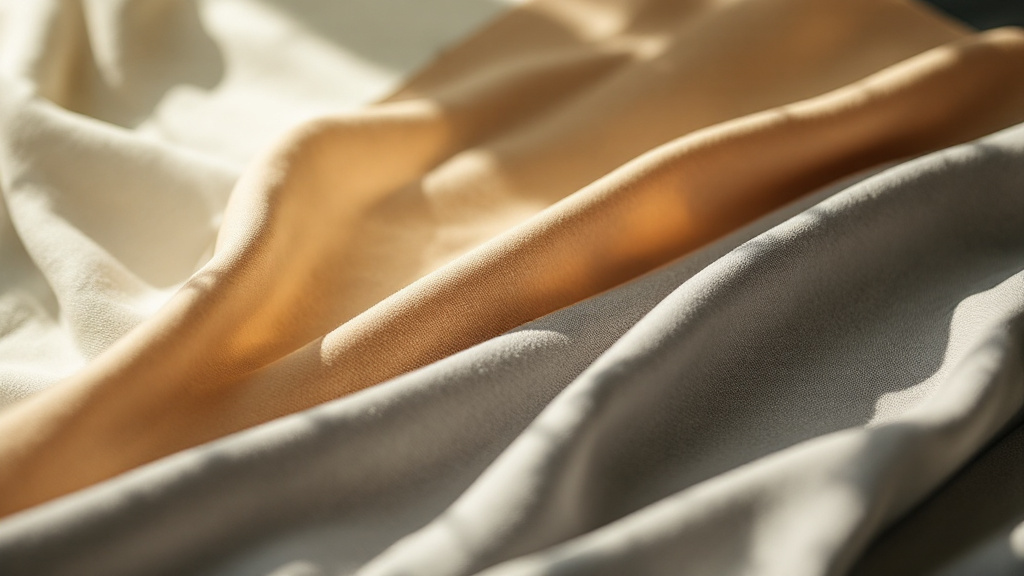
Most people shopping for swim fabric look at the elastane percentage first. It's the obvious number. But it's also incomplete on its own. Standard swim fabric ranges from 15% to 22% elastane content. Below 15%, you start seeing measurable drops in recovery rate after 20-plus wash and stretch cycles. That's well-documented. But 20% elastane in a low-grade fabric can still fail faster than 15% elastane in a quality nylon-based construction. The percentage tells you how much elastane is in the fabric. It doesn't tell you the quality of that elastane, or what the base fibre is doing alongside it.
Nylon-elastane blends and polyester-elastane blends behave differently in swimwear conditions. Nylon has better inherent resistance to chlorine and UV degradation, which means the elastane embedded in a nylon carrier is protected differently than elastane in a polyester carrier. A 500-unit run of swim shorts using fabric spec'd at 80% nylon and 20% elastane at 6.5 oz/sq yd will cost more per yard than an 88% polyester and 12% elastane equivalent. But return rates from shape failure alone justify that material cost difference by the second reorder. The cheaper fabric isn't cheaper once you account for what comes back.
The other number most brands ignore is weight. Swimwear shell fabrics typically run between 5.0 and 7.5 oz/sq yd. A fabric at the lighter end of that range with lower elastane content has less material doing the structural work. It's not automatically wrong to use lighter fabric, but it needs to be paired with the right elastane grade and construction, not treated as a cost-neutral swap for something heavier and better-specified.
How chlorine, salt, and sunscreen chemically degrade low-grade elastane
This is the part that surprises most brand founders when they first hear it. Chlorine degrades polyurethane-based elastane at a faster rate than saltwater does. A fabric tested only under freshwater conditions will show accelerated failure in pool environments — sometimes dramatically so. If your customer base is buying swim shorts for resort pools or lap swimming, and your fabric was only washed in tap water during QC, you've tested for the wrong environment.
The mechanism is straightforward. Chlorine is an oxidising agent. It attacks the polyurethane chains that give elastane its stretch-and-recovery properties. Each exposure doesn't destroy the elastane immediately — it's cumulative. After repeated pool sessions, the polymer chain degrades, the fabric stops recovering fully, and you get permanent elongation. Low-grade elastane has less resistance to this process, which is why cheap fabric fails faster in pools than it does in ocean conditions.
Sunscreen adds another layer of chemical stress. Many chemical sunscreens contain benzophenone-based UV filters and oxybenzone, both of which can break down elastane fibres. If a customer applies sunscreen, swims, and rinses without washing properly, the residue sits in the fabric between wears. Over a summer season, that's significant cumulative degradation. Mineral sunscreens are less reactive, but most people aren't using mineral sunscreen, and you can't control what your customer applies before getting in the water.
What fabric recovery rate means and how factories test it before cutting
Recovery rate is the percentage a fabric sample returns to its original dimensions after being stretched to 100% of its length and held for 30 seconds. Quality swimwear fabric should recover to within 3% to 5% of its original dimensions. A fabric that recovers to within 3% is excellent. One that comes back to within 8% is borderline. One that only recovers to within 12% or more is going to fail during the season.
At Procesarte, we test fabric recovery on every swim fabric before cutting begins. A swatch is stretched, held, and measured at 15-minute intervals to confirm the recovery rate meets the brand's spec. It's not a complicated test, but it has to happen before the fabric goes to the cutting table, not after someone's already cut 500 panels. By that point, if the fabric is wrong, the problem is yours and the brand's to split. Testing before cutting keeps that conversation from happening.
What most brands don't ask for is recovery testing after simulated wear conditions, meaning after a wash cycle with chlorinated water, or after UV exposure. A fabric can pass a clean recovery test and still fail faster than expected once it's been in a pool ten times. If your factory is only testing virgin fabric, you're getting an optimistic number. The real test is how the fabric recovers after it's been through conditions that approximate actual use.
The liner problem: why cheap mesh fails faster than the shell fabric
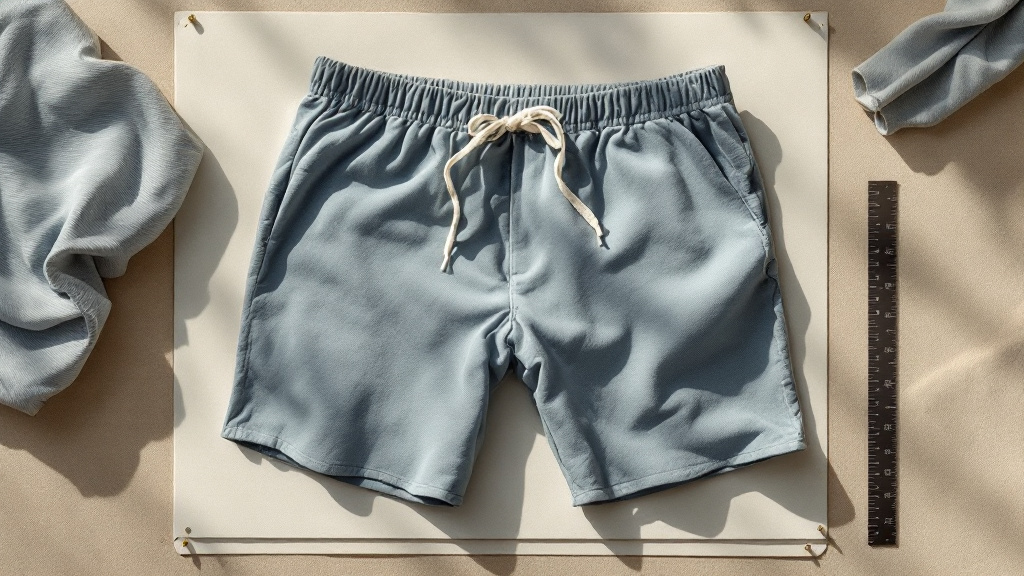
This is probably the most overlooked part of swim short construction. The shell fabric gets all the attention — the print, the colour, the hand feel. The liner is often treated as an afterthought, a commodity component to tick a box. But in a lot of garments, the liner fails before the shell does. And when the liner goes, the garment feels unwearable even if the shell still looks fine.
Cheap mesh liners are typically made from 100% polyester at 3.0 to 3.5 oz/sq yd. That construction has no meaningful chlorine or salt resistance and very little elastane content, so there's nothing to maintain the structure under stretch. After a summer of use, that mesh has bagged out, lost its shape, and in many cases started pilling against the skin. Quality liners use a nylon-elastane blend at a similar weight, with significantly better chlorine and salt resistance. The weight feels similar in the hand, the cost difference per unit is real but modest, and the performance difference over a season is not subtle.
The attachment method matters too. A liner that's only sewn at the waistband will shift and bunch under movement. A liner that's tacked at the leg openings as well stays in position. Neither is complicated to specify, but if the brand doesn't ask for it, a low-cost factory will default to the minimum viable attachment. Minimum viable is fine for cost. It's not fine for customer experience after the third beach trip.
What waistband construction does to shape retention over a season
Waistband elastic width is one of those specs that gets glossed over because it sounds minor. It isn't. Waistband elastic with less than 1.5 in of width in swim shorts loses tension faster under repeated wet-dry cycles. That's the primary reason shorts that fit perfectly in the fitting room feel loose by mid-summer. The elastic isn't broken — it's fatigued. Narrow elastic has less material distributing the tension across the waistband, and each wet-dry cycle puts more stress on a smaller cross-section of material.
The elastic grade matters as much as the width. Rubber-core elastic degrades quickly in chlorinated water. Chlorine attacks the rubber just as it attacks polyurethane in elastane fibres. Silicone-coated or fully synthetic elastic holds up significantly better in repeated swim conditions. If the elastic spec sheet just says "1.5 in waistband elastic" without specifying the grade or chlorine resistance, you don't actually know what you're getting.
And then there's the drawcord. A draw cord made from 100% cotton will absorb water, sag, and lose tension within a single season. It's not debatable — cotton is hydrophilic and it stretches when wet. By late summer, a cotton drawcord is several inches longer than it started, the cord locks don't hold it properly, and the whole waist system feels sloppy. Polyester or woven nylon drawcords maintain tension significantly longer under repeated exposure. The material cost difference between a cotton and polyester drawcord is negligible per unit. The performance difference is the customer deciding whether to buy from you again.
What brands need to specify before sampling to avoid this entirely
Here's the practical part. Before a sample gets made, a brand should be able to hand a factory the following in writing. Not "good quality fabric" — actual numbers and material callouts.
- Shell fabric: nylon-elastane or polyester-elastane blend with elastane content between 18% and 22%, weight between 6.0 and 7.0 oz/sq yd, and a recovery rate of within 5% after stretch-hold testing
- Liner fabric: nylon-elastane blend, not 100% polyester, at 3.0 to 3.5 oz/sq yd, with elastane content of at least 10%
- Liner attachment: sewn at waistband and tacked at both leg openings
- Waistband elastic: minimum 1.5 in width, silicone-coated or fully synthetic grade, rated for chlorine exposure
- Drawcord: 100% polyester or woven nylon — no cotton
- Print method: if dye sublimation, confirm elastane content in shell fabric before sublimation is applied, as low elastane content causes print surface cracking under stretch
- Testing protocol: request recovery testing after chlorinated wash cycle simulation, not only on virgin fabric
That last point about dye sublimation is worth a sentence on its own. Dye sublimation prints on polyester swim fabric are more prone to colour degradation when elastane content is low, because the fabric distorts under stretch and the print surface cracks at the microscopic level. It's not visible to the naked eye at first, but it shows up as fading and colour loss faster than it should. If you're running a printed swim short and you're cutting costs on the fabric spec, the print is going to show the failure before the shape does.
The spec sheet is also where you protect yourself contractually. If the spec says 20% elastane and the fabric that arrives tests at 12%, you have a documented non-conformance. If the spec just says "swimwear fabric," you have a conversation that goes nowhere. Be specific. It's not about distrust — it's about giving the factory something measurable to hit.
Why nearshore sampling lets you catch swimwear fabric failures before a full run ships
Here's where geography becomes a production tool rather than just a talking point. From Barranquilla, we turn samples in 7 to 14 days. That turnaround means a brand can test a swim short through two full rounds of wash, stretch, and salt exposure before committing to a full production run. Not one round. Two. Which is the minimum you'd want to feel confident about seasonal performance.
Compare that to a production timeline from further away, where samples take four to six weeks to arrive. By the time you receive a sample, test it, identify a failure, communicate the change, and request a revised sample, you've lost three months. Swim is a seasonal category. Three months lost in sampling doesn't just cost you time — it can cost you the selling season entirely. If the revised sample also needs revision, you may be looking at production that arrives after your retail window has closed.
The other thing the nearshore model changes is communication. Same time zone as New York, Miami, and Los Angeles means a production manager in Barranquilla and a brand founder in New York can have a phone call during normal business hours. If a fabric issue comes up during sampling — say, the recovery test came back outside spec — that conversation happens the same day, not via email threads that span 12 hours of time difference and take three days to resolve.
And under the Colombia-U.S. Trade Promotion Agreement, finished swimwear ships duty-free into the U.S. That's not a minor detail when you're comparing landed cost. Duty savings on apparel often run 15% to 20% of the FOB value. On a 500-unit swim short run, that's real money that goes back toward a better fabric spec, not toward customs.
The goal isn't to sell you on nearshore manufacturing for its own sake. The goal is to point out that a 7-to-14-day sample turnaround changes what's possible in QC. You can actually test the garment before it scales. For a category like swimwear, where seasonal failure is both common and avoidable, that window matters. Use it.
If you're developing a swim short line and want to talk through fabric spec, liner construction, or recovery testing before sampling begins, send us your brief and we'll tell you exactly what we'd recommend before a yard gets cut.
Get a quote