Production basics
Why Your Return Rate Is a Production Problem, Not a Marketing One
High apparel return rates are a production problem. Here's how to reduce apparel return rates by fixing fit specs, grading, and sample sign-off before the next run ships.
If you're trying to figure out how to reduce apparel return rates on your ecommerce store, the instinct is usually to fix the size chart, rewrite the product description, or add a fit quiz. Those things might help at the margins. But in most cases, if your returns are running above 20%, the problem started at the production level, not the marketing level. The size chart is describing a garment that was never built consistently enough to match it.
What the return data actually tells you (and why 'wrong size' is not the whole story)
Industry estimates put ecommerce apparel return rates between 20% and 40%, depending on the category. Consumer surveys from 2023 through 2025 consistently put fit as the primary reason. Customers tick 'wrong size' on the return form, and brands read that as a sizing communication problem. But 'wrong size' covers a lot of territory.
A customer who orders a medium and receives a garment that feels too tight across the shoulders but loose at the waist isn't experiencing a labelling failure. They're experiencing a fit block problem. The garment might measure correctly at the chest. The grade between small and medium might be fine. But the proportional relationship between measurements is off, and no size chart update fixes that.
The other thing return data won't tell you is whether the fit problem is consistent or variable. If every medium shirt is coming back for the same reason, that's a spec problem. If returns are scattered across sizes and styles, that's more likely a quality control tolerance issue, meaning garments are shipping outside the acceptable measurement range. Both are fixable. But they require different interventions, and you won't know which one you have until you pull actual measurements from returned units.
How inconsistent grading between sizes creates fit problems that no size chart can fix
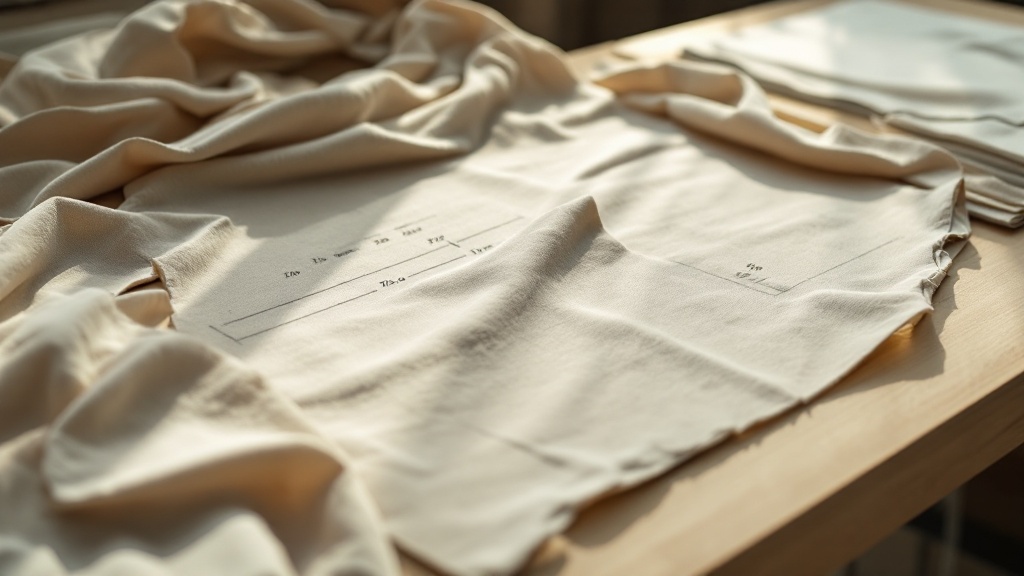
Grading is the process of scaling a base pattern up and down to create each size in your range. Standard grading increments at the chest and hip typically run between 1 and 1.5 inches per size step. That sounds like a small number. But if a factory applies their house grade rule instead of your brand-specific one, a size large can end up 2 inches narrower or wider than you intended. The label is correct. The garment is not.
This happens most often when brands provide a sample in one size and ask the factory to grade the rest. If you haven't supplied explicit grade rules for every key measurement, the factory fills in the gaps with whatever their default is. Sometimes that aligns with your fit intention. Often it doesn't, especially at the extremes of your size run.
The fix is straightforward but requires upfront work. Your tech pack needs a full graded spec sheet, meaning every measurement across every size you're producing. Not just the sample size with a note saying 'grade per standard.' Standard means different things to different factories. Write the numbers.
The role of ease allowance in returns: when factories default and brands don't specify
Ease allowance is the difference between the body measurement and the finished garment measurement. A relaxed-fit shirt and a slim-fit shirt both fit a 38-inch chest. The relaxed shirt might have 6 to 8 inches of ease at the chest. The slim-fit might have 2 to 3. The label size is the same. The garment experience is completely different.
A garment that measures correctly at a size medium but carries the wrong ease allowance for its intended fit category will generate returns even when the label size is accurate. The customer isn't wrong about their size. The garment is wrong about what kind of garment it's supposed to be.
Factories have default ease allowances built into their block patterns. Those defaults are calibrated for whatever their most common client type is. If you don't specify your ease explicitly in the tech pack, you're getting their default. For a relaxed streetwear brand sourcing from a factory that primarily makes slim athletic wear, that gap can be significant enough to drive returns across the entire size run.
Ease needs to be stated as a finished garment measurement, not as a descriptor. 'Relaxed fit' tells a factory almost nothing. '6 inches of ease at the chest on a size medium' tells them exactly what you need.
Why fit blocks drift between production runs and what prevents it
Your first run fits well. Your second run gets complaints. Nothing changed, or so you thought. This is one of the more frustrating return scenarios because it's not immediately obvious what went wrong.
Fit block drift happens when a factory re-digitises a pattern between runs rather than working from the stored original marker file. Re-digitising introduces small measurement variations, 0.25 to 0.5 inches in multiple places, that individually might fall within tolerance but cumulatively shift the fit. A chest that's 0.25 inches wider and a sleeve that's 0.25 inches longer and an armhole that's 0.25 inches deeper adds up to a garment that fits differently than the one your customer bought last season.
Brands that don't require digital pattern file retention as a contract term often discover this only after the second or third run has already shipped. By then, the damage is done, and there's no clean baseline to revert to.
The fix is a contract requirement, not a production requirement. Before the first run starts, you should have written agreement that the factory retains your original digital pattern files and uses those files, unchanged, for subsequent runs unless you've approved a revision. This is a basic ask. Any factory worth working with will agree to it.
The difference between a fit sample sign-off and a production-ready fit approval
Most small brands approve a fit sample on a single fit model and move to production. That's a thin approval process for something that's going to go on hundreds or thousands of different bodies.
Brands that conduct fit sessions on at least three body types per size before approving a production sample report significantly fewer fit-related returns than those that approve on a single model. Three bodies isn't a large study. But it catches proportional fit issues that a single model will never surface, particularly in the hip-to-waist ratio, the shoulder slope, and the upper chest fit.
The other commonly skipped step is a wash-and-wear re-check after the production sample is approved. Fabric behaves differently off the bolt than it does after it's been cut, sewn, washed, and tumble-dried. Shrinkage or relaxation in the fabric can shift a previously approved measurement by 0.25 to 0.75 inches. That's often enough to push a borderline fit into return territory.
So the approval process that actually protects you looks like this: fit the production sample on multiple body types, approve it, then wash and wear it according to the care instructions and re-check the critical measurements before releasing the production run. It adds a few days. It saves a lot of returns.
How to write a fit spec that a factory can actually hold to across 500 units

A standard production tolerance for a critical measurement like chest width is plus or minus 0.5 inches. That's the number most factories will work to if you don't specify otherwise. But here's the thing: plus or minus 0.5 inches at the chest means two garments labelled the same size can differ by a full inch from each other. Whether that's acceptable depends entirely on the fit category. For a relaxed oversized piece, maybe. For a slim tailored shirt, almost certainly not.
Brands that don't specify tolerances in their tech pack are accepting whatever the factory's default is. That varies. Some factories hold tighter. Some hold looser. You don't know until you measure the finished goods, and by then it's too late to do much about it.
A fit spec that a factory can actually use has a few essential components.
- A full graded measurement chart across all sizes, with every key measurement listed, not just the sample size.
- Explicit tolerances per measurement point. Critical dimensions like chest, hip, and inseam should have tighter tolerances than non-critical ones like hem circumference.
- Construction callouts for anything that affects fit: seam allowances, stretch direction, stitch type at stress points.
- A clear ease notation per measurement point, stated as a finished garment number.
- A wash and care test requirement before final approval, with re-measurement criteria.
That's not an overwhelming document. It's a precise one. The time you spend writing it is substantially less than the time you'll spend managing returns from a run that went out under-specified.
What nearshore production lead times allow you to do that long-cycle sourcing doesn't
Here's where the sourcing structure actually matters for return rates. A 14 to 16 week production cycle means that by the time you see return data from your first run, your second run is already in production or shipped. You have no practical window to make a fit correction between runs within the same season. You absorb the returns, mark down the affected inventory, and hope you catch it before the third run.
A 4 to 6 week production lead time changes that entirely. If your first run ships and generates fit-related returns in weeks one and two, you have enough time to diagnose the problem, revise the spec, and run a corrected production before the season is over. That's not a theoretical advantage. It's a structural one.
Samples from Barranquilla reach Miami in four sailing days. A fit sample request takes 7 to 14 days. That means you can put a revised sample on a fit model and re-approve it within the time it would take a long-cycle supplier to confirm they received your revision request.
The time zone alignment matters here too. When a fit issue comes up and you need to talk through a spec change with the factory, you're not waiting for an overnight email window. You're having a same-afternoon conversation and moving forward the same day.
The cost of a single return at the ecommerce unit economics level

Let's put a number on this. A single ecommerce return in the $80 to $150 retail price range costs a brand an estimated $20 to $35 in reverse logistics, restocking, and potential markdown loss when the unit can't be resold as new. That's the conservative estimate. It doesn't include the customer service time, the repackaging labour, or the cost of losing a customer who doesn't come back.
At a 25% return rate on a 500-unit run, that's 125 returned units. At $25 per return, that's $3,125 in direct return costs on top of whatever you paid for production. On a run where your contribution margin is already thin, that's the difference between a profitable product and a loss-leader.
Now consider the fix. A more thorough fit approval process, including a multi-body fit session and a post-wash re-check, might add $500 to $800 in time and sample costs to the pre-production phase. A tighter tech pack costs nothing except the time to write it. Requiring pattern file retention is a contract clause, not a line item.
The minimum order quantities that make sense for a boutique ecommerce brand also matter here. Running corrective production at 50 to 100 units per style is financially viable when your factory can work at that scale. It means you can act on return data quickly without committing to another large inventory position while you're still solving the fit problem. That kind of flexibility is what makes the iteration process practical rather than punishing.
The return rate problem is solvable. But it gets solved in the tech pack, in the grading table, in the fit approval process, and in the production contract terms. Not in the size chart copy on the product page.
If you're heading into a new production run and want to build a fit spec that holds across the size run and across runs, send us your tech pack and we'll tell you exactly what's missing before the first unit is cut.
Get a quote