Production basics
Why Your Garments Are Pilling After Three Washes (And What the Fibre Spec Is Telling You Before It Happens)
Fabric pilling after three washes isn't a care label problem — it's a fibre spec problem. Here's what causes it and how to stop it before production.
If you're getting customer complaints about why fabric pills in apparel manufacturing, the answer is almost never 'they washed it wrong.' It's the fibre composition, the yarn construction, or the finish — and the evidence was sitting in the fabric spec sheet long before a single unit shipped. Pilling is one of the most preventable quality failures in garment production, and it's also one of the most expensive ones to clean up after the fact. This is what's actually happening, and what you should be doing about it before the cutting table.
What pilling actually is at the fibre level
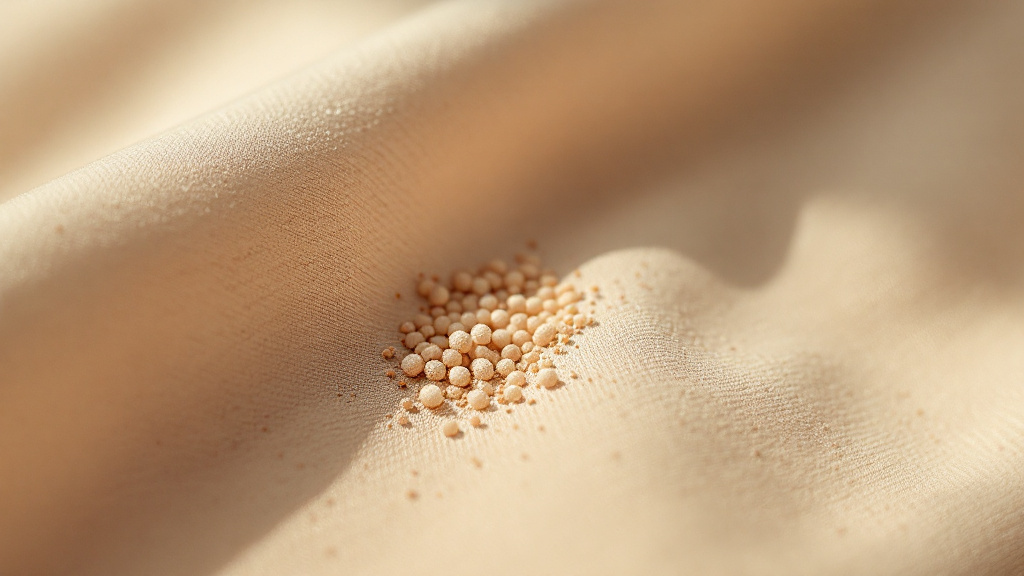
Pilling happens when loose fibres on the fabric surface catch on each other under friction and tangle into small, matted balls. That friction comes from wear, from other fabrics rubbing against the garment, and from the mechanical action of a washing machine drum. It's not a defect that appears randomly. It's a predictable outcome of specific fibre and construction decisions.
The key variable at the fibre level is staple length. Short-staple fibres have more free ends protruding from the yarn surface. Those ends catch, tangle, and eventually knot into pills. Long-staple fibres stay more securely anchored within the yarn structure, so they shed less and tangle less. This is why a long-staple cotton like Pima or Egyptian will outperform a standard short-staple ring-spun cotton on pill resistance, even at the same fabric weight and construction. Same fibre type, very different behaviour.
What makes synthetic-blend pills particularly frustrating for end consumers is that the pill doesn't fall off. With pure natural fibres, pills often abrade away on their own eventually. With polyester in the blend, those strong synthetic fibres hold the pill firmly to the fabric surface. So it accumulates. The garment looks increasingly worn, and the customer blames the brand.
The fabric compositions that pill fastest and why
Cotton-polyester blends are the most common offender, and the risk scales with how much polyester is in the mix. Once polyester content crosses 50%, you're in high-risk territory. The polyester fibres are strong enough to tangle and hold together under friction, but they don't anchor cleanly to the yarn structure the way longer natural fibres do. The result is pills that form quickly and persist indefinitely.
Pure polyester performs differently. Tightly spun polyester yarns in performance fabrics can actually resist pilling reasonably well because the fibre ends are more controlled. The problem is the middle ground — mid-count blended jerseys and fleeces where the polyester content is high enough to cause problems but the yarn quality isn't high enough to compensate.
Acrylic is another high-risk fibre, particularly in knit constructions. It's cheap, it's soft out of the bag, and it pills aggressively. Brands that are sourcing budget knitwear with acrylic content should factor pill failure into the expected return rate rather than treating it as a surprise.
Rayon and modal sit in a different category. They're generally lower-risk for pilling when woven, but in loosely knitted constructions they can still generate surface fuzz. The construction matters as much as the fibre identity.
How yarn twist, fibre length, and weight interact to determine pill risk
Twist per inch is a number most brands never ask about, and it matters a lot. A low-twist yarn has more exposed fibre ends on the surface. It's often softer to the touch, which is why low-twist yarn gets used in fabrics marketed as 'ultra-soft' or 'buttery.' But that surface fuzz is exactly what feeds the pilling process. The fibres have more freedom of movement, more exposure to friction, and more opportunity to tangle.
A tighter twist reduces surface fuzz and anchors fibre ends more securely within the yarn. The trade-off is hand feel. A tighter-twisted yarn will feel crisper and less plush. For some applications — a structured shirt collar, a canvas bottom weight — that's fine. For a fleece hoodie or a casual knit tee, brands are often making a deliberate softness-versus-durability trade-off, sometimes without knowing it.
Fibre length, twist, and fabric weight compound each other. A short-staple fibre in a low-twist yarn in a lightweight construction is the worst possible combination for pill resistance. Each factor individually increases risk. Together, they make pilling almost certain within a handful of wash cycles.
Why fabric weight in oz/sq yd affects pilling behaviour at scale
Lighter fabrics pill faster. It's that straightforward. A fabric below 4.5 oz/sq yd has less fibre density, which means individual fibres have less structural support around them. Under friction, they move, catch, and tangle more easily. A 3.5 oz/sq yd jersey and a 6 oz/sq yd jersey can be made from the exact same yarn, and the lighter one will pill faster under the same conditions.
Above 6 oz/sq yd, you generally see better abrasion resistance. There's simply more material per square yard holding each fibre in place. This is part of why heavyweight tees and premium sweatshirt fleeces tend to wear better than their lightweight counterparts, even when the fibre composition is similar.
The issue for brands is that lighter fabrics are often selected for cost or for season — a lightweight summer tee, a tissue-thin layering piece. Those are legitimate product decisions. But if you're choosing a low-weight fabric, you need to be more rigorous about fibre quality and finishing, not less. The fabric weight is working against you, so something else has to compensate.
What construction choices make pilling worse: stitch density, seam friction, and finish type
Pilling almost always appears first at friction points: side seams, underarm panels, collar edges, cuffs. This is predictable because these are the areas where two pieces of fabric are constantly moving against each other during wear. High stitch density at seams actually increases localised abrasion on the fabric immediately adjacent to the stitch line. That narrow band of fabric takes more stress than the rest of the panel.
Specifying a minimum of 12 stitches per inch at seams is a reasonable baseline. It provides seam integrity without creating excessive seam bulk and friction against adjacent fabric. But stitch count alone doesn't solve the problem — you also need to think about seam allowance, seam type, and whether the garment design concentrates friction in a particular zone.
Fabric finishing is the other variable most brands overlook. Anti-pill finishes and singeing — a process that burns off surface fuzz using a gas flame across the fabric surface before cutting — can meaningfully reduce pilling on higher-risk materials. These treatments need to be specified explicitly on the fabric spec sheet. You cannot assume they've been applied. If your spec sheet doesn't list the finish type, you don't know what you're getting.
The wash and abrasion tests factories should be running before cutting begins
The Martindale abrasion test is the standard method for evaluating pill resistance. A fabric sample is rubbed against a standard abrasive surface under controlled pressure for a set number of cycles, and the resulting surface is rated on a visual scale. For mid-range apparel, 20,000 cycles is a generally acceptable baseline. For premium product, you should be requiring 40,000 cycles or above.
That number needs to come from your fabric supplier before you approve the material for production. If they can't provide it, that tells you something. Either they haven't tested it, or the result isn't one they want to share. Neither is acceptable when you're building a brand on perceived quality.
Wash testing at multiple cycles is equally important, particularly for fleece and brushed fabrics. A garment that looks fine after two washes can show significant pilling by wash ten. Testing at 5, 10, and 20 cycles gives you a curve, not just a snapshot. It tells you how fast the fabric degrades under realistic use conditions.
These tests should be happening before the cutting table, not after the first production run ships. By the time you're dealing with customer returns, you've already absorbed the cost of the problem. Pre-production testing is cheap relative to what a return wave costs.
What to specify in your tech pack to reduce pill risk across a production run
Most tech packs list fabric composition and weight. That's necessary but not sufficient. Here's what you actually need to include if you're serious about pill resistance:
- Martindale abrasion rating (minimum cycles required — state 20,000 or 40,000 depending on product tier)
- Fabric finish type (anti-pill finish and/or singeing — specify by name, not by implication)
- Staple length specification where possible, particularly for cotton-dominant fabrics
- Fabric weight in oz/sq yd with a tolerance band (for example: 5.8 oz/sq yd ±0.2)
- Minimum stitch density at seams (12 stitches per inch minimum)
- Wash test requirement before cutting approval (5, 10, and 20 cycle wash samples with visual grade reporting)
- Polyester content cap if the design is pill-sensitive (for example: polyester not to exceed 40% of blend composition)
These aren't exotic demands. A fabric supplier with solid product should be able to meet all of them. The ones who push back on providing test data are the ones you should be cautious about.
For brands running full-package production, make sure these specs are aligned between the fabric approval stage and the final production run. Fabric substitution mid-run without brand approval is more common than it should be in the industry. If your spec lists an anti-pill finish, that finish needs to be confirmed on the mill certificate for every fabric lot, not just the sample.
When pilling is a returns problem and when it is a sourcing problem
If customers are reporting pilling after three washes, you're looking at a fabric spec or finishing problem. Not a care instruction problem. Adding 'wash inside out, cold, gentle cycle' to the label does not change the fibre composition. It does not improve the Martindale rating. It does not remove the surface fuzz from a low-twist short-staple yarn. It just moves the blame to the consumer, which destroys trust and doesn't fix the return rate.
The financial case for getting the spec right before production is not complicated. On a 50-unit first run, switching from a pilling-prone fabric to a spec-compliant alternative with better fibre quality and an anti-pill finish typically adds somewhere between $0.40 and $1.20 per unit in fabric cost. That's $20 to $60 across the full run. One return shipment with reverse logistics, restocking, and customer service labour can cost $15 to $25 per unit returned. If 10 units come back, you've spent between $150 and $250 to avoid a $60 problem.
Brands that treat pilling as a one-off customer complaint are underestimating the compounding effect on perceived quality. Apparel quality signals are cumulative. A pilling tee shirt doesn't just generate one return. It shapes how a customer talks about the brand to others, how they rate the product online, and whether they reorder. The unit economics of quality fabric are almost always better than the unit economics of managing quality failure after the fact.
So when should you accept some pill risk? Occasionally, the product category or price point genuinely constrains your fabric budget, and a moderate-risk fabric with good finishing is the practical answer. The honest move in that situation is to acknowledge the trade-off, run your wash tests, and set accurate customer expectations in the product description rather than pretending the garment is something it isn't. But 'we knew it would pill and didn't tell anyone' is not a sourcing strategy. It's a return waiting to happen.
If you're reviewing a fabric spec for an upcoming run and want a second opinion on pill risk before you commit to production, send us your spec sheet and we'll tell you what we'd flag.
Get a quote