Strategy
Why Retail Compliance Chargebacks Are the Margin Problem Your Production Timeline Is Causing
Retail compliance chargebacks are quietly destroying apparel brand margins. Here's how to avoid them and what your production timeline has to do with it.
If you're trying to figure out how to avoid retail compliance chargebacks, the first thing to understand is that most of the damage is done before the shipment ever leaves the factory. Not at the dock. Not in the carrier's hands. In the production process itself, weeks earlier, when the wrong label specification got sent, or the routing guide wasn't reviewed until someone was already packing cartons. By then, you're not preventing a chargeback. You're just hoping the retailer doesn't catch it.
This post is about where chargebacks actually come from, what they cost in real dollar terms, and why your production timeline is the lever most brands aren't pulling.
What a Retail Compliance Chargeback Actually Is and How the Money Gets Taken
A compliance chargeback is a financial penalty a retailer deducts directly from the payment it owes you. You ship goods, you invoice the retailer, and instead of paying the full invoice amount, they pay you minus whatever violations they've flagged. No negotiation upfront. The money is simply gone from the remittance.
Major retailers including Nordstrom, Macy's, and Target publish vendor compliance manuals. These are detailed documents, often 50 to 100 pages long, that specify exactly how cartons must be labelled, how shipments must be routed, what documentation windows apply, and what the penalty is for each type of violation. The penalty rates are not gentle. Most run 2 to 5% of invoice value per violation. Some retailers charge per carton or per unit rather than as a percentage, which can add up faster on higher-volume shipments.
And increasingly, this isn't a manual process where a buyer's assistant reviews violations and you have a chance to talk them down. Many large retailers have moved to automated chargeback systems. The violation is flagged, the deduction is calculated, and it posts. You have a narrow window to dispute it, and disputing it successfully requires documentation you should have assembled before the shipment left.

The Most Common Chargeback Triggers and Where They Originate in the Production Process
There are five categories that account for the majority of apparel compliance chargebacks. Late shipment. Incorrect ticketing or labelling. Wrong carton markings. ASN (advance shipping notice) errors. And routing guide violations. Each one of these has a root cause that sits earlier in the process than most brands realise.
Late shipment penalties at most large retailers run $50 to $250 per purchase order, or a percentage of the order value. That's per PO, not per item. A brand shipping four POs in a single container and missing the receiving window has just absorbed $200 to $1,000 in penalties before anything else goes wrong.
Barcode and UPC errors are among the top five chargeback causes reported by apparel vendor compliance consultants. Almost every time, they trace back to a communication breakdown between the brand's merchandising team and the factory's ticketing team. The brand updates a UPC in their system, doesn't send a revised spec, the factory runs tickets off the original file, and 2,000 units go out with the wrong barcode.
Routing guide violations are their own category of pain. Retailers specify which carriers you must use, what documentation must accompany the shipment, and critically, how far in advance you must confirm the shipment. That window is often 48 to 72 hours before the goods leave the facility. If you're scrambling to sort out a labelling revision the day before pickup, you're already too late to stay clean.
What a 3% Chargeback Rate Actually Costs a Brand Doing $500,000 in Wholesale Volume
The numbers are straightforward. A brand with $500,000 in annual wholesale volume and a 3% aggregate chargeback rate is losing $15,000 per year to penalties. Before administrative costs. Before the staff time spent pulling together dispute documentation. Before the relationships that get strained when a buyer's team is processing violations on your account every quarter.
$15,000 a year is not a rounding error. At a 40% wholesale margin, that's the equivalent of wiping out the margin on $37,500 in wholesale orders. It's a full seasonal collection's worth of margin disappearing into compliance penalties.
Then there's the other number that doesn't get discussed enough: receiving window violations that result in the retailer refusing the shipment entirely, or accepting it at a markdown. Large retailers will commonly accept a late shipment at 10 to 20% off invoice value, as a separate negotiated concession on top of whatever chargeback has already been applied. That's not a compliance penalty. That's a margin destruction event.
Why Long Lead Times from Distant Factories Make Chargeback Risk Structurally Higher
This is the part most brands don't connect until they've had a painful season. Your chargeback exposure isn't just a compliance management problem. It's a production timeline problem.
When your factory is 12 to 16 time zones away, every revision cycle costs you a full calendar day at minimum. A mislabelled carton specification gets flagged. Your team sends a correction. The factory receives it the next morning their time, which is your evening. They respond with questions. Another day gone. In a tight retailer receiving window, that 24 to 48 hour lag on a single revision can push a shipment from compliant to late, even when the goods are physically ready to go.
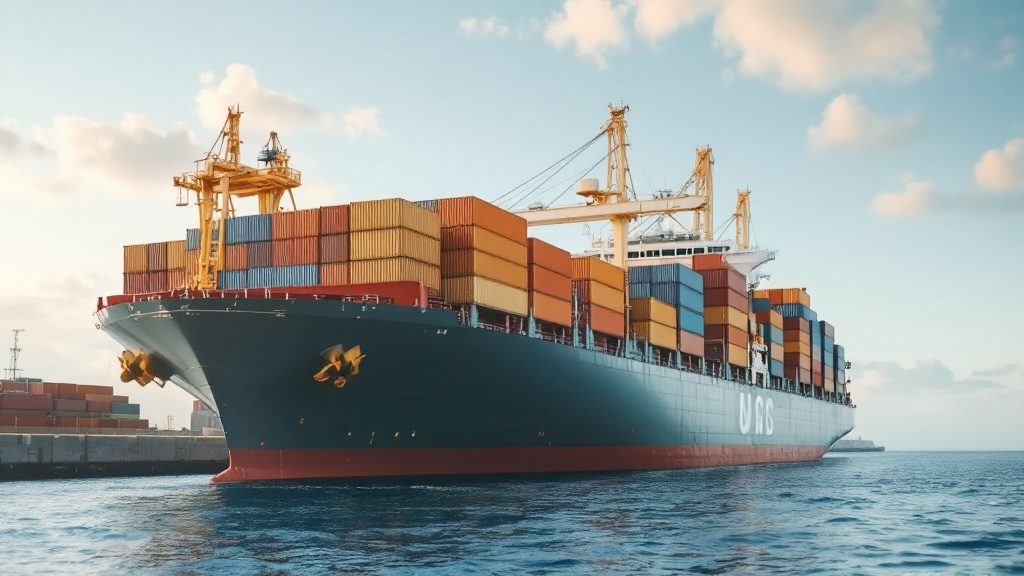
And then there's ocean transit itself. A 25 to 30 day ocean transit from East Asia gives you almost no ability to catch documentation problems after the container seals. If there's a labelling error and the ship has sailed, your options are limited to disputing the chargeback after the fact, which you may or may not win. There's no pre-shipment correction window. The goods are on the water.
Barranquilla to Miami is four sailing days. A brand working with us has a realistic ability to receive a pre-shipment compliance check, identify a problem, make corrections, and still get the container out before the receiving window closes. That's not a theoretical advantage. It's a structural difference in how much time you have to catch and fix errors before they become chargebacks.
The Documentation Failures That Cause Most Labelling and Ticketing Penalties
Most labelling chargebacks are not caused by factories doing sloppy work. They're caused by brands sending incomplete or outdated specifications. There's a difference, and it matters for figuring out how to fix the problem.
The most common failures follow a predictable pattern. The brand sends a tech pack that includes hang tag and label placement, but doesn't include the retailer's specific ticketing requirements. Those requirements live in the compliance manual, not the tech pack. So the factory makes a garment that matches the brand's internal spec perfectly and violates the retailer's ticketing requirements completely.
Or the UPC database gets updated mid-season and nobody sends a revised barcode sheet to the factory. Or the retailer updates their carton marking requirements between seasons and the brand doesn't catch it until they're already packing. All of these are documentation chain problems, not quality problems.
- UPC and barcode specs not passed through from the brand's merchandising system to the factory ticketing team
- Retailer-specific hang tag or price ticket requirements not included in the production order, only in a compliance manual the factory has never seen
- Carton marking specs sent verbally or in email threads rather than as a formal annotated document
- GS1-128 barcode requirements not specified at the order stage, resulting in incorrect label formats at packing
- ASN filing requirements and windows not communicated to the freight forwarder until after the shipment is booked
How Same-Time-Zone Communication Changes Your Ability to Catch Problems Before Shipment
Barranquilla operates on the same time zone as New York, Miami, and during most of the year, the same working hours. That sounds like a small operational detail. It isn't.
When you have a question about a carton marking spec at 2 p.m. on a Wednesday, you can pick up the phone and talk to someone on the production floor. Not send an email that gets answered at 3 a.m. Not wait until the next business day. You can resolve a compliance question in real time, the same way you'd resolve it with a domestic vendor.
This matters most in the week before a shipment seals. That's when compliance questions are highest volume and most time-sensitive. Routing guide confirmation. Final carton counts. ASN data submission. Pre-shipment label verification. Every one of those tasks involves communication between your team, the factory, and often the freight forwarder simultaneously. When all three parties are working in roughly the same hours, problems get caught and resolved. When the factory is asleep while you're working, they compound.
What Nearshore Lead Times of 4-6 Weeks Do to Your Buffer Time Before Retailer Receiving Windows Close
Standard production lead times from East Asia run 12 to 16 weeks. Add 25 to 30 days of ocean transit and you're looking at 16 to 20 weeks from order placement to U.S. port arrival. In practice, that means most brands sourcing from Asia are committing to retailer delivery windows before production has even started, let alone before they've seen a bulk production sample.
That structure forces brands into a compliance corner. You have no room to catch a problem and fix it. Any deviation from plan, even a three-day production delay, a customs hold, or a documentation revision, can push you past the retailer's receiving window. And when that window closes, you're either accepting a markdown or eating the chargeback.
A 4 to 6 week production lead time from Barranquilla, plus four sailing days to Miami, puts a fundamentally different amount of buffer into the equation. Brands can order later, adjust later, and still arrive on time. For a brand shipping to a retailer with a specific two-week receiving window, that buffer isn't a luxury. It's the margin of error that keeps you compliant.
It also means samples are faster. We can have a pre-production sample to a U.S. brand within 7 to 14 days. That's enough time to catch a labelling issue, get retailer approval if needed, and update the spec before bulk production runs. On a 12-week Asia cycle, the sample review happens during a period where any change cascades into the entire production timeline.
What to Specify in Your Production Agreement to Reduce Chargeback Exposure Before the Order Is Placed
Brands that consistently report lower chargeback rates across their production partners share one habit: they build retailer compliance requirements into the tech pack and production order from the start. Not as an afterthought at the shipping stage. From the beginning.
Here's what that looks like in practice.
- Attach the retailer's current compliance manual to the production order as a reference document, even if you're summarising the key requirements in the order itself. The factory and freight forwarder both need access to it.
- Include a dedicated labelling and ticketing section in the tech pack that specifies hang tag placement, price ticket type, UPC barcode format (GS1-128 vs. standard), and any retailer-specific ticket requirements alongside your brand's own specifications.
- Send a verified UPC sheet signed off by your merchandising team at the time the production order is placed, not at the time of packing. Make it a required document before production starts.
- Specify carton marking requirements in a formal annotated diagram, not in an email thread. Include master carton label placement, inner pack requirements, and any retailer-specific barcode requirements for carton labels.
- Define the ASN filing window in the production agreement and assign responsibility clearly. Who files the ASN, when, and with what data. This should not be a question that gets answered the week of shipment.
- Require a pre-shipment compliance check as a stated deliverable. Not a quality inspection only, but a specific review of ticketing, carton markings, and documentation against the retailer's compliance manual before the container seals.
- Specify the routing guide carrier requirements in the production order so the freight booking is made with the right carrier from day one, not revised at the last minute.
None of this is complicated. All of it requires discipline to do consistently. The brands that get hit hardest by chargebacks are usually not doing anything egregiously wrong. They're just treating compliance as a shipping-department problem rather than a production-order problem. Move the conversation earlier and most of the exposure disappears.
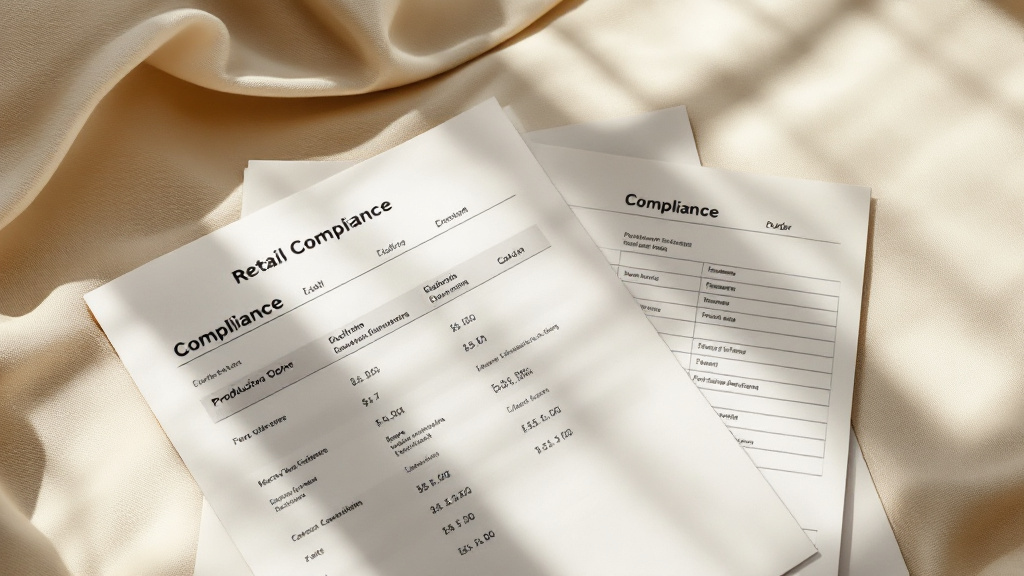
The four sailing days, the shared time zone, the 4 to 6 week lead time — these aren't abstract advantages. They're hours and days you have to catch errors, make corrections, and still make your retailer's receiving window. That's the actual mechanism by which nearshore production reduces chargeback exposure. Not magic. Just time, proximity, and the ability to pick up the phone at 2 p.m. and talk to the person packing your cartons.
If you're shipping to U.S. retailers with compliance manuals and want to build chargeback risk reduction into your production process from the order stage, contact Procesarte to discuss your programme requirements and see how our lead times and communication structure fit your retail calendar.
Get a quote