Sourcing
Why Ocean Freight Delays Are Now a Production Planning Variable, Not a Logistics Exception
Apparel freight delays in 2026 are no longer edge cases. Here's how nearshore manufacturing from Colombia changes the logistics risk math for U.S. boutique brands.
If you're planning production around a carrier's scheduled transit time, you're planning around a number that increasingly has nothing to do with when your goods actually arrive. Apparel freight delays in 2026 have become structural, not occasional. Port congestion, blank sailings, customs inspection backlogs — these aren't disruptions anymore. They're the baseline. And if your brand is built on seasonal drops, limited runs, or tight retail windows, basing your production calendar on optimistic carrier estimates is one of the more expensive habits you can have.
What the freight landscape actually looks like for apparel imports in late 2026
Standard ocean transit from major Asian manufacturing hubs to the U.S. East Coast runs 18 to 28 days under normal conditions. That's the number carriers quote. What actually happens on the water is different. Congestion events through 2024 and 2025 pushed real delivery times to 35 to 50 days on multiple major trade lanes, and those conditions haven't resolved cleanly. The backlog doesn't disappear between seasons — it shifts, eases slightly, then compounds again when volume peaks.
Blank sailings are part of this now. Carriers cancelled 20 to 30 percent of scheduled sailings on certain Asia-U.S. lanes during high-volatility weeks in both 2024 and 2025. When a vessel is blanked, your freight doesn't move. You might wait a week for the next available slot, or longer if capacity is tight. And you usually find out with little notice, which makes it nearly impossible to communicate accurate timelines to your retail partners or adjust your marketing schedule.
U.S. Customs and Border Protection has also increased the rate of inspections on Asian-origin textile and apparel imports following tariff escalations in 2025 and 2026. A random or targeted inspection can add 5 to 15 business days to your clearance time. That's not a rare event anymore — it's a realistic probability you should be pricing into your timelines.
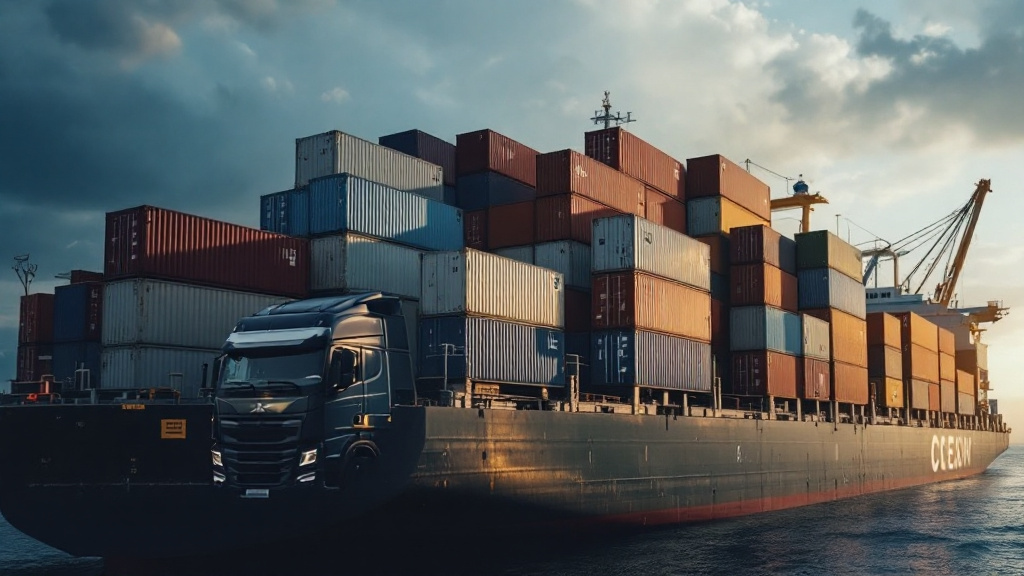
The difference between scheduled transit time and actual delivery time
Scheduled transit time is when the ship leaves and when it's supposed to arrive. Actual delivery time is when your goods clear customs and land in your warehouse, available to ship to customers or to a retail floor. The gap between those two numbers is where brands lose money, and it's wider than most people budget for.
Take a 28-day transpacific booking. Add a 5-day delay at origin because your factory finished late. Add a blank sailing that pushes your freight to the next vessel, which leaves 8 days later. Add West Coast port processing during moderate congestion: 3 to 10 business days before your container is released. Add a targeted customs inspection: another 5 to 15 business days. You started with a 28-day quote and you're now looking at 55 to 70 days from the day your goods left the factory. For a spring collection, that difference can mean missing the window entirely.
How port congestion compounds a production delay that already happened upstream
Here's something that doesn't get talked about enough: freight delays almost never happen in isolation. They layer on top of production delays that already occurred. Your factory ran 5 days late on finishing. You absorbed that. Then the vessel was blanked and your freight missed its slot by a week. You absorbed that too. Then the container sat at port for longer than expected. At that point, you've absorbed 20 or more days of cumulative delay without a single event being dramatic enough to feel like an emergency.
This is how brands miss selling windows without ever experiencing one catastrophic failure. It's death by compounding, and ocean freight from distant origins is structurally more exposed to it because there are more handoffs, more intermediate port calls, and more opportunities for each individual delay to multiply the next one.
What a two-week freight delay costs a boutique brand in real dollars
Let's be specific. A boutique brand selling 300 units at $95 retail is looking at $28,500 in potential full-price revenue. If a freight delay causes them to miss a 3-week selling window — a holiday drop, a trunk show, a seasonal campaign — those units don't disappear. They go on markdown. A 30 to 40 percent discount to move them. At 35 percent off, you're now selling at $61.75. On 300 units, that's $18,525 in revenue instead of $28,500. You've lost roughly $10,000 in gross revenue, and that's before you account for storage, re-ticketing, or the marketing spend that drove traffic to a product that wasn't there.
Some brands try to solve this with air freight. It's a reasonable emergency measure, but the math is brutal. Air freight on garments runs $4 to $8 per kilogram depending on the lane and urgency. A medium-weight garment averages around 0.9 lb, which is roughly 0.4 kilograms. On 500 units, you're looking at 200 kilograms of freight. At $6 per kilogram, that's $1,200 — before volumetric weight adjustments, surcharges, and the fact that garments in boxes tend to cube out before they weigh out, which pushes the effective cost higher. Realistic air freight on a 500-unit order of medium-weight garments: $1,800 to $3,600, and that's just the freight line. Duties and fees on top of that.
And here's what most freight insurance policies won't tell you upfront: standard ocean cargo insurance, which typically runs 0.5 to 1.5 percent of declared cargo value, covers physical damage and loss. It does not cover delay. If your goods arrive late and you miss your selling window, that financial loss sits entirely with you. There's no claim to file.
Why the Colombia-to-Miami run is structurally different from transpacific shipping
Barranquilla sits on Colombia's Caribbean coast. The Port of Miami is approximately 1,200 nautical miles away, which puts regular cargo on a 4-sailing-day transit under standard conditions. That's not a marketing claim — it's geography. And the structural implications of that geography are significant.
Fewer intermediate port calls means fewer points of failure. Transpacific routes typically involve multiple stops, transshipments, and port-to-port handoffs before your freight reaches a U.S. port. The Barranquilla-to-Miami lane is a much cleaner corridor. Vessels run it regularly, the route is well-established, and there's no transshipment complexity adding days and uncertainty.
Customs clearance reflects this too. A Barranquilla-to-Miami shipment of finished garments manufactured in Colombia typically clears U.S. Customs within 1 to 3 business days under standard conditions. Compare that to 3 to 10 business days for transpacific cargo arriving at major West Coast ports during moderate congestion. And because finished garments made in Colombia and meeting rules of origin requirements enter the U.S. duty-free under the Colombia-U.S. Trade Promotion Agreement, there's no tariff classification dispute to trigger a hold. That's one less reason for CBP to pull your shipment for review.
Tariff classification disputes on Asian-origin garments have become a more significant source of delay following the tariff escalations of 2025 and 2026. When CBP questions whether a product has been correctly classified, clearance can stall while the importer responds to a CF-28 or CF-29. Under duty-free entry, that particular risk largely goes away.
What nearshore logistics actually look like on a 500-unit order
Here's how a 500-unit order moves from a Colombian cut-and-sew factory to a U.S. warehouse, with realistic numbers at each stage.
- Order placed and tech pack confirmed. Production begins within a few days of material confirmation, assuming fabric is in stock or sourced locally.
- Production window: 4 to 6 weeks for most cut-and-sew runs at this unit count, depending on construction complexity and trim lead times.
- Pre-shipment inspection and packing: typically 2 to 4 days. Documents prepared for export: commercial invoice, packing list, certificate of origin for duty-free entry.
- Transit from Barranquilla to Miami: 4 sailing days under standard conditions.
- U.S. Customs clearance: 1 to 3 business days under normal processing.
- Drayage or last-mile delivery to warehouse: 1 to 2 days depending on location.
Total elapsed time from order placement to goods in warehouse: roughly 6 to 8 weeks. That's a real number, not a best-case scenario. It's what happens when production runs on schedule, which is far more likely when you're working with a factory you can actually visit, call during your business hours, and communicate with in real time without a 12-hour time difference creating a full-day lag on every question.
How to build a production calendar that accounts for real freight risk, not optimistic carrier estimates
The first thing to do is stop using carrier transit time as your planning anchor. Use actual delivery time as the anchor and work backwards from there. If your goods need to be in warehouse on November 15th, don't count back 28 days from November 15th and call that your ship date. Count back from your realistic customs clearance window, add a buffer for port processing, add a buffer for production finish, and see what date you actually need to place your order.
A practical rule for transpacific sourcing in the current environment: add 15 to 20 days of buffer on top of the carrier's quoted transit time before you do any planning math. That accounts for moderate congestion, a standard customs inspection, and a single blank sailing event. If none of those happen, you've got inventory early, which is fine. If they do happen, you've still made your window.
For nearshore production from Colombia, the buffer is shorter — 7 to 10 days is usually sufficient for the freight and customs leg — but you still need honest production lead times from your factory. A 4-week lead time is real if the fabric is confirmed and in stock. If your factory is sourcing fabric on your behalf and there's a mill delay, that moves. Know what you're buying when you commit to a timeline.
Nearshore production at a Colombian factory with a 4 to 6 week lead time means a brand placing an order in early October can realistically expect goods cleared and in-warehouse by mid-November. That's a Q4 delivery on a Q4 order. From most Asian suppliers at standard ocean freight rates, that timeline is structurally impossible unless the goods were already in production when you decided you needed them.
When ocean freight from distant suppliers still makes sense and when it doesn't
This is worth being straight about. If you're running large-volume, non-seasonal basics — T-shirts, fleece, jersey pieces in steady replenishment — and you've got the inventory capital to hold a 14 to 16 week supply cycle, distant sourcing can still make sense on pure unit cost. The economics work when volume is high enough to absorb the freight and duty overhead, when timing flexibility exists, and when the product doesn't expire the moment a season turns.
But if you're a boutique brand running drops of 100 to 1,000 units with specific seasonal relevance, or if you're a retailer who needs to reorder based on sell-through rather than forecasts made months in advance, the freight risk profile of a distant supply chain works against you. Every week of transit time is a week you can't react. Every blank sailing is a week you can't recover. And the costs of a missed window, as we've laid out above, are real and measurable.
Nearshore manufacturing isn't right for every brand or every product category. But for U.S. boutique brands that sell seasonally, launch in limited runs, or need to respond to demand rather than predict it, the logistics risk profile of a Colombian supply chain is genuinely different. Not just faster — structurally less exposed to the kinds of compounding delays that are now a consistent feature of long-haul ocean freight.

If you're mapping out a production calendar for a Q4 or Q1 drop and want to understand exactly what a nearshore timeline from Barranquilla looks like for your specific order, get in touch with Procesarte for a production and freight estimate based on your actual unit count and product type.
Get a quote