Production basics
Why Nylon Beats Polyester in Swimwear Fabric (And What the Spec Numbers Actually Mean for Your Brand)
Nylon vs polyester swimwear fabric isn't a style choice — it's a spec decision that affects chlorine resistance, recovery, and your return rate. Here's what the numbers mean.
If you're building a swimwear line and you haven't locked down your base fabric yet, the nylon vs polyester swimwear fabric decision is the one that will affect everything downstream — your fit, your colour retention, your customer return rate, and ultimately whether the garment holds up past the first season. This isn't a philosophical debate about sustainability or brand values. It's a performance spec question, and there are real numbers behind it.
Why the nylon vs polyester question matters before a single yard gets cut
Most brand founders come to us with a strong opinion about their silhouette and a vague idea about fabric. They know they want something that looks good and lasts. What they don't always know is that the wrong fabric choice will cost them more in customer service, reorders, and returns than the per-yard price difference ever would have.
Swimwear fabric sits in an unusual category. It gets stretched, pulled, chlorinated, sun-baked, and rinsed in saltwater repeatedly, often within the same day. The degradation isn't gradual — it compounds. And the fibre type you choose determines how fast the compounding happens.
So before we talk price, let's talk about what each fabric actually does under stress. Then you can make a call that fits your market, your price point, and your production volume.
How chlorine and saltwater degrade polyester elastane blends faster than nylon
Chlorine is essentially a controlled corrosive. Pool water is maintained at 1-3 parts per million of free chlorine, and that's enough to attack the elastane component in any stretch fabric over time. The question is how fast, and that depends on what the elastane is bonded to.
Chlorine resistance testing based on ISO 105-E03 equivalent protocols consistently shows nylon-spandex retaining both colour and tensile strength through 100 hours or more of chlorinated water exposure. Polyester-spandex blends under the same conditions show visible degradation, colour shift, and measurable tensile loss starting at around 60-70 hours. That's not a marginal difference. That's the gap between a swimsuit that survives a full summer of lap swimming and one that starts pilling and losing shape by July.
Saltwater is less aggressive than chlorine, but it still matters. Salt causes fibre swelling and dye migration over repeated exposure cycles. Nylon handles this better partly because of how it absorbs and releases moisture — slowly and evenly — rather than sitting on the surface of the fibre the way polyester does.
What recovery rate means and why it collapses in cheap fabric after repeated wear
Recovery rate is the spec that determines whether your swimsuit still fits at the end of the season. It measures how close a fabric returns to its original dimension after being stretched. And in swimwear, the fabric gets stretched every single time someone puts the garment on.
Standard swimwear nylon-spandex blends run 78-82% nylon with 18-22% elastane. Polyester-spandex alternatives typically run 80-88% polyester with 12-20% elastane. That elastane percentage gap matters, but the fibre type matters just as much. In a four-way stretch test, quality nylon-spandex should return to within 2-3% of its original dimension after 50 stretch cycles. Polyester-spandex fabrics from lower-tier mills often show 6-9% permanent elongation after the same test.
What does 6-9% permanent elongation look like in practice? A swimsuit that fits a size small in the dressing room starts fitting like a size medium by mid-season. The leg openings go slack. The hip panel starts to droop. The fabric that was supposed to hold everything in place has permanently relaxed, and there's no fixing it. That garment ends up returned, reviewed, or quietly never repurchased.
The difference in recovery force between nylon and polyester blends is measurable within just 20 wash cycles in side-by-side testing. So this isn't a long-term theoretical problem — it shows up fast, especially in categories like competitive swimwear or figure-critical resort pieces where fit precision is part of the product's value.
Dye uptake and colour depth: why nylon holds vibrance longer under UV exposure
Here's a number that surprises most people: nylon absorbs roughly 4-4.5% of its weight in water. Polyester absorbs less than 0.5%. That sounds like polyester wins on drying speed, and it does. But that same hydrophobic nature is exactly what makes polyester harder to dye well.
Because polyester doesn't bond with water-based chemistry, it requires disperse dyes applied under high heat and pressure. Those dyes sit largely on the surface of the fibre rather than penetrating deeply into the structure. Under sustained UV exposure, that surface-level dye migrates and fades faster. Nylon, by contrast, accepts reactive and acid dyes that bond more deeply with the fibre, producing richer initial colour and better long-term vibrance.
Tightly woven nylon-spandex at 6.5 oz/sq yd also typically achieves a UPF rating of 40-50 without any additional chemical treatment. Polyester-spandex at the same weight often needs a UV stabiliser finish applied separately to reach the same rating. That finishing step adds cost, and it can change the hand-feel of the fabric in ways that some buyers don't notice until they're holding a production sample.
The dye sublimation question is worth flagging here specifically. Procesarte offers dye sublimation printing, and if all-over prints are part of your brief, you need to know that polyester accepts sublimation dye far more readily than nylon does. Nylon requires reactive or acid dyes and a different print process entirely. This affects both cost and turnaround. If your design depends on photographic-detail prints across the entire garment, polyester may actually be the technically correct base fabric for that application. More on that in a later section.
The oz/sq yd and stretch percentage specs your factory needs before sampling
Before we can source fabric for your run, we need actual numbers. Not 'medium weight' or 'good stretch.' Numbers.
Fabric weight for competitive and resort swimwear typically runs 6.5-7.5 oz/sq yd for nylon blends. Below 6.5 oz/sq yd and you risk sheerness in light colours, especially at the seat. Above 7.5 oz/sq yd and you're getting into territory that starts feeling more like a compression garment than a swimsuit. Polyester blends at the same weight often feel stiffer because of lower elongation at break, which concentrates stress at the seam lines at the hip and leg openings. That's where polyester-based swimwear tends to fail structurally first.
For four-way stretch, the spec we want to see on a swimwear fabric is at least 100% stretch in both directions, with recovery back to within 2-3% after repeated cycles. Anything below that and you're going to see fit issues in the first production run. We'll test fabric samples before we cut, but it's much better if you come in knowing your spec rather than building it from scratch at the sampling stage.
- Fibre content and blend ratio (e.g., 80% nylon / 20% elastane)
- Fabric weight in oz/sq yd
- Four-way stretch percentage and recovery rate
- Chlorine resistance requirement (competitive pool use or resort/casual)
- UPF target, if applicable
- Print method: solid colour, reactive dye, or dye sublimation
- Finish requirements: matte, chlorine-resistant finish, UV stabiliser
If you can supply that list before sampling, we can source to spec rather than approximating. The difference shows up in fit and durability, and it saves at least one round of back-and-forth.
What nylon-spandex fabric costs versus polyester-spandex at production volume
Let's be straightforward. Nylon costs more. At production volumes of 300-600 units, nylon-spandex fabric typically runs 15-25% more per yard than comparable polyester-spandex from the same mill tier. On a garment that uses 1.5-2 yards of fabric, that's a real number.
But here's the other real number: the cost of returns, replacements, and reputation damage from garments that lose shape in the first season consistently exceeds the per-unit fabric premium when you do the accounting across a full product run. One season of 15-20% return rates on a 500-unit production run is a far worse outcome than spending an extra dollar fifty per unit on fabric upfront.
Colombian textile mills, including suppliers we work with directly in and around Barranquilla, produce both nylon and polyester swimwear fabrics domestically. Finished garments cut and sewn in Colombia ship duty-free into the U.S. under the Colombia-U.S. Trade Promotion Agreement. That applies to the finished piece, not the raw fabric, but when you're working with locally sourced material and local production, the cost structure is more competitive than most U.S. buyers expect before they run the numbers.
For brands placing 300 or more units per style, we can also negotiate fabric lot consistency requirements with the mill, which reduces dye lot variation between the front and back of a production run. That matters a lot in swimwear because colour shift between lots is visible on a garment where the front and back panels are both exposed at the same time.
When polyester blends are actually the right call for your price point and market
Polyester isn't a wrong answer. It's a specific answer. And there are markets where it's the right one.
If you're producing all-over print swimwear and dye sublimation is your print method, polyester is the technically correct base fabric. Sublimation dye bonds to polyester at the molecular level under heat, producing vivid, photographic-quality prints that nylon simply can't replicate with the same process. If your product is a printed resort piece sold at a retail price point below $60 and your customer is buying it for occasional beach use rather than lap swimming, polyester-spandex is a reasonable fabric choice and the economics work.
Similarly, if your production volume is low, your retail price is constrained, and your target customer expects to replace beachwear each season anyway, the durability premium of nylon may not be the right trade-off for your specific business. We're not going to push you toward a more expensive fabric if your margin and your market don't support it.
What to put in your tech pack so your factory sources the right swimwear base fabric
A tech pack for swimwear needs a fabric spec sheet, and the fabric spec sheet needs to be specific. 'Swimwear fabric, nylon, good quality' is not a spec. Here's what should actually be in it.
- Fibre content with exact blend ratio: e.g., 80% nylon / 20% elastane, not just 'nylon-spandex'
- Fabric weight: target oz/sq yd with an acceptable tolerance, e.g., 7.0 oz/sq yd ± 0.25
- Stretch spec: minimum stretch percentage in warp and weft, plus recovery rate after 50 cycles
- Chlorine resistance standard: specify whether the end use is competitive pool, resort/casual, or both
- UPF target: state the minimum rating required and whether chemical treatment is acceptable to achieve it
- Colour standard: Pantone or physical swatch with acceptable delta E tolerance for colour matching
- Print method: solid colour or print, and if print, which method — reactive dye, acid dye, or dye sublimation
- Dye lot consistency requirement: especially for 300+ unit runs where lot variation between cuts is a risk
- Finish requirements: chlorine-resistant finish, UV stabiliser, matte or shine preference
- Minimum and maximum yardage per colour: helps us plan mill orders and avoid short lots
We start sampling at 50 units, and sample yardage for swimwear fabric is compatible with that minimum. At that scale we can get you a fabric hand-feel sample and a sewn sample for fit review within 7-14 days if the fabric is available in our local supply chain. If you're bringing a new fabric spec we haven't sourced before, add a few days for mill confirmation.
Brands scaling to 300 units per style or more should be thinking about lot consistency before the first sample is cut. It's much easier to set a requirement upfront than to manage a colour variation problem after half the production run is already sewn.
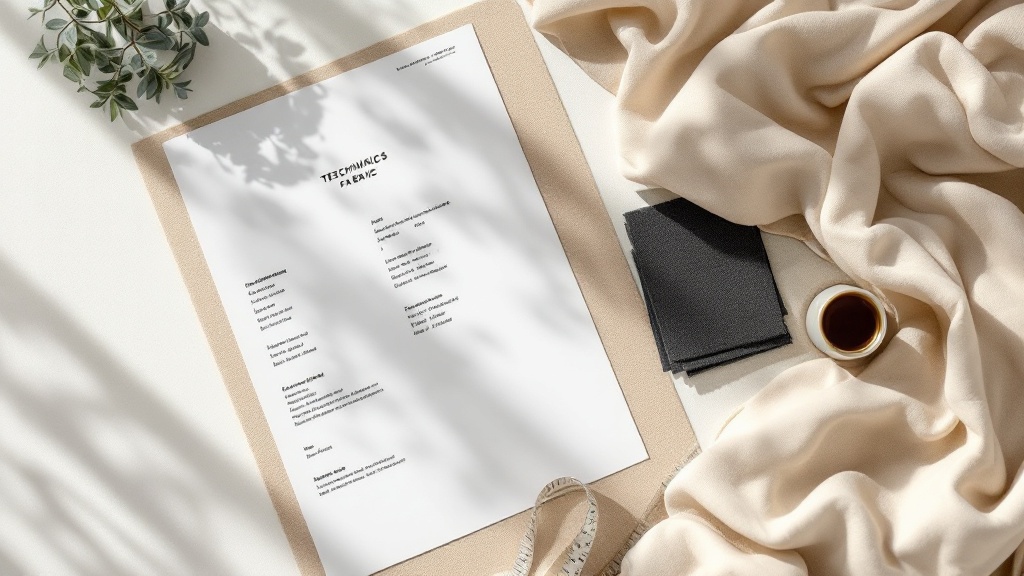
The nylon vs polyester question is ultimately a spec decision, not a trend. Get the numbers right before the first yard gets cut and you avoid a lot of expensive conversations later. If you're not sure what numbers to put in your tech pack, that's exactly the conversation to have before sampling starts, not after.
If you're preparing a swimwear run and want to talk through fabric spec options, chlorine resistance requirements, or dye sublimation print compatibility before committing to a base fabric, send us your brief and we'll give you a straight answer.
Get a quote