Strategy
Why Large Apparel Retailers Keep Going Broke While Boutique Brands Keep Growing (And What the Inventory Numbers Actually Say)
Boutique apparel brands avoid overstock inventory by using nearshore production and real sell-through data. Here's what the numbers actually say.
The question of how boutique apparel brands avoid overstock inventory has a fairly straightforward answer once you look at the production calendar rather than the marketing strategy. Large retail chains aren't going broke because they picked the wrong colours or missed a trend. They're going broke because they committed to enormous seasonal volumes based on five-month-old demand signals, received the goods too late to pivot, and then spent the back half of the year discounting their way to insolvency. The boutiques doing well aren't smarter. They're just working with shorter lead times and smaller commitments, and those two things change almost everything downstream.
Why large retail chains keep ending up with warehouses full of garments nobody wants
Express filed for Chapter 11 in April 2024. Rue21 followed in May. Several regional department store groups quietly shuttered locations through the same period. The press coverage tends to focus on e-commerce competition or shifting consumer behaviour, which isn't wrong, but it's incomplete. The more direct problem is that these companies were sitting on 90-plus days of unsold inventory when they filed. That's not a branding problem. That's a supply chain problem.
Here's how it happens. A chain buying through long-cycle offshore production needs to place seasonal orders somewhere between 12 and 16 weeks before the floor date. For a June sell-in, that means a January commitment. In January, the brand is forecasting what consumers will want in June based on trade show signals, prior year sales, and genuine guesswork. That's a 5-month gap between the demand signal and the demand reality. A lot changes in five months. Trends accelerate. Competitors discount early. A slow spring kills foot traffic. None of that was visible when the purchase order was placed.
And because the minimums on offshore production typically run 300 to 1,000 units per style before a factory will cut, the brand can't test at low volume. They have to commit. So they do. And when the season doesn't land the way the January forecast said it would, they're stuck with inventory that has nowhere to go except the markdown rack.
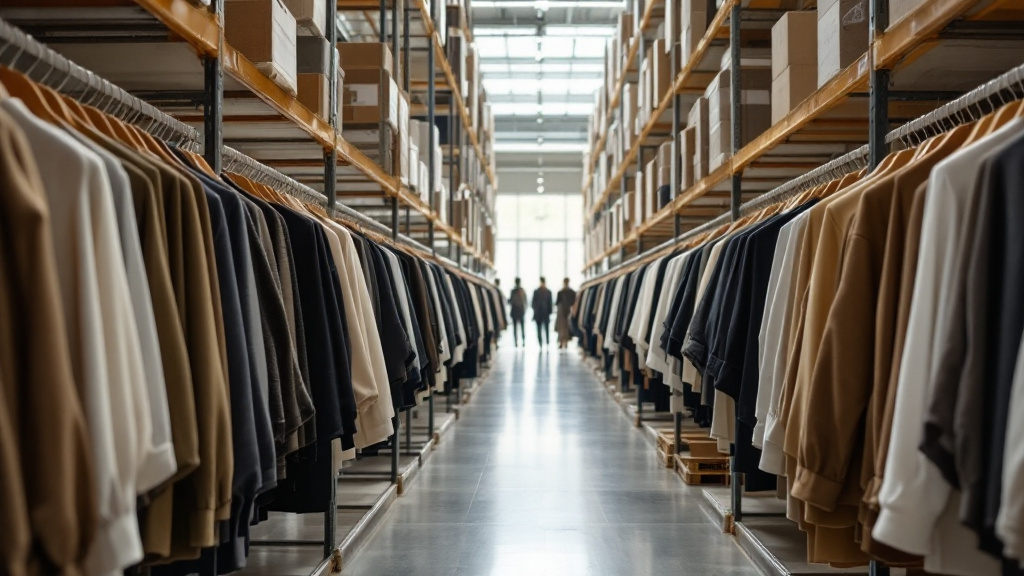
What the markdown math actually looks like when a 14-week production cycle goes wrong
Let's use a real enough example. A brand orders 500 units of a seasonal style at a $28 landed cost. They priced it at $58 wholesale, which is a reasonable margin for a mid-market product. The season opens and 300 units move at full price. The remaining 200 units are slow. To clear them before the next season crowds the floor, the brand marks them down 30 to 50 percent off wholesale. That means they're recovering between $29 and $40.60 per unit on goods that cost $28 to make. After the markdown, they've lost between $2,800 and $5,600 in gross margin on a single style, before accounting for the staff time it took to manage the clearance process.
Now run that across six styles in a seasonal buy and you can see how the numbers compound. A brand that looks profitable at wholesale can be quietly haemorrhaging margin through markdowns, and the root cause is almost always the same: they ordered too much because the production cycle forced them to commit before they had real demand data.
Dead inventory also carries ongoing costs that don't show up as a markdown line item. Warehouse space, insurance, and the capital cost of goods sitting idle typically run 20 to 30 percent of inventory value per year. A boutique brand holding $40,000 of unsold stock is losing $8,000 to $12,000 annually in carrying costs, and that's before a single unit gets discounted. The markdown is the visible cost. The carrying cost is the one that quietly erodes cash flow month after month.
How boutique brands are using sell-through data instead of gut instinct to set production volumes
The boutiques that are growing aren't necessarily more sophisticated in terms of software or systems. Most of them are working with fairly basic tools. What they're doing differently is treating the first production run as a test, not a seasonal commitment. They put 50 to 100 units on the floor, watch what happens over 3 to 4 weeks, and use that actual sell-through data to decide whether to reorder and at what volume.
This only works if the reorder can happen fast enough to matter. If your lead time is 14 weeks, by the time you've watched 4 weeks of sell-through data and placed a reorder, the goods won't arrive until the season is essentially over. The test-and-reorder model is only viable when the production cycle is short enough that a confirmed bestseller can be restocked while it's still selling. That's the operational precondition most people skip over when they talk about data-driven buying.
Healthy boutique apparel brands are typically achieving 85 to 95 percent sell-through at full price, compared to an industry average closer to 60 to 70 percent for brands buying large seasonal volumes months ahead of the floor date. That gap isn't about taste or trend-reading. It's almost entirely about the size of the initial commitment and whether there was real demand data behind it.
Why a 50-unit minimum and a 4-to-6-week lead time changes the reorder calculation entirely
This is where nearshore production becomes a structural advantage rather than just a feel-good sourcing story. A factory with a 50-unit minimum and a 4-to-6-week production lead time lets a small brand run the test-and-reorder model as a real business strategy. A factory requiring 300 to 1,000 units minimum with a 12-to-16-week lead time makes that same model operationally impossible.
At Procesarte, we cut from 50 units. That's not a promotional offer. It's the actual minimum, because we're set up for runs at that scale. A brand can place an initial order of 75 units, get the goods in 4 to 6 weeks, put them on the floor, sell through 60 of them in the first three weeks, and have enough signal to place a reorder with confidence. If the reorder goes in immediately, it arrives before the season closes. If the style underperforms, the brand is sitting on 15 unsold units, not 200.
The transit time matters here too. Barranquilla is four sailing days from Miami. Finished goods leaving our floor can be in a U.S. warehouse within roughly two weeks of production completion. Compare that to a 3-to-5-week ocean transit from Southeast Asia, and you're compressing the reorder-to-floor cycle by 2 to 3 weeks. On a time-sensitive seasonal product, that difference is often the margin between catching the peak and missing it entirely.
What inventory turn rates actually look like for boutique brands using nearshore production vs long-cycle offshore sourcing
Inventory turn rate is simply how many times per year a brand sells through and replaces its inventory. A healthy boutique apparel brand is typically turning inventory 4 to 6 times per year, meaning they're cycling stock roughly every 8 to 13 weeks. A brand stuck in a long-cycle offshore model, buying twice a year in large seasonal blocks, might be turning inventory 2 to 3 times annually at best.
That difference in turn rate has a direct effect on both cash flow and margin. A brand turning inventory 5 times a year is continuously cycling cash back into production at full-price sell-through, rather than tying it up in slow-moving stock waiting for a clearance event. Over the course of a year, the higher-turn brand generates more revenue from the same floor space with a smaller capital commitment per cycle.
This is also why boutique brands using nearshore production tend to look healthier on paper than their unit economics alone would suggest. They're not just manufacturing closer. They're running a fundamentally different inventory model that keeps capital moving instead of sitting in a warehouse depreciating.
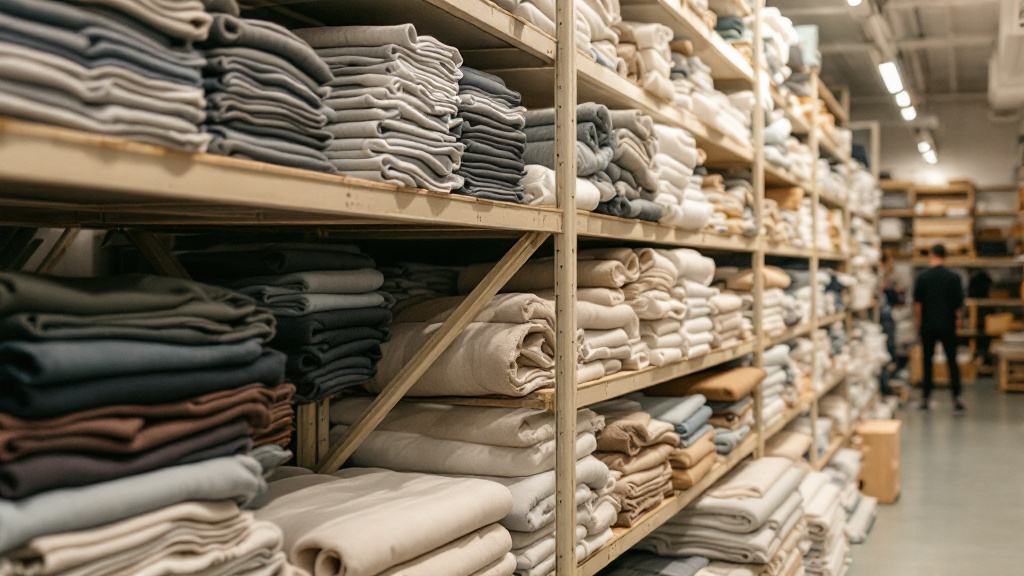
How to structure a test-and-reorder production model that works at small volumes
The mechanics aren't complicated, but they do require a factory that can actually execute at low minimums with fast turnaround. Here's the basic structure we see working well for brands in the 50 to 500 units per run range.
- Start with a sample. At Procesarte, samples typically come back in 7 to 14 days. Use that sample to confirm fit, construction, and colourway before committing to a production run. Don't skip this step to save time. A bad sample wastes more time than it saves.
- Place a test run at the minimum you need to validate the style, not the volume you hope to sell. For most boutique brands, that's somewhere between 50 and 150 units depending on the number of sizes and colourways.
- Set a clear sell-through threshold before the run ships. Decide in advance: if 70 percent of units sell in the first four weeks at full price, you reorder. If they don't, you don't. Having this decision made in advance removes the temptation to wishful-think a slow seller into a reorder.
- Place the reorder as soon as the threshold is hit, not after the season peaks. By the time a style is clearly winning, you've already lost a week or two of selling time. The reorder goes in the day you cross the threshold.
- Track the data by style, colourway, and size run separately. Aggregate sell-through numbers hide the detail you need. A style that's 80 percent sold through in size S and M but 30 percent in XL tells you something specific about how to weight the reorder.
Same-time-zone communication is not a minor convenience in this model. It's operationally meaningful. When a U.S. brand and a Colombian factory are both working 9 to 5 EST, a reorder decision, a revised size breakdown, or a question about fabric availability gets answered the same day. When there's a 12-hour time difference, every back-and-forth costs 24 to 48 hours. Over a 6-week production run, that compounds into real delays.
The cash flow difference between ordering 300 units you might not sell and 75 units you already know you can
Let's put actual numbers on this. A brand orders 300 units at $28 cost. That's $8,400 committed upfront. If 200 of those units sell at full price and 100 get marked down 40 percent, they've recovered less than they would have earned on a clean sell-through of a smaller run. They've also tied $8,400 in cash to a single style four to five months before knowing whether it will work.
Now the same brand, working with a nearshore factory, places a first run of 75 units at the same $28 cost. That's $2,100 committed. They sell through 65 units in four weeks at full price, 86 percent sell-through, and immediately reorder 150 units based on confirmed demand. Total cash committed at peak exposure: $2,100. Total units eventually produced: 225, almost all at full-price sell-through.
The second approach produces fewer total units, yes. But it produces a higher percentage of those units at full margin, ties up significantly less cash at the moment of highest uncertainty, and eliminates virtually all markdown exposure on that style. For a brand that's managing 10 or 15 styles simultaneously, the cumulative difference in working capital is the difference between a healthy business and a cash flow crisis.
What boutique brands need to track before they can forecast accurately at the production level
The test-and-reorder model sounds simple, but it only works if you're tracking the right things. A lot of small brands are tracking revenue and total units sold, which tells you almost nothing useful at the production planning level. Here's what actually needs to be in your data before you can make a confident reorder decision.
- Sell-through rate by style, broken down by colourway and size. Not blended across the assortment.
- Velocity: how fast units are moving per week, not just total units sold. A style that sold 40 units in week one and 5 in week four is a different story than one that sold 15 units consistently across all four weeks.
- Full-price vs markdown units: how many units sold at the original wholesale price vs how many were discounted to move.
- Days of inventory remaining at current velocity: if you have 20 units left and they're selling at 5 per week, you have 4 weeks of stock. Your reorder lead time is 4 to 6 weeks. That means you order today if you want continuous availability.
- Return rate by style: some categories, especially anything with fit variability, will have returns that distort the sell-through picture. Track net sell-through after returns, not gross.
- Channel breakdown: if you're selling through your own site, wholesale accounts, and a retail location, the velocity data needs to be aggregated across all three or the picture is incomplete.
None of this requires expensive software. A well-structured spreadsheet updated weekly works for most brands running 10 to 20 styles at a time. The discipline of actually doing it consistently is more important than the tool you use to do it.
What this data gives you, after two or three production cycles, is a real baseline for forecasting. You stop guessing whether a new style in a similar category will sell 75 or 300 units because you have comp data from styles that are genuinely comparable. Your initial run sizes get more accurate over time, which means your sell-through rates improve, your markdown exposure drops further, and the business starts compounding in the right direction.
The large chains that are going broke had access to far more data than any boutique brand ever will. They had analytics teams and enterprise software and decades of historical sales records. None of it helped because the production model they were locked into required them to commit before the data was meaningful. The boutiques winning right now aren't winning because they have better data. They're winning because they have a production model that lets them act on the data they do have, quickly enough for it to matter.

If you're ready to move from large seasonal guesses to a test-and-reorder model with real production minimums and lead times that actually fit your sell-through window, send us your spec sheet and let's talk about what a first run looks like.
Get a quote