Sourcing
Why High Factory Minimums Are Bankrupting Small Apparel Brands (And What 50-Unit Production Actually Changes)
High clothing factory minimum order quantities are forcing small brands into cash traps. Here's what 50-unit production actually changes in 2026.
A brand contacted us last month. They'd designed a capsule collection of four styles, negotiated pricing with a factory in Vietnam at $16 per unit, and felt good about the numbers. Then the factory sent the revised minimum: 1,000 units per style, per colour. The brand needed three colourways. That's 12,000 units. At $16 each, they were looking at $192,000 in inventory before they'd validated a single design with a real customer. They had $40,000 in working capital. The factory's clothing factory minimum order quantity had just killed the collection before it launched.
This isn't an edge case anymore. It's the norm in 2026. And it's forcing a reckoning for independent designers and boutique brands that can't write six-figure cheques for untested inventory.
Why overseas factories are raising minimums in 2026 (and what numbers brands are actually seeing)
Factory minimums have climbed steadily over the past three years. What used to be 300 to 500 units per style is now 1,000 to 1,500 units in many facilities across Asia. Some factories have gone higher: 2,000 units per colour, not per style.
The reasons are straightforward. Labour costs in China, Vietnam, and Bangladesh have increased. Energy costs have increased. Factories are prioritising larger clients with consistent volume because setup time and sample costs are fixed whether you're running 300 units or 3,000. A smaller run doesn't cover the overhead.
And larger brands are willing to hit those minimums. If you're an established label doing $2 million a year in revenue, a 1,500-unit run isn't a problem. But if you're an independent designer launching your first collection or a boutique brand doing $200,000 a year, those minimums aren't just inconvenient. They're existential.
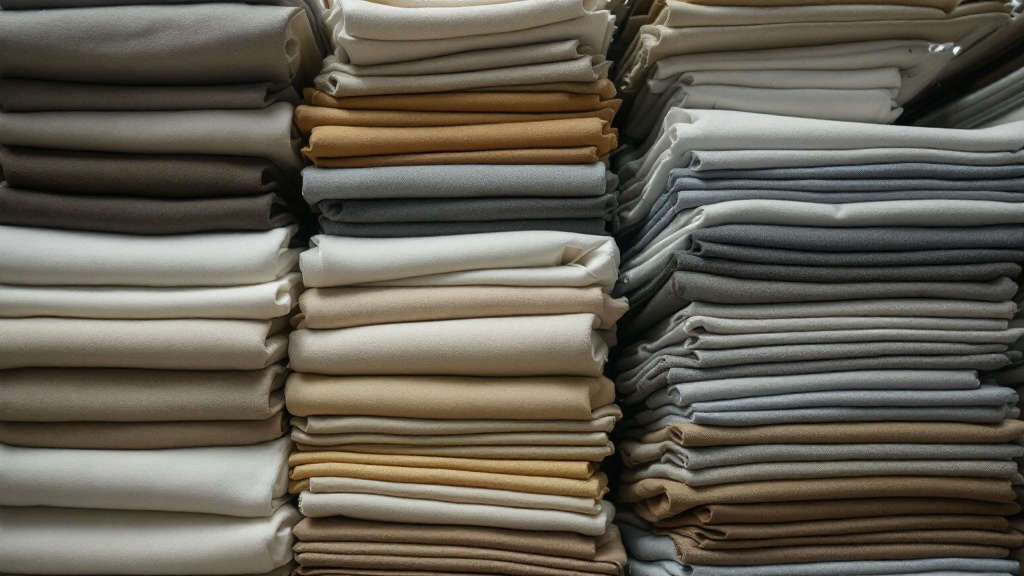
What a 1,000-unit minimum actually ties up in capital before you sell a single piece
Let's use real numbers. A basic cut-and-sew T-shirt costs $12 per unit at 1,000 pieces. A hoodie runs $22. A pair of joggers, $18. You're producing a small activewear capsule: one hoodie style, one jogger style, one T-shirt style. Two colours each. That's six SKUs.
Here's what you're committing:
- Hoodies: 2,000 units × $22 = $44,000
- Joggers: 2,000 units × $18 = $36,000
- T-shirts: 2,000 units × $12 = $24,000
That's $104,000 in garment costs alone. You haven't paid for shipping yet (add another $4,000 to $6,000 for a container). You haven't paid duties, though Colombia-to-U.S. shipments are duty-free under the trade agreement. You haven't paid for hangtags, polybags, or freight forwarding.
And you haven't sold anything. You've turned cash into inventory. If your sell-through rate is 60%, you've just committed $104,000 to generate maybe $62,400 in actual sales at wholesale. You're underwater before you start.
The dead inventory trap: how high minimums force brands to bet on styles before market validation
The real killer isn't the upfront cost. It's the fact that you're guessing. You think the hoodie will sell. You think customers will like the colourway. But you don't know, because you haven't tested it in the market.
A brand that orders 1,000 units of a hoodie and sells 400 is now sitting on 600 units of dead stock. You can discount it, but that erases your margin. You can try to move it through liquidation channels, but you'll get $4 to $6 per unit for a garment that cost you $22 to make. You can write it off, but that doesn't bring the cash back.
And here's the part that doesn't get talked about enough: the opportunity cost. That $13,200 you sunk into unsold hoodies could have been used to reorder the joggers that actually sold out in three weeks. Instead, you're out of stock on the winner and warehousing the loser.
This is why high minimums aren't just a cash flow problem. They're a business model problem. You're forced to bet the entire budget on styles that haven't been validated, and if you're wrong, the savings you got from a lower per-unit cost evaporate in discounting and write-offs.

What a 50-unit production run actually costs per unit (and when the premium is worth it)
Here's what the same garments cost at 50 units instead of 1,000, produced nearshore at Procesarte:
- Basic T-shirt: $18 per unit (vs $12 at 1,000 units overseas)
- Hoodie: $32 per unit (vs $22 at 1,000 units)
- Joggers: $26 per unit (vs $18 at 1,000 units)
Yes, the per-unit cost is higher. A 50-unit hoodie run costs $1,600. A 1,000-unit run overseas costs $22,000. But here's what that $1,600 buys you: the ability to test the market without destroying your cash position.
Let's say you produce 50 hoodies at $32 each. You sell 45 of them at $58 retail. Your revenue is $2,610. Your cost was $1,600. You've made $1,010 in gross profit, and you have data. You know the style works. You know which size sold out first. You know customers wanted a third colourway you didn't offer.
Now you reorder 200 units. The per-unit cost drops to $28. Lead time is six weeks. You're back in stock before the momentum dies. And you didn't have to commit $22,000 to find out the hoodie was a winner.
The premium is worth it when the alternative is guessing with five figures of capital. It's worth it when your business can't survive a 40% sell-through rate on a 1,000-unit order. And it's worth it when speed matters more than cost, because six weeks from order to delivery lets you restock a bestseller while customers still want it.
How boutique brands are using low minimums to test styles, validate demand, and reorder winners
We're seeing a pattern with the brands that are growing steadily without outside funding. They're not trying to launch with ten styles. They're launching with three. They're producing 50 to 100 units per style. They're selling through small drops on their website and Instagram, often pre-selling or doing limited releases to create urgency.
One brand we work with launched a vintage-wash oversized tee in two colours. Fifty units each. Sold out in eleven days. They reordered 150 units per colour, added a third colour, and had inventory back in five weeks. Six months later, that single T-shirt style is 60% of their revenue, and they're producing it in runs of 400 units now because they know it sells.
Another brand tested four hoodie styles at 50 units each. One style sold 48 units in the first two weeks. Another sold nine. Instead of sitting on 1,000 units of the dud, they killed it and put all their budget into reordering the winner. That's not possible when you've already committed to 1,000 units of everything.
The cycle looks like this: test at 50 units, validate in two to four weeks, reorder the winner at 200 to 300 units, deliver in six weeks, repeat. You're turning inventory every 60 to 90 days instead of sitting on a six-month supply of styles you're not sure will sell.

The cash flow difference: what your working capital looks like at 50 units vs 1,000
Let's model two scenarios. You're a new brand. You have $25,000 in working capital. You want to launch with three styles in two colours each.
Scenario A: You go overseas, 1,000-unit minimum per colour. That's 6,000 units total. At an average of $18 per unit, you're committing $108,000. You don't have it, so you either don't launch, or you take on debt, or you bring in an investor and dilute equity before you've made a single sale.
Scenario B: You produce nearshore at 50 units per colour. That's 300 units total. At an average of $28 per unit, you're committing $8,400. You have $16,600 left. You can cover your website hosting, your first ad spend, your packaging, and still have a cushion for the reorder when the winning style sells out.
In Scenario A, you're all-in before you know what works. In Scenario B, you have room to adapt. And here's the part that matters: if Scenario B works and you sell through 80% of your 300 units in eight weeks, you've generated $13,440 in revenue at wholesale pricing. You can now afford to reorder 200 units of the bestseller without touching your original capital.
That's the difference. It's not just cheaper to start small. It's safer. And in 2026, with customer acquisition costs climbing and retail margins tightening, safety is strategy.
When high-volume overseas production still makes sense (and when it doesn't)
We're not pretending every brand should produce at 50 units forever. If you're doing $3 million a year in revenue and you know a core style sells 5,000 units a season, overseas high-volume production makes sense. The per-unit savings are real, and you have the capital and the sell-through history to justify the risk.
Overseas makes sense when:
- You have at least two seasons of sales data proving a style sells in volume
- You can afford to hold six months of inventory without it breaking your cash flow
- You're producing basics or core styles with predictable demand, not trend-driven pieces
- Your order volume per style is consistently above 800 to 1,000 units
- You have the infrastructure to manage 12 to 16-week lead times and plan that far ahead
It doesn't make sense when you're launching new styles, testing new categories, or operating on thin cash reserves. It doesn't make sense when you need to reorder quickly because a style is selling faster than expected. And it doesn't make sense when the cost of being wrong, sitting on unsold inventory, is higher than the cost of paying a bit more per unit to stay nimble.
A lot of brands are running a hybrid model now. Core basics overseas at volume. Seasonal styles and new releases nearshore at lower minimums. It's not all or nothing. It's about matching the production model to the risk profile of each product.

What to ask your factory about minimum order quantities before you commit to a production partner
Not all minimums are the same. Some factories quote per style. Others quote per colour. Others quote per size run. And some have different minimums depending on garment complexity, fabric type, or whether you're providing your own materials.
Here's what to ask before you send a deposit:
- Is your minimum per style, per colour, or per SKU?
- Does the minimum change if I provide my own fabric or trims?
- Can I start with a smaller test run and scale up if it sells?
- What's your reorder minimum, and is it lower than the initial minimum?
- How does your per-unit pricing change at 50, 100, 250, and 500 units?
- What's your lead time at each volume tier?
- Do you require a deposit, and is it refundable if minimums can't be met?
- Can I split a minimum across multiple colourways, or does each colour need to hit the minimum separately?
And here's the one question most brands don't ask but should: what happens if I need to cancel or modify an order after I've confirmed? Some factories will let you adjust quantities up until fabric is cut. Others lock you in at the PO stage. Know the terms before you commit.
If a factory won't answer these questions clearly, or if they're vague about minimums until after you've paid for samples, that's a red flag. A good factory will tell you the minimums upfront, explain how they're structured, and work with you to find a starting volume that fits your budget and your risk tolerance.
The bottom line: lower minimums won't save a bad product, but they might save your business
Let's be clear. A 50-unit minimum doesn't mean you can launch a mediocre product and succeed. It doesn't mean you can skip the work of building a brand, finding your audience, or designing something people actually want to buy. And it doesn't mean nearshore is always cheaper, it often isn't on a per-unit basis.
But it does mean you can test your ideas without betting the entire business on a single production run. It means you can validate demand before you commit five figures to inventory. And it means you can reorder the winners fast enough that you're not out of stock for three months waiting on a container.
In 2026, the brands that are surviving and growing aren't the ones with the lowest cost per unit. They're the ones that didn't run out of cash in month four because they overcommitted to untested inventory. They're the ones that could pivot when a style didn't work, and double down when one did.
That's what a 50-unit minimum actually changes. Not the unit cost. The ability to stay in the game long enough to figure out what works.
If you're launching a new collection or testing styles without committing to four-figure order quantities, get in touch for a quote on 50 to 500-unit production runs with six-week lead times.
Get a quote