Strategy
Why Fashion Startups Overestimate First Production Orders (And What the Right Number Actually Looks Like)
Most apparel brands overorder their first production run by 200-400%. Here's how to calculate first production order size using real sell-through data.
You've got your tech packs ready, your fabric selected, and your samples approved. Now comes the question that separates successful small brands from those drowning in unsold inventory: how many units do you actually order for your first production run? Most founders get this wrong. Not by a little. By a factor of three or four. They order 800 units when they should've started with 200. They commit to a year's worth of inventory when they've got eight weeks of actual sales data. And six months later, they're sitting on pallets of dead stock, trying to figure out how to pay for their second collection whilst the first one gathers dust in a third-party logistics warehouse that's billing them monthly. Let's talk about how to calculate first production order size properly, using actual numbers instead of optimism.
Why brands consistently overorder on their first run
The maths seems simple on the surface. You've shown samples to friends, posted mockups on Instagram, maybe even pre-sold a few dozen units. Everyone loves it. Your retail pitch deck projects 2,000 units sold in year one. So ordering 1,000 units for the first run feels conservative, even cautious.
But here's what actually happens. That typical first-time apparel brand orders somewhere between 500 and 1,200 units. In the first six months, they achieve 30 to 40% sell-through if they're lucky. That leaves 600 to 800 units as dead stock. Not slow-moving inventory. Dead stock. Styles that won't sell at full price, won't sell at 30% off, and eventually need to be liquidated or written off entirely.
Three things drive this consistent overordering. First, factory minimums push brands toward larger orders. A factory quotes $18 per unit at 200 pieces but $12 per unit at 1,000 pieces. The savings look massive on paper. Second, founders confuse interest with demand. A hundred Instagram likes doesn't equal a hundred customers with credit cards out. Third, longer lead times from distant factories force brands to bet big early. If you're waiting 14 weeks for production from Asia, you can't test and adjust. You commit once and hope you're right.

What actually happens to dead inventory at a small brand (the real costs)
Dead inventory doesn't just sit there costing nothing. It actively drains cash from your business at a rate most founders never calculate until it's too late. The real cost of unsold stock runs between 18 and 24% annually when you add up everything.
Storage and handling come first. If you're using a third-party logistics provider, you're paying for the space those boxes occupy. That's typically $4 to $8 per pallet per month, and a pallet holds roughly 150 to 200 folded T-shirts or 80 to 120 hoodies. Handling fees add another $0.50 to $1.50 per unit for receiving, putaway, and periodic inventory checks.
Then there's opportunity cost. The $15,000 you spent on inventory that's not selling could've been used for paid acquisition, a second style that actually moves, or keeping your business account above zero whilst you wait for sales to come in. At a conservative 10% annual opportunity cost, that's $1,500 you're not making.
Finally, liquidation. When you eventually admit the stock won't sell at any reasonable price, you're offloading it at 15 to 30 cents on the dollar. Sometimes less. A $15,000 first production order that sells 35% in six months leaves you with $9,750 in dead stock. Factor in $800 in storage over six months, $1,500 in opportunity cost, and eventual liquidation at 20 cents on the dollar, and that $15,000 order actually costs your business $22,000 to $24,000 when the dust settles.
How to calculate sell-through assumptions that aren't fiction
Most founders build their order quantities on projected demand. They shouldn't. Projections are fiction until you've got sales data. What you need instead are conservative sell-through assumptions based on how apparel actually moves for small brands with limited distribution.
If you're selling direct-to-consumer online with zero brand recognition, assume 8 to 15 units per week for your first style in the first month, tapering to 4 to 8 units per week by month three unless you're spending heavily on acquisition. That's roughly 60 to 100 units in 90 days if things go reasonably well. Not great, not terrible. Just realistic for a brand no one's heard of yet.
If you've got retail placement, the numbers look different but not wildly optimistic. A small boutique typically orders 12 to 36 units per style for an initial buy. They'll reorder if those move within six to eight weeks. They won't if they don't. So one retail account doesn't justify a 500-unit production run. It justifies 24 units, maybe 36 if you're in three colourways.
The maths gets clearer when you work backwards. If you need to sell 400 units in six months to justify a 400-unit production run, and boutique stores are ordering 24 units each, you need 16 to 17 confirmed placements. Not conversations. Not maybes. Confirmed purchase orders. Most first-time brands land two to four retail accounts in their first season. That's 48 to 144 units of actual demand, not 400.
What retail placement timelines tell you about order size
Retail buyers don't operate on your production schedule. They operate on theirs, and it's slower than you think. A buyer sees your line in January, places an order in February, and wants delivery in May for a June floor set. That's a four-month cycle from first contact to product on the sales floor, and it's common.
Here's the problem. If you're producing in Asia with 12 to 16 week lead times, you need to start production before you have confirmed orders. You're guessing at quantities based on interest, not demand. If you've got meetings scheduled with six buyers and two of them sound enthusiastic, do you produce 500 units hoping four of the six convert? Or do you wait for confirmed orders and tell buyers you need 16 weeks, knowing they'll move on to another brand that can deliver in six?
Nearshore changes this completely. With four to six week production timelines, you can wait for actual purchase orders, produce to confirmed demand, and still hit retail delivery windows. A buyer places an order in February, you start production in March, and you deliver in April. No guessing. No overproduction. You're making what's already sold, plus a small buffer for reorders.
This is why order size calculations look different depending on where you're producing. Longer lead times force larger bets. Shorter lead times let you match production to actual demand, which almost always means smaller first runs.

The cash flow maths most founders skip before ordering
Production costs money up front. Sales generate money later. The gap between those two things is called cash flow, and it's where most small apparel brands run into trouble. You can be profitable on paper and still run out of cash because your money's tied up in unsold inventory.
Let's say you've got $20,000 in working capital. You spend $15,000 on a 1,000-unit production run at $15 per unit. You've got $5,000 left for everything else: shipping, storage, marketing, packaging, website costs, and keeping the lights on whilst you wait for sales. If you're selling online at $45 retail, you need to move 112 units just to break even on the production cost, ignoring all other expenses. At 10 units per week, that's 11 weeks before you see your first dollar of actual profit.
Now run the same scenario with a 200-unit order at $18 per unit. That's $3,600 in production costs. You've got $16,400 left for operations and marketing. You need to sell 80 units to break even, which at 10 units per week is eight weeks. More importantly, you've got enough cash left to actually drive those sales through paid ads, influencer seeding, or trade show attendance.
Most successful small apparel brands reorder at 60 to 70% sell-through of current inventory, not after selling out completely. That means when you've sold 120 of your 200 units, you're placing your second order. If you've got cash left from the first round, you can do that. If you spent it all on a bigger first order that's moving slowly, you can't. You're stuck waiting for full sell-through before you can reorder, and by then you've lost momentum.
Why a 200-unit first run often makes more sense than 1,000 units
The per-unit cost difference between 200 and 1,000 units looks significant. Let's say $18 per unit at 200 pieces versus $12 per unit at 1,000 pieces. That's a $6 per unit savings, or $6,000 total if you're comparing a 1,000-unit run to five separate 200-unit runs.
But cost per unit is the wrong metric when forecasting uncertainty is high. Total financial risk is what matters. A 200-unit run at $18 per unit costs $3,600. If you achieve 50% sell-through and liquidate the rest at 20 cents on the dollar, you've lost roughly $1,400. A 1,000-unit run at $12 per unit costs $12,000. At the same 50% sell-through and liquidation rate, you've lost $4,600. The cheaper per-unit cost doesn't matter if you're sitting on three times the dead stock.
There's another advantage to smaller first runs: you learn faster. A 200-unit order across two colourways tells you which colour sells and which doesn't. You can adjust your second order accordingly. A 1,000-unit order in a single colourway commits you to that decision for months, regardless of what the market's telling you.
Brands that split first production into two 200-unit runs six weeks apart reduce dead stock risk by 40 to 55% versus single 400-unit orders. The first run gives you real sales data. The second run incorporates what you've learned. Yes, you're paying a bit more per unit. But you're losing far less on unsold inventory, and in the first year of a small brand, minimising losses matters more than maximising margin.
When higher minimums force you into the wrong order size
Factory minimums exist for a reason. Setting up a production line, cutting fabric, and organising workflow takes the same amount of time whether you're running 50 units or 500 units. Below a certain threshold, the setup cost per unit makes the order unprofitable for the factory. So factories set minimums.
The problem is when those minimums don't match your business reality. If a factory's minimum is 500 units per style and you've got demand signals pointing to 150 units, you've got three bad choices. First, you can order 500 units anyway and accept the dead stock risk. Second, you can wait until you've got more confirmed demand, which might mean missing your market window entirely. Third, you can find a different factory with lower minimums, even if it costs more per unit.
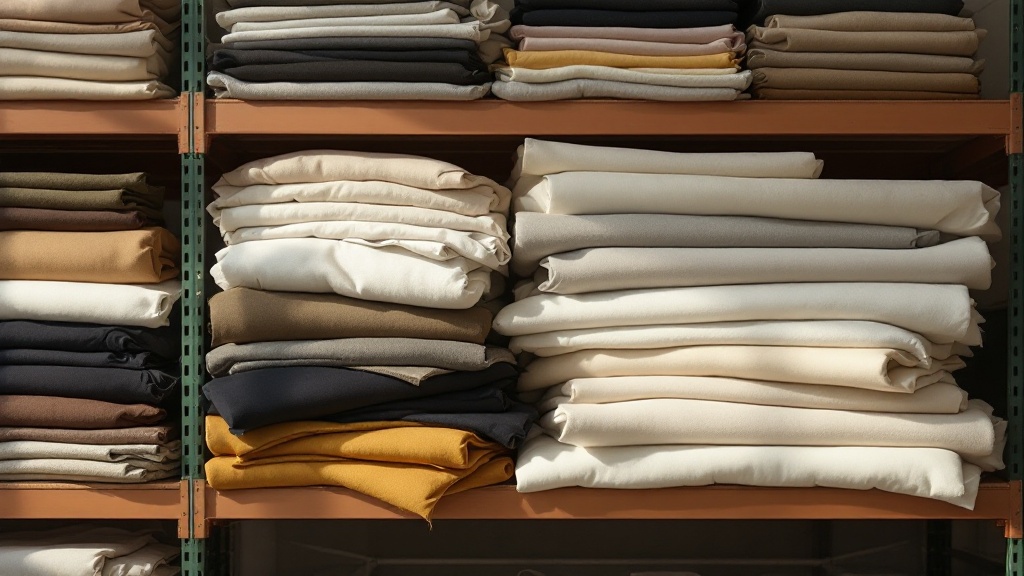
This is where manufacturing location changes the calculation. Asian factories with 500 to 1,000 unit minimums make sense for established brands with proven demand. They don't make sense for a first-time brand testing a concept. Colombian manufacturing with 50-unit minimums allows brands to test three colourways at 150 total units versus committing to 500 or 1,000 units in a single colourway.
The cost per unit might be higher at lower minimums. But the total financial exposure is lower, and for a brand with limited capital and unproven demand, total exposure is what matters. A $2,700 order for 150 units at $18 per unit is a recoverable mistake if the style doesn't sell. A $12,000 order for 1,000 units at $12 per unit can sink a small brand if demand doesn't materialise.
How nearshore production changes the first-order calculation
Lead time is a hidden variable in every order size decision. The longer the lead time, the further out you're forecasting demand. And the further out you're forecasting, the more likely you are to get it wrong. Brands sourcing from Asia with 12 to 16 week lead times must forecast demand four to five months out. You're placing an order in January for inventory that arrives in May, based on what you think the market will want in summer. That's a long bet.
Nearshore production with four to six week timelines cuts that forecast risk window to six to eight weeks total. You're making decisions based on what's happening now, not what you think might happen in four months. If you're selling 12 units per week in February, you can confidently order 200 units in March for May delivery. If sales spike or drop, you know about it before you've committed to the next production run.
This shorter feedback loop changes how you think about inventory. Instead of ordering a large batch and hoping it lasts six months, you can order smaller batches every six to eight weeks, adjusting quantities based on actual sell-through. Ecommerce-only brands need eight to twelve weeks of sales data to establish reliable reorder velocity. That makes smaller first runs with fast reorder capability essential, not optional.
It also changes how you respond to retail interest. When a buyer asks if you can deliver in six weeks, you can say yes if you're producing nearshore. You can't if your production timeline is 14 weeks and you haven't started yet. That optionality has value. It means you can wait for confirmed orders rather than producing on speculation, which almost always results in better inventory matching and less dead stock.
There's a cost to this flexibility. Nearshore production isn't the cheapest per-unit option, especially at higher volumes. But for first production runs where forecasting uncertainty is high and cash flow is tight, paying $18 per unit with a 50-unit minimum and six-week turnaround is financially safer than paying $12 per unit with a 1,000-unit minimum and 14-week turnaround. You're trading a lower unit cost for lower total risk, and in the early stages of a brand, that's the right trade to make.
The brands that get this right don't start with the question 'what's the cheapest per-unit price?' They start with 'what's the smallest order I can place that lets me test demand, learn quickly, and reorder before I run out?' That number is almost never 1,000 units. It's usually somewhere between 100 and 300 units, depending on how many sales channels you've got and how much cash you're willing to tie up in inventory. If your factory can't do that quantity at a lead time that matches your cash flow, you're at the wrong factory.
If you're planning your first production run and want to talk through minimums, lead times, and what order size actually makes sense for your cash flow and distribution, get in touch for a quote.
Get a quote