Production basics
Why Fabric Shrinkage Is One of the Most Expensive Mistakes a Brand Can Make Before Cutting Begins
Fabric shrinkage problems in garment production cost brands thousands in wasted yardage and rejected units. Here's how to spec it right before you cut.
Fabric shrinkage problems in garment production are one of those issues that feel invisible right up until they're catastrophically expensive. The fabric looks fine on the roll. The cut panels look fine stacked on the table. The sewn garments look fine hanging on the rack. And then a buyer washes the first sample, or worse, a customer washes the first unit they receive, and the shirt is a size smaller than it was when it shipped. That's the moment a shrinkage problem stops being a quality issue and starts being a financial one.
What shrinkage actually is and why it happens in production
Fabric is under tension during manufacturing. When yarn is woven or knitted into fabric, the fibres are pulled, stretched, and locked into place under mechanical stress. That tension holds while the fabric is dry and handled carefully. But introduce water, heat, and agitation and the fibres relax back toward their natural state. That's shrinkage. It's not a defect in the sense of something going wrong on a single roll. It's a physical property of how textiles are made.
The problem isn't that shrinkage exists. The problem is when it hasn't been accounted for before cutting begins. If you cut your pattern pieces based on pre-wash dimensions and the fabric hasn't been pre-shrunk, you're essentially cutting a garment that will be smaller than your specs by the time the customer receives it. And depending on the fabric and the wash conditions, that difference can be significant.
Heat accelerates the process. So does repeated washing. The first wash typically produces the most dramatic dimensional change, which is why wash testing is always done on a freshly produced fabric sample, not on something that's already been laundered.
The difference between warp shrinkage and weft shrinkage, and why both matter
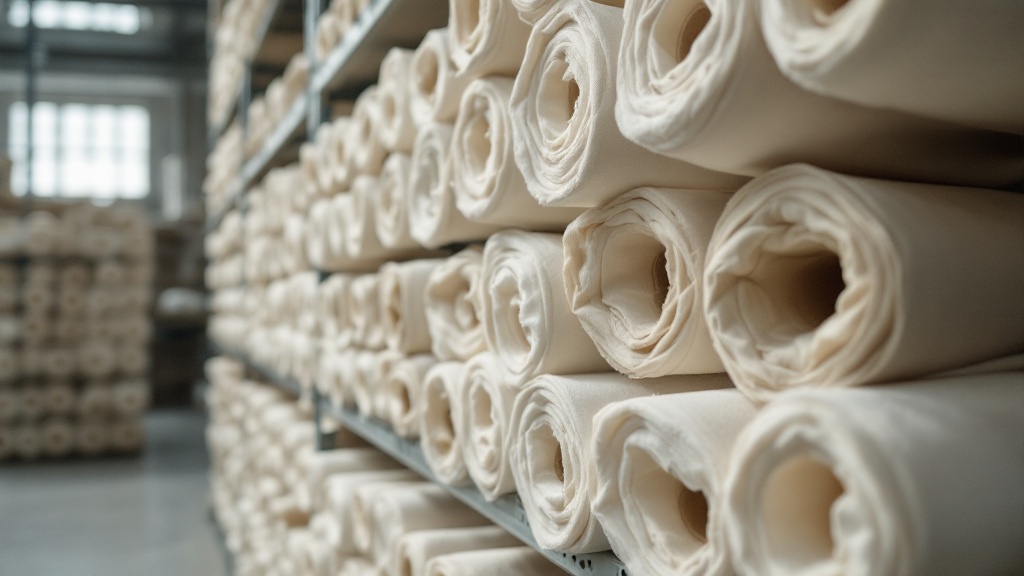
Warp and weft are the two directions of a woven fabric. Warp runs lengthwise along the roll, parallel to the selvage. Weft runs across the width, from selvage to selvage. They're under different amounts of tension during manufacturing and they respond differently to washing. That means they shrink at different rates.
Warp shrinkage tends to be higher because the warp yarns are under more longitudinal tension on the loom. Weft shrinkage is often lower, but it's not zero. And this matters a lot because the two directions affect different dimensions of your finished garment. Warp shrinkage changes the length of your pieces. Weft shrinkage changes the width. If you only test one and miss the other, you can still end up with off-spec garments, just failing on a different measurement than you expected.
A shirt that's been graded for warp shrinkage but not weft shrinkage might come out the right length but too narrow across the chest. Or vice versa. Neither version passes. So both directions need to be tested separately, and both need to be graded into the pattern if the fabric hasn't been pre-shrunk.
Which fabrics shrink the most and by how much
Cotton is the most common high-shrinkage fibre in everyday production. If it hasn't been pre-shrunk, cotton fabric can shrink anywhere from 3% to 10% after the first wash. To put that in real terms: a 30-inch chest panel can come out closer to 27 inches in a worst-case scenario. That's not a slight variation. That's a full size down on a fitted garment.
Jersey knits are among the worst offenders, particularly 100% cotton jersey. They're produced under high tension on circular knitting machines and they have a lot of relaxation potential once that tension is released. An 8% warp shrinkage rate on a 1,000-yard roll means roughly 80 yards of effective fabric loss before you've sewn a single garment. That's 80 yards you paid for and can't use at spec.
- 100% cotton wovens: typically 3% to 7% shrinkage, more in loosely woven constructions
- 100% cotton jersey and single knits: 5% to 10%, sometimes higher in pre-consumer tests
- Cotton-polyester blends: lower than pure cotton, usually 2% to 4%, depending on blend ratio
- 100% polyester: minimal shrinkage, typically under 1% in standard wash conditions
- Rayon and viscose: can shrink 5% to 10% and also distort, particularly in weft
- Linen: 3% to 5% in the first wash, stabilises quickly after that
- Wool: highly variable and sensitive to heat; agitation is a bigger risk than temperature for felting
Blended fabrics are generally more stable than pure natural fibres because the synthetic component resists shrinkage. But don't assume a blend is safe without testing it. The blend ratio matters, and so does the fabric construction.
What a proper pre-production shrinkage test looks like
The test itself isn't complicated. You cut a swatch, measure it, wash it under controlled conditions, dry it the same way the care label will instruct, and measure it again. The difference between the before and after measurements, expressed as a percentage, is your shrinkage rate. But the details matter.
- Cut a swatch of at least 20 by 20 inches from the production roll, not the sample card.
- Mark the warp and weft directions clearly before washing so you can measure both separately.
- Wash at the temperature specified for the end garment's care label. For U.S. market goods, 104°F (warm wash) and 140°F (hot wash) are the two most common test conditions, depending on what's going on the care label.
- Dry using the same method the care label will specify, whether that's tumble dry low, line dry, or flat dry.
- Measure both warp and weft dimensions after the swatch has fully cooled and relaxed.
- Run the test on fabric from at least two or three different rolls in the same lot, because shrinkage can vary between rolls even in the same dye lot.
The standard industry tolerance for shrinkage in most woven apparel is plus or minus 3%. Anything beyond that is generally considered a fabric quality failure. But here's the catch: that specification has to be written into your purchase order with the fabric supplier to be enforceable. If it's not in writing, you don't have much standing to push back when a roll comes in at 7% and you've already cut half of it.
How shrinkage errors show up in finished garments and what they cost
At the consumer level, shrinkage shows up as a garment that fits differently after the first wash than it did in the shop. A t-shirt that was a true large becomes a medium. A pair of shorts that sat comfortably at the hip becomes tight. The customer doesn't know why. They just know the product let them down, and they say so in reviews.
For a brand ordering 500 units of a cotton t-shirt without specifying shrinkage testing, one bad roll can produce garments that effectively size down by a full size after the customer's first wash. That drives returns. It drives negative reviews. In wholesale, it drives chargebacks from retail buyers who have size contracts and QC requirements of their own.
At the production level, the costs stack up differently. If shrinkage is discovered after cutting but before sewing, you lose the yardage but not the sewing labour. If it's discovered after sewing, you lose both. If it's discovered after finishing and packing, you're looking at rework costs, possible reshipment, and depending on the buyer's contracts, chargeback exposure that can wipe out the margin on an entire order.
What to specify in your tech pack to prevent shrinkage problems
Your tech pack is where you make shrinkage your supplier's problem rather than yours, legally and operationally. If it's not specified, it defaults to nothing, and nothing is not a standard.
- Maximum allowable shrinkage in both warp and weft, stated as a percentage (typically 3% or less for woven apparel)
- Whether the fabric must be delivered pre-shrunk or Sanforized, and proof of treatment if so
- The test method to be used (AATCC 135 is the most common standard for home laundering shrinkage in the U.S. market)
- Wash temperature for testing, matched to the care label instructions on the finished garment
- Dry method for testing, matched to care label (tumble dry, flat dry, line dry)
- Acceptable test results to be submitted with each fabric lot before cutting is approved
- Right to reject or return fabric that fails the specified shrinkage tolerance
Most fabric suppliers who work regularly with garment factories are used to these requirements. It's not an unusual ask. If a supplier pushes back on providing shrinkage test data, that tells you something useful about how they operate.
One more thing worth noting on storage: fabric that sits in a warehouse for extended periods can relax and shift dimensionally before it's even been cut. This isn't shrinkage in the wash sense, but it can affect your lay dimensions if rolls aren't stored at consistent tension and orientation. It's a smaller risk than wash shrinkage, but it's real, and it's another reason why receiving inspection matters, not just supplier test reports.
How we handle fabric testing at Procesarte before the cut is approved
We don't cut on incoming fabric without inspection. That's not a policy we debate case by case. When a fabric roll comes in, it gets inspected. If shrinkage testing is part of the spec for that job, and on most natural-fibre orders it is, the test gets run before the cut ticket is issued.
If a roll fails the shrinkage spec, it goes back to the supplier or gets pre-treated, depending on what the situation calls for and what the brand prefers. What it doesn't do is go to the cutting table. We've seen too many situations, in our own history and in jobs that come to us after problems elsewhere, where someone made the call to cut and hope. It's a bet you lose more often than you'd think.
We also test at the conditions relevant to the garment's care label, not at a generic standard. A garment going to market with a cold-wash care label gets tested at cold-wash conditions. A garment with a warm-wash label gets tested at 104°F. We're not going to tell you a fabric passed testing and then test it at the easiest possible conditions.
When shrinkage is the brand's problem versus the factory's problem
This is the part nobody likes to talk about plainly, so we will. Responsibility for shrinkage problems depends almost entirely on what was specified and when.
If a brand supplies their own fabric, doesn't specify shrinkage tolerance, and doesn't request pre-shrinking, and the garments come back undersized after washing, that's the brand's problem. The factory cut what was supplied, at the dimensions provided. There's no contractual basis to hold the factory liable for a spec that didn't exist.
If the factory is sourcing the fabric on behalf of the brand under a full-package arrangement, the factory has a responsibility to source fabric that meets reasonable performance standards for the end use. If the factory knew or should have known that the fabric needed pre-shrinking and didn't flag it or spec it, that shifts responsibility toward the factory.
The cleanest version of this is when shrinkage tolerance is written into the tech pack, agreed by all parties before production starts, and tested before cutting. At that point, if the fabric passes the agreed test and the garments still shrink more than specified in use, it's a fabric quality issue with a paper trail. Without that paper trail, you're arguing about who assumed what, and that conversation never ends well.
The practical takeaway: specify it. It takes one paragraph in a tech pack. It costs nothing to write. And it's the difference between having a clear resolution process when something goes wrong and having an expensive argument with no documentation to anchor it.
If you're planning a cotton or knit production run and want to make sure fabric testing and pre-shrinkage requirements are built into your production process from the start, get in touch with the Procesarte team for a quote and a straight conversation about what your fabric spec should include.
Get a quote