Production basics
Why Cotton Blends Behave Differently After Every Wash (And What That Means Before You Cut a Single Yard)
Why cotton blends shrink differently after washing comes down to fibre physics. Here's what factories see, and what brands must spec before cutting begins.
One of the most predictable problems in garment production is also one of the most preventable. Brands ask us all the time why their cotton blends shrink differently after washing than they expected, and the honest answer is that it was always going to happen. Cotton and synthetic fibres don't respond to water and heat the same way. When you blend them, you don't average out those responses. You stack them on top of each other, and they fight. What you get out of that fight determines whether your hem stays straight after ten washes or starts pulling toward the back seam.
Why cotton and synthetic blends don't shrink at the same rate (and why that matters before you spec a garment)
Cotton is hydrophilic. It absorbs water readily, the fibres swell, and when heat is applied they contract. A plain cotton fabric will typically shrink 3-5% in length after the first wash at 104°F. That's not a defect. That's just cotton. Polyester, on the other hand, is hydrophobic and thermally stable. In a blend, polyester shrinks less than 1% under the same conditions.
So what happens in a 60/40 cotton-polyester fabric? The cotton fibres try to pull. The polyester fibres resist. The result is internal tension that builds across the structure of the fabric. You might not see it dramatically after the first wash. But after five washes, seams start to twist, hems start to pull, and side seams on a fitted T-shirt migrate to the front. None of this is random. It's physics.
And it matters enormously at the spec stage, before a single yard is cut. A 60/40 blend and an 80/20 blend can carry the exact same weight in oz/sq yd and feel similar in your hand off the bolt. But the 80/20 blend has significantly more cotton, which means more moisture absorption and a higher differential shrink rate between the two fibres. They'll behave very differently after repeated washing, even if they look identical on a swatch card.
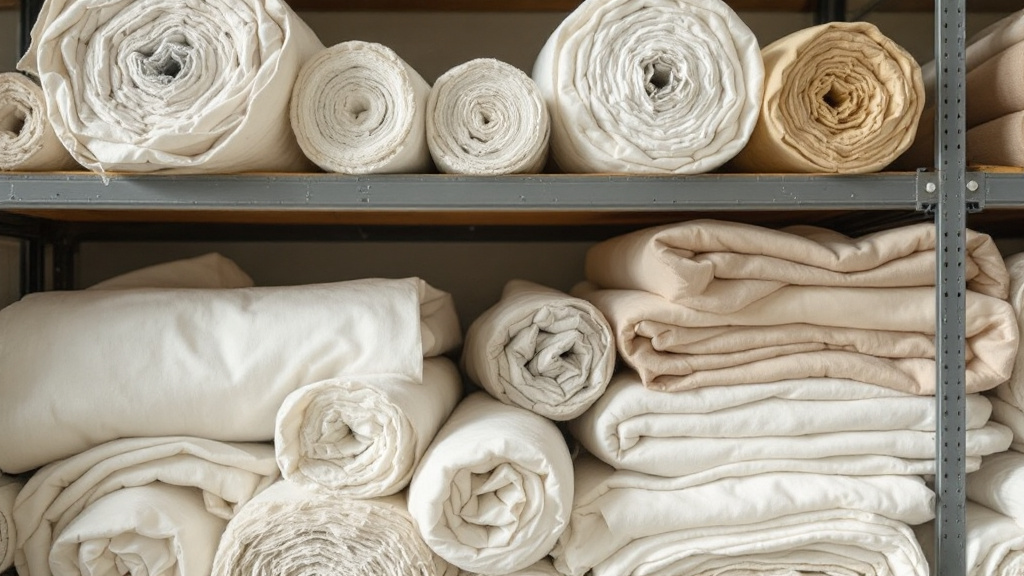
What pre-shrinkage testing actually looks like at the factory level
At the production level, pre-shrinkage isn't a concept. It's a step with a cost attached to it. The standard process is called sanforizing, or compressive shrinkage finishing, and it's applied at the mill before the fabric is sold. When it's done properly, residual shrinkage comes in under 1%. That's acceptable for most retail applications.
But here's what brands often don't realise: sanforizing must be explicitly requested. It adds cost per yard. If your purchase order doesn't specify it, the factory will source whatever is available, and that may or may not be sanforized. The fabric might look fine on the roll. It won't look fine after the first wash.
At our end, pre-shrink testing on raw yardage involves cutting marked test squares, washing them at the care label temperature, and measuring dimensional change before the fabric goes to the cutting table. A standard retail compliance wash test requires a minimum of three wash cycles before bulk production is approved. Most small brands skip this on the sampling round. They approve the sample after one wash, it looks fine, they go to bulk. The problem shows up in customer returns six months later.
The specific blend ratios that create the most post-wash problems
Not all blends are equally problematic. The most stable blends for wash performance tend to be at the extremes: very high cotton content (90/10 or above) or very high polyester content (90/10 or above in the other direction). At those ratios, one fibre dominates the behaviour of the fabric. The blend in the middle is where things get complicated.
The 50/50 and 60/40 cotton-polyester ratios are the most common in mid-market T-shirts and casual basics, and they're also the most likely to show seam distortion and dimensional instability over time. The 80/20 blend is widely used for a more cotton-like hand, but that higher cotton content amplifies the differential shrink problem. Tri-blends adding rayon or viscose into the mix introduce a third variable. Rayon can shrink 3-5% on its own and loses significant strength when wet, which affects how seams hold under stress during washing.
Cotton-spandex blends are their own category. Spandex is heat-sensitive and can lose elasticity permanently if exposed to high dryer temperatures. Brands often spec a cotton-spandex garment with a 140°F dryer care instruction on the label, then discover that their end customer ignores it. You need to design for how your customer will actually wash the garment, not how you'd prefer they wash it.
How pilling starts at the fibre level and what fabric weight and yarn twist have to do with it
Pilling isn't a fabric defect in the conventional sense. It's a mechanical outcome. Short fibres work their way out of the yarn structure, tangle with neighbouring fibres, and form small balls on the surface. The question is how quickly that happens and how visible it becomes.
Yarn construction is the biggest factor that brands almost never specify. Ring-spun cotton yarns have longer fibres that are tightly aligned and twisted together. Open-end spun (also called rotor-spun) yarns are faster and cheaper to produce, but the fibre alignment is less precise and the twist is lower. The result is a softer initial hand but significantly faster pilling. At equivalent fabric weights, a ring-spun jersey will pill far less than an open-end spun jersey. But most tech packs say 'cotton jersey' and nothing more. That means the factory will source whatever is cheapest at the mill, and open-end spun usually wins that contest.
Fabric weight compounds this. Lighter fabrics have less material holding the yarn structure together. A 3.5 oz/sq yd jersey will pill faster than a 5.5 oz/sq yd jersey in the same yarn construction, because there's simply less fabric anchoring the surface fibres. Pilling resistance is formally measured using the Martindale method or the pilling box method, and results are rated on a 1-5 scale. A rating below 3 means visible pilling within 10-15 washes. For anything retailing above $40, that's a product failure, not a quality control issue.
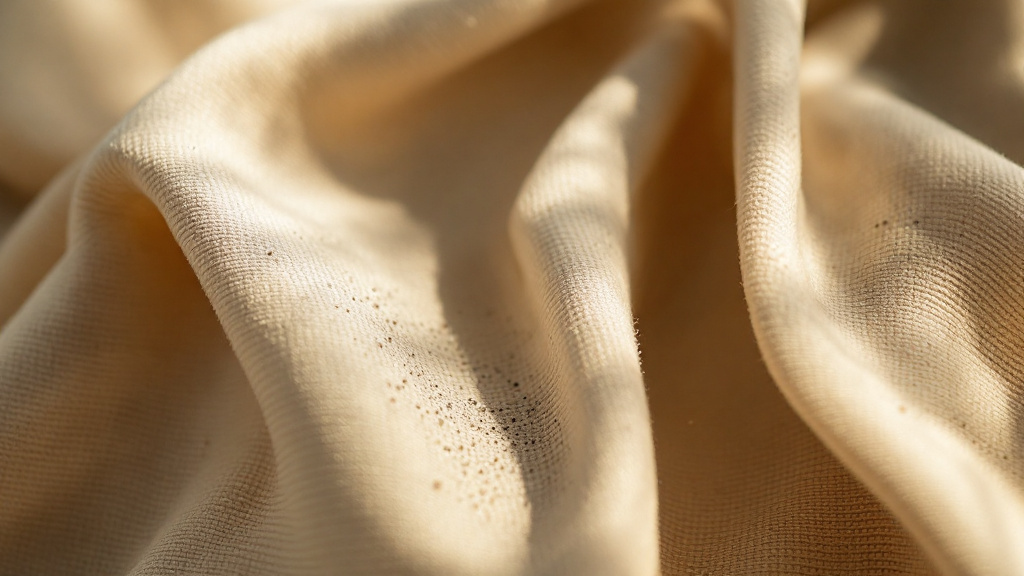
Colour shift after washing: what causes it and what dye methods are more resistant
Colour shift after repeated washing is one of the most common complaints brands bring to us after bulk production. And like differential shrinkage, it's almost always predictable if you know what to look for before the fabric is cut.
The dye class used on cotton makes a significant difference. Reactive dyes form a chemical bond with the cotton fibre, which gives them better wash fastness than vat or direct dyes. But reactive dyes cost more per yard to apply. Without a specific dye class instruction in the tech pack or purchase order, a factory will use whatever is available at the mill. Direct dyes are common in the lower-cost tier of cotton fabrics. After five or six washes, the colour shift can be visible to the naked eye, especially in deeper shades like navy, forest green, or burgundy.
Garment-dyeing adds another layer of complexity. When a garment is constructed first and then dyed as a finished piece, colour development is inherently uneven. Seams, hems, and edges absorb dye differently than open panels. Some brands use this intentionally as a design effect, the vintage or worn-in look. But if a brand spec'd uniform colour and receives garment-dyed product without understanding what garment dyeing does, those seam shadows and edge variations will show up in customer returns labelled as defects. It's not a defect. It's a process outcome. But the brand has to know which outcome they're purchasing.
What brands need to write into their tech pack to prevent post-wash failures at scale
This is where most preventable problems actually originate. Not on the factory floor. In the tech pack, or more precisely, in the gaps in the tech pack. A fabric callout that says '60/40 cotton-poly jersey, 5 oz/sq yd' gives a factory almost no actionable information. Here's what it actually needs to say.
- Blend ratio and fibre content, including exact percentages, not a range
- Yarn construction: ring-spun, open-end spun, combed, carded. If you don't specify, expect open-end spun.
- Fabric weight in oz/sq yd, with an acceptable tolerance (typically plus or minus 0.2 oz/sq yd)
- Pre-shrink requirement: sanforized or compressive shrinkage finished, with residual shrinkage not to exceed a stated percentage
- Dye class: reactive dyes preferred for wash fastness, specified by name where possible
- Dye method: piece-dyed, yarn-dyed, or garment-dyed, with expected colour variation tolerances
- Wash test protocol: minimum number of cycles, wash temperature, drying method, and dimensional tolerance after washing
- Pilling resistance standard: Martindale rating of 3 or above on a 5-point scale, minimum, for garments retailing above $40
Most small brands don't write any of this. Most mid-sized brands write some of it. The ones who never have remake conversations with their factory write all of it.
When to test on a finished garment vs raw yardage, and why the answer changes by style
Testing raw yardage tells you how the fabric behaves. Testing a finished garment tells you how the garment behaves. They're not the same question.
For simple cut-and-sew styles with minimal construction, like a basic jersey T-shirt or a single-panel tote bag, raw yardage wash testing gives you most of what you need to know. The seam stress is low, and fabric shrinkage drives the overall dimensional result.
For garments with more construction elements, think structured waistbands, fused interlinings, woven labels, embroidered graphics, or screen-printed panels, you need to test the finished garment. Each of those elements has its own response to heat and water. A woven waistband on a knit body will shrink at a different rate than the body fabric. A heat-fused interlining can delaminate at temperatures the fashion label's care instruction doesn't mention. Screen-print inks have their own wash-fastness profiles and should be wash-tested as applied, not from a spec sheet.
What a nearshore sampling cycle actually gives you in terms of wash-test turnaround time
This is where geography becomes directly relevant to fabric testing, not as a marketing angle but as a practical matter of calendar management.
A standard sampling round from Procesarte runs 7-14 days from submission to sample in hand. If you need to run a three-cycle wash test on that sample before you approve bulk, add three to five days for testing. You're still inside three weeks from sample request to a wash-tested approval. That gives you an actual iteration cycle. If the fabric shrinks more than your tolerance, or if colour shift shows up on cycle two, you can go back, adjust the spec, and get a revised sample before committing to bulk yardage.
A sampling round from overseas typically runs six to eight weeks from submission to sample receipt. Running the same three-cycle wash test adds another week. By the time you have a tested result and need a revision, you're looking at three to four months before you have a corrected, tested bulk-ready sample. For most brands working on a seasonal calendar, that's the difference between launching on time and missing a window entirely.
There's a less obvious advantage too. When you're buying fabric through a factory that also holds textile supply, as we do here, you can verify the fabric origin, dye lot consistency, and finishing treatment before the cutting room touches it. Dye lot variation between bolts of the same fabric is a common source of colour inconsistency at scale. It's easy to miss if you're specifying fabric through a third party and never seeing the mill documentation. When the fabric and the production are in the same building, that variable gets controlled at the source.
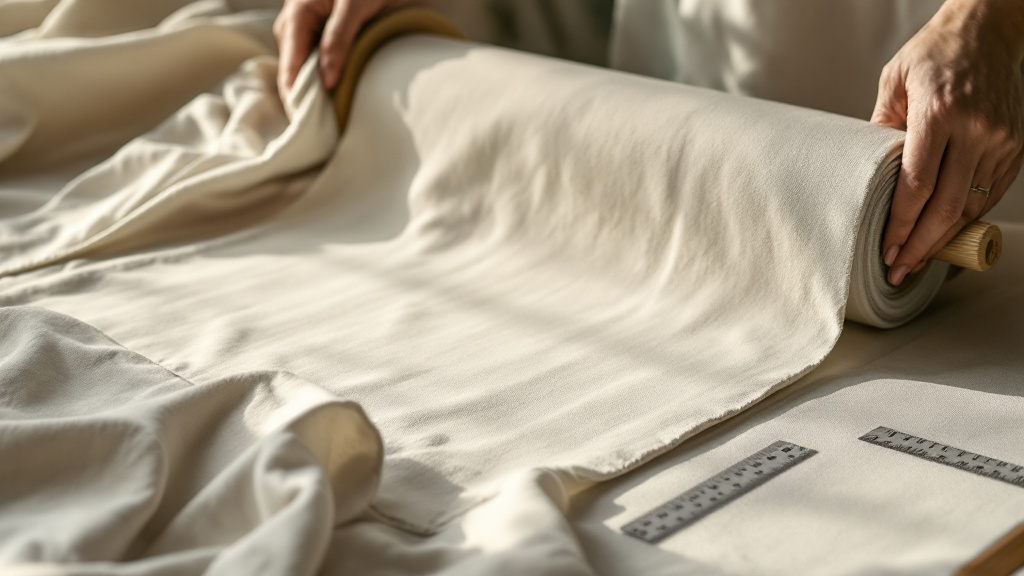
Cotton blends are not difficult to work with. But they're not forgiving of vague specs and untested assumptions either. The brands that have the fewest post-wash problems aren't the ones who spent the most on fabric. They're the ones who asked the right questions before the fabric was cut, got tested samples back fast enough to act on the answers, and wrote what they found into the next purchase order. That's the whole system. It's not complicated. It just has to actually happen.
If you're developing a cotton or cotton-blend style and want wash-testing built into your sampling round before bulk yardage is committed, send your tech pack to Procesarte and we'll tell you exactly what we need from you to control for the variables this post describes.
Get a quote