Production basics
Why Cheap Swimwear Falls Apart After One Season (And What the Fabric Spec Sheet Tells You Before It Does)
Why cheap swimwear loses shape and colour after one season comes down to fabric spec. Here's what the numbers actually tell you before you cut a single panel.
If you've ever bought a swim short that looked great in March and was sagging, fading, and pilling by August, you already understand the problem. Why cheap swimwear loses shape and colour isn't a mystery once you look at what it's made from. The answer is almost always in the fabric spec sheet, and most brands, especially smaller ones placing their first production runs, never read it carefully enough. This post is about what those numbers actually mean and which ones you need to hold the line on.
What 'cheap swimwear' actually means at the fabric level
Cheap swimwear isn't just about price. It's about what compromises were made to hit that price. And those compromises almost always start with the fabric before anything else.
Budget swim fabrics typically use lower-denier yarns, weak elastane construction, and polyester bases with minimal finishing treatments. The elastane content in most budget swimwear sits between 10 and 15%. That sounds like enough until you understand what elastane is actually doing in a stretch fabric under repeated stress.
Elastane provides recovery, meaning the fabric's ability to return to its original shape after being stretched. At 10-12%, you're getting minimum viable stretch. It works fine in the fitting room. After 30 wears and washes combined with UV exposure and saltwater or chlorine, the elastane fibres start to break down and the recovery drops off noticeably. The waistband goes first, then the seat, then the side panels.
This isn't a defect in the traditional sense. The fabric did what a fabric with those specs was always going to do. The problem is that most buyers, including brand founders placing production orders, don't know what specs to ask for.
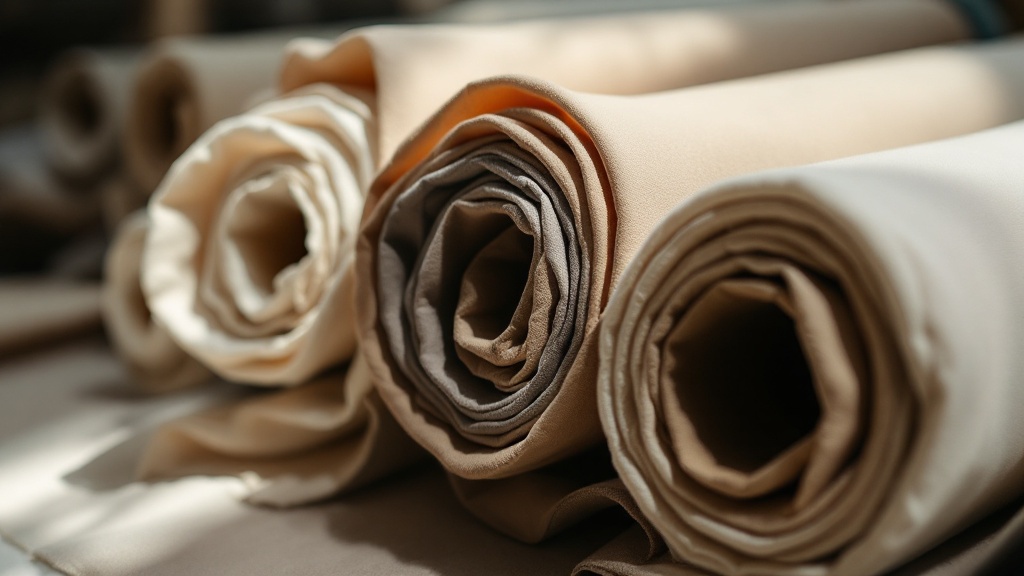
How elastane percentage and yarn quality determine recovery over time
Performance swimwear built to last uses 18-22% elastane, and the fibre quality matters as much as the percentage. Lycra and Creora are the two brand names you'll hear most often from mills that take this seriously. These fibres are engineered to maintain recovery after 200 or more stretch cycles. That's the difference between a garment that holds its shape through a full summer and one that doesn't.
Generic elastane at a lower price point isn't built to the same standard. It may test fine on initial stretch but degrade faster under the combination of UV radiation, chemical exposure, and repeated mechanical stress that any swim garment is going to face in regular use.
When we're reviewing fabric for a swim run here, we ask for the elastane fibre brand specifically. If a mill can't tell you whether their elastane is Lycra, Creora, or a named equivalent, that's worth noting. Generic elastane at a lower cost per metre is one of the most common ways budget fabrics are made, and it's one of the hardest compromises to see until the product is already in the customer's hands.
Why nylon outperforms polyester in chlorine and saltwater environments
This is one of the clearest performance differences in swimwear fabrics and one of the most underappreciated by brands placing their first orders. Polyester is cheaper and easier to source. It's also significantly less resistant to degradation from repeated chlorine and saltwater exposure.
Nylon 6 and nylon 6,6 retain tensile strength up to five times longer than standard polyester equivalents under repeated chlorinated water exposure. That's not a marginal difference. For a swim short that's going to see a pool or ocean every other day through a summer, the base fibre choice has a direct and measurable impact on how long the garment performs.
Nylon also has a softer hand feel against skin, which matters for comfort, and it takes dye more consistently, which matters for colour retention. Polyester has its place in swimwear, particularly in printed fabrics where sublimation is involved, but if you're building a solid-colour or yarn-dyed swim product intended to retail above $80 and last multiple seasons, nylon-elastane should be the default conversation with your mill.
Where polyester earns its keep is specifically in sublimation printing. Sublimation bonds to polyester at a molecular level and the colour output is excellent. But even there, the print quality depends heavily on doing the process correctly, which we'll get to shortly.
What colour fastness ratings mean and how factories test for them before cutting
Colour fastness is the measurement of how well a fabric holds its colour under specific conditions. For swimwear, the most relevant standard is ISO 105-E02, which tests colour fastness to water exposure. The scale runs from 1 to 5, where 5 is the best possible result.
A rating below 4 on this scale is a red flag for any swimwear fabric intended for saltwater or pool use. It means the dye is likely to bleed, fade, or transfer under normal conditions. That's not an edge case problem. That's a problem that shows up in the first few wears and generates customer complaints and returns.
Fabric suppliers provide certifications and test results, but supplier documentation isn't the same as factory verification. At Procesarte, before we cut any production run, fabric inspection includes checking lot consistency, doing stretch and recovery assessments by hand across multiple points in the roll, and running a basic colour fastness check. We do this regardless of what the supplier's certification says. Lot variation is real and certifications are issued per batch, not per delivery.
Brands should ask their factory specifically what pre-cut inspection looks like. If the answer is that they trust the supplier's paperwork, that's a workflow worth understanding before production starts.
The role of fabric weight in shape retention and why heavier isn't always better
Fabric weight, measured in grams per square metre (gsm), is one of those numbers that sounds straightforward but isn't. More weight should mean more fabric, more durability, right? Not necessarily.
A 220gsm fabric using low-denier yarn with weak elastane construction will pill and lose shape faster than a 180gsm fabric using high-tenacity nylon with properly integrated elastane. The gsm tells you how much material is there. It doesn't tell you whether that material is doing its job well.
For swim applications, the relevant question isn't just how heavy the fabric is but how the weight is distributed between the base fibre and the elastane, how the fabric is knitted, and what the recovery rate is after repeated stretch cycles. Two fabrics at the same weight can perform completely differently under the same conditions.
200gsm is often cited as a minimum for swim fabric and that's a reasonable starting point. But it should be the beginning of the conversation, not the end of it. Ask for the fibre breakdown, the denier of the yarn, and the elastane content alongside the weight.
How lining construction affects both feel and durability across wears and washes
Lining is one of the most overlooked specs in a swim short, and it's one of the first things customers notice when it fails. Budget swim shorts typically use an unstructured polyester mesh liner at 80gsm or below. It's light, it's cheap, and it breaks down quickly. After 10-15 wears, it starts to stretch out, bunch, and lose its structure.
Better swim shorts use a 4-way stretch nylon liner at 110-130gsm with a reinforced gusset seam. The weight gives the liner enough body to hold its shape, the nylon handles moisture and chlorine well, and the reinforced gusset is where the construction actually holds up under repeated stress.
The gusset seam in particular is a failure point that's easy to ignore at the spec stage but shows up reliably in customer returns. If the liner is sewn with a single stitch at the gusset, it's going to open up. It should be reinforced with a bartack or a double-stitched seam at minimum.
There's also the draw cord and waistband elastic to consider. These are parts of the garment that brands rarely spec carefully, but both are common failure points. Low-grade braided elastic loses tension after UV and salt exposure, typically within one season of regular use. It's worth specifying the elastic type, grade, and minimum tension retention in your tech pack just as carefully as you spec the outer fabric.
Sublimation printing on swim fabric: what goes wrong and what the temperature has to do with it
Dye sublimation is the standard for printed swimwear and it can produce genuinely excellent, lasting colour, but only if it's done correctly. The process works by converting solid dye into a gas under heat and pressure, bonding it to the polyester fibres at a molecular level. The problem is that temperature matters a great deal.
Sublimation done below the correct temperature threshold, typically 180-210°C depending on the substrate, produces prints that haven't fully bonded. They look fine initially. After 15-20 wash cycles, the colour starts to fade noticeably. Proper sublimation on quality polyester fabric, done at the correct temperature and dwell time, should hold colour through 50 or more washes without significant degradation.
The substrate matters too. You can't sublimate onto nylon effectively, which is why printed swim fabric is almost always polyester-based. The trade-off is that polyester is less chlorine-resistant than nylon, so brands building printed swim products need to account for this in their overall durability expectations and how they communicate care instructions to customers.
What a responsible fabric spec sheet looks like for a swimwear run intended to retail above $80
If you're retailing swim at $80 or above and you want the garment to perform well enough to justify that price, the fabric spec sheet needs to cover specific ground. Here's what that should include as a minimum.
- Fibre content with named elastane brand (Lycra, Creora, or equivalent) and elastane percentage of 18-22% minimum
- Fabric weight in gsm alongside yarn denier for both the base fibre and elastane
- ISO 105-E02 colour fastness rating of 4 or above for the outer fabric
- Nylon 6 or nylon 6,6 base for solid-colour or yarn-dyed styles; quality polyester base for sublimation-printed styles
- Fabric construction type (knit direction, stretch percentage in both directions)
- OEKO-TEX Standard 100 certification for brands retailing above $100 USD, both for dye quality correlation and sustainability positioning
- Lining spec: 4-way stretch nylon at 110-130gsm minimum with reinforced gusset seam
- Elastic spec for waistband: UV- and salt-resistant grade with stated tension retention rating
- Draw cord material and closure type
Brands retailing above $100 are increasingly requesting OEKO-TEX Standard 100 certified fabrics. The sustainability angle is part of it, but the more practical reason is that the certification process correlates with better dye and finish quality. A mill that has gone through OEKO-TEX certification is a mill that has thought carefully about its chemistry. That tends to show up in performance.
What boutique swim brands should be asking their factory before approving a fabric for production
Most small brand founders don't know what questions to ask at the fabric approval stage. That's not a criticism, it's just how the industry works. You're focused on design, marketing, and logistics. The factory should be guiding you on fabric quality, but not all factories take that responsibility seriously.
Here's what's worth asking directly before you approve a fabric for production.
- What's the elastane content and who makes the elastane fibre? Can you show me the mill spec sheet?
- What's the ISO 105-E02 colour fastness rating for this fabric, and has your team checked it independently on the current lot?
- Is this fabric OEKO-TEX Standard 100 certified, and can I see the certificate?
- How does your pre-cut inspection process work? What do you check beyond what the supplier certifies?
- What's the lining you're proposing, what's its gsm, and how is the gusset seam constructed?
- What elastic grade are you using in the waistband and what's its UV and salt exposure rating?
- If we're doing sublimation, what temperature and dwell time does your process use, and can you share wash-testing results on a strike-off before we commit to the run?
A factory that can answer these questions specifically and without hesitation is a factory that understands what it's making. Vague answers or deflection at this stage is useful information too.
Getting specific on fabric before production starts isn't being difficult. It's being professional. And it's the difference between a swim line that builds a reputation for quality and one that quietly disappears after a single season because the returns and complaints weren't worth managing.
If you're planning a swim run and want to talk through fabric specs, minimum quantities, and what a production timeline actually looks like from sample to finished units, get in touch with the team at Procesarte and we'll give you straight answers.
Get a quote