Production basics
What Fabric Weight Actually Does to Your Garment (And Why Getting It Wrong Costs You at Scale)
Fabric weight for garment production is one decision most brands get wrong before sampling. Here's what oz/sq yd actually costs you at scale.
Fabric weight for garment production is one of those decisions that sounds technical until you're staring at a 1,000-unit cut where the fabric arrived 0.8 oz/sq yd heavier than sampled and your yield is off by six percent. Suddenly it's not technical anymore. It's $1,200 you didn't budget for and a conversation nobody wants to have. This post covers what fabric weight actually does to your garment, your pattern, your cost per unit, and your seasonal sell-through. We'll be specific about the numbers, because vague guidance is how brands end up in that conversation.
What fabric weight actually measures and why oz/sq yd is the number that matters
Fabric weight is the mass of one square yard of fabric. That's it. Expressed in ounces per square yard (oz/sq yd), it's a single number that tells you how dense, how heavy, and in most cases how stiff or drapey a fabric will behave. It doesn't tell you fibre content, weave structure, or finish. But it correlates strongly with all of them, and it's the number your factory will use to set up machinery, price CMT, and calculate yield.
The reason oz/sq yd matters more than any other weight measurement is that it normalises across fabric widths. A roll that's 58 inches wide and a roll that's 72 inches wide can't be compared by roll weight alone. But oz/sq yd gives you an apples-to-apples number regardless of how the fabric is milled. Every serious spec sheet, tech pack, and purchase order should list it. If yours doesn't, you're leaving a major variable undefined.
How fabric weight affects drape, structure, and silhouette across garment categories
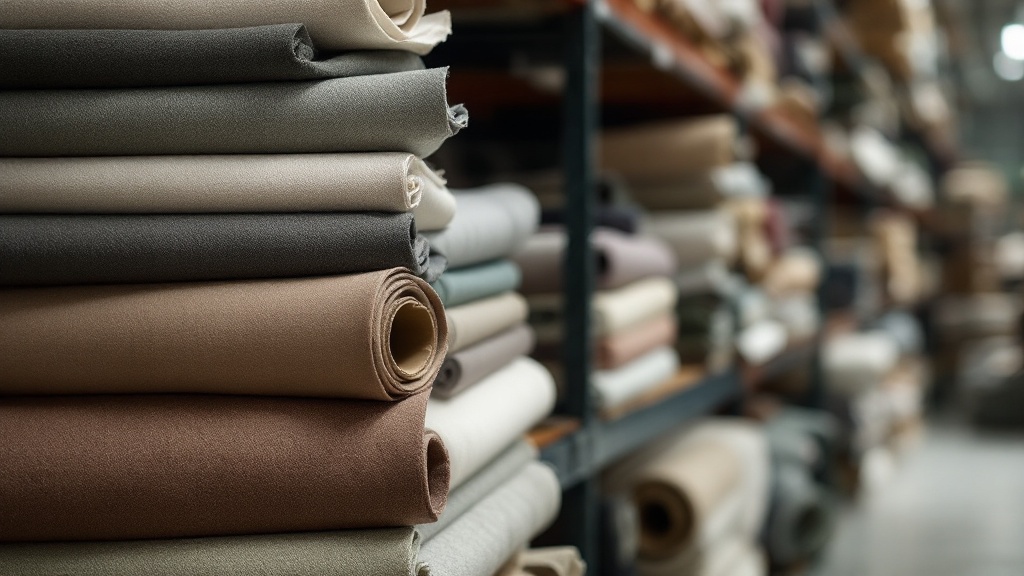
This is where the physics of fabric actually shows up in the finished garment. A lightweight jersey at 3.5 to 5.5 oz/sq yd moves with the body. It drapes. It's the right territory for draped silhouettes, T-shirts, and garments made for warm climates where you want the fabric to skim rather than hold shape. Push that number up to 6.5 to 8.0 oz/sq yd and you're in premium basics and sweatshirt territory. The hand feels substantial. The garment holds its silhouette. Shoulder seams sit where you put them.
The problem is when brands design for one behaviour and specify the other. A wrap dress cut in a 7.0 oz/sq yd jersey doesn't flow the way the sketch assumes. A boxy crewneck in a 4.0 oz/sq yd fleece looks collapsed on the hanger. Neither of those failures is obvious until you've made a sample in the actual fabric. And if you've been working from swatches rather than sewn samples, you've probably been fooling yourself about how the garment will actually behave.
Swimwear adds another layer to this. Four-way stretch nylon-elastane for swimwear generally specs between 6.5 and 8.5 oz/sq yd. Brands that try to save money by dropping to 5.0 oz/sq yd see the consequences within a season: shape loss after a few wears, poor recovery after chlorine exposure, and garments that look used before they should. The fabric weight is doing structural work in swimwear. It's not a cosmetic variable.
The seasonal trap: why the wrong weight kills sell-through before the garment hits the floor
Weight reads as season. Consumers feel it before they consciously think about it, and buyers know it immediately. Woven shirting fabrics for warm-weather retail fall between 2.8 and 4.2 oz/sq yd. That's the range that reads as spring and summer in U.S. and Caribbean markets. Cross 4.5 oz/sq yd and the hand feel shifts. Buyers feel it as an autumn-weight shirt, regardless of what the colour story says. If you're trying to place a warm-weather shirt at a boutique in April and the fabric reads heavy, the buyer passes. The garment was wrong before it left the factory.
This is a particularly expensive mistake because it doesn't show up as a quality failure. The garment is sewn correctly. The construction is fine. But the sell-through is poor because the fabric weight is out of season, and by the time the brand figures that out, the production run is sitting in a warehouse. Getting weight right isn't just a manufacturing question. It's a merchandising decision that has to be made before you cut a single yard.
What happens to your pattern and yield calculations when fabric weight shifts between runs
Here's the one that causes the most financial damage and gets the least attention. When fabric weight changes, even slightly, yield changes. A shift of 1.0 oz/sq yd across a 500-unit run can increase fabric yardage requirements by 8 to 12 percent depending on pattern complexity. That's because heavier fabric behaves differently under the knife. Shrinkage in pre-washing is different. Stretch and recovery during spreading affect how tightly markers can be laid. The math on your original cut plan stops working.
The specific scenario that catches brands by surprise is a fabric substitution between the sample and bulk production runs. You sampled in one fabric, approved the fit, signed off on the tech pack, and submitted the bulk order. But the fabric that arrives for bulk is 0.8 oz/sq yd heavier than what you sampled. Maybe the mill had a run variation. Maybe a supplier substituted a similar style. The factory catches it at spreading, or sometimes not until the cut is done and the yardage doesn't reconcile. On a 1,000-unit run at $4.50 per yard, a 5 to 7 percent yield loss across the cut translates to $900 to $1,300 in unplanned fabric cost, before any labour implications.
And that's a modest run. Scale this to 5,000 units and the numbers are a different conversation entirely.
Cost per unit implications: heavier fabric, more yardage, higher CMT time
Fabric cost is the obvious one. More oz/sq yd typically means more material per yard, higher price per yard, and more yardage consumed per unit because heavier fabric often requires more ease and handling. But the CMT cost is the one brands underestimate.
Heavier fabrics are physically harder to sew. Feed dogs need to be adjusted. Presser foot tension changes. Needle selection matters more. Seam bulk increases. A fabric that jumps from 5.0 to 7.5 oz/sq yd can add 4 to 8 minutes of operator time per piece depending on seam count and garment category. In a factory setting, operator minutes are money. Factories recover that cost in CMT pricing, either by quoting higher upfront or by adjusting on the back end if the fabric wasn't what was specified. Neither outcome is pleasant for the brand.
The honest way to think about it: every time you change fabric weight, you need to go back and re-cost the unit. Not adjust. Re-cost. Material cost, yardage consumption, CMT time, and trim implications all shift. If you're negotiating with a factory on a fixed CMT rate and then substituting a heavier fabric, you're creating a gap between what the factory priced and what they're actually producing.
Where brands most commonly get it wrong during sampling versus bulk production
The most common failure is sampling in one fabric and producing in another without formally re-approving. It happens constantly. A brand samples in a 5.5 oz/sq yd jersey because that's what the factory had in stock for sampling. The bulk fabric arrives at 6.2 oz/sq yd because the supplier's standard stock runs heavier. Nobody flags it because it looks similar. The cut goes ahead and the fit is different from the approved sample, the yield is off, and the brand is confused about why.
The second failure is not listing weight in the tech pack at all. Brands list fabric content, colour, sometimes weave structure. But if oz/sq yd isn't specified, the factory or fabric supplier makes the call, and they're making it based on availability and what they think is close enough. 'Close enough' in fabric weight is not close enough in production.
Third is assuming that because a swatch feels right, the sewn garment will behave correctly. Swatches are flat. Garments have seams, ease, movement, and structure. A fabric that feels soft and appropriate as a swatch can behave completely differently once it's cut and sewn into a silhouette that depends on a specific weight to hold its shape.
How to specify fabric weight correctly in a tech pack so the factory doesn't make the call for you
This is straightforward, and there's no excuse for skipping it. Your tech pack fabric page should include:
- Fabric weight in oz/sq yd, with a tolerance range (typically plus or minus 0.3 oz/sq yd for most categories)
- Fibre content and blend percentages
- Fabric construction (jersey, fleece, woven poplin, etc.)
- Minimum fabric width (usually expressed in inches)
- Finish specifications if relevant (enzyme wash, silicone finish, etc.)
- A physical swatch or lab dip reference attached to the tech pack
The tolerance range is the piece most brands forget. Specifying exactly 6.0 oz/sq yd is fine, but fabrics vary in production. Giving the factory a range of 5.7 to 6.3 oz/sq yd tells them what's acceptable for bulk without leaving everything undefined. Anything outside that range should trigger a hold for your review before the cut starts.
If you're buying your own fabric and supplying it to the factory, ask for a mill test report with the shipment. It should confirm oz/sq yd for the actual lot that shipped, not the mill's nominal spec. Lot-to-lot variation is real, and nominal specs are not guarantees.
What nearshore sampling turnaround means for catching weight problems before a full run
This is where the geography of production actually matters to your bottom line. A 7 to 14 day sample turnaround means you can have a physical garment in your hands, sewn in the actual bulk fabric, in under two weeks. You can wash-test it. You can feel the hand. You can check the drape against your original design intent. If the fabric weight is wrong, you find out before you've committed to a full run.
Brands sourcing from suppliers with 12 to 16 week lead times and no practical sample review process don't get that window. By the time the shipment arrives, the decision is made, the fabric is cut, and the units are packed. If the weight was substituted somewhere in the supply chain, you find out when you open the boxes. That's when a fixable problem becomes a $15,000 problem, or worse.
The 4 to 6 week production lead time for a full run compresses the entire risk window. You sample, review, approve, and produce. The feedback loop is tight enough that weight deviations get caught at the sample stage, not after a bulk cut. That's not a small advantage. For brands who've been burned by weight substitutions on distant production runs, it's the specific reason they move production closer.

Fabric weight is one of the few decisions in garment production that touches everything simultaneously: drape, structure, seasonality, yield, CMT cost, and landed cost. Get it right in the tech pack, confirm it at the sample stage, and hold the supplier to it at bulk. Those three steps don't require complicated systems. They require treating oz/sq yd as a spec, not an afterthought.
If you're preparing a new style for production and want to confirm fabric weight specs before cutting bulk, send your tech pack to Procesarte and we'll review it with you before samples go into production.
Get a quote