Production basics
What Actually Happens During a Garment Factory Audit (And Why Most Brands Aren't Ready for One)
A practical breakdown of what happens during a garment factory audit, what auditors check, why brands fail, and how to prepare before a retailer asks.
If you've never been through a garment factory audit, the request can feel like it comes out of nowhere. A retailer sends over a vendor compliance packet, there's a line item about audit requirements, and suddenly you're trying to figure out what happens during a garment factory audit and whether your factory is even close to ready. The short answer is that most brands aren't. Not because their factory is doing anything wrong, but because nobody bothered to prepare the paperwork.
Why brands get audited in the first place, and who is actually asking for it
The audit request almost always comes from a retailer, not from you. When a mid-size or larger U.S. retailer agrees to carry your brand, they're not just buying your product. They're taking on reputational and legal exposure from everything upstream in your supply chain. An audit is how they verify that the factory making your goods meets a minimum standard they've already committed to publicly.
The pressure driving this has been building for years. Legislation like the Uyghur Forced Labor Prevention Act, heightened CPSC scrutiny on imported textiles, and major retailers' published sustainability commitments have all made supply chain auditing non-negotiable at scale. Even some independent boutiques with volume ambitions are starting to ask.
Sometimes the push comes from a brand's own investors or a licensing partner. Sometimes it's a precondition for a new purchase order category, say, moving from accessories into apparel. But most of the time, the sequence is simple: you land a meaningful wholesale account, the buyer's vendor compliance team sends you a checklist, and audit certification is on it.
The four main types of audit and what each one covers
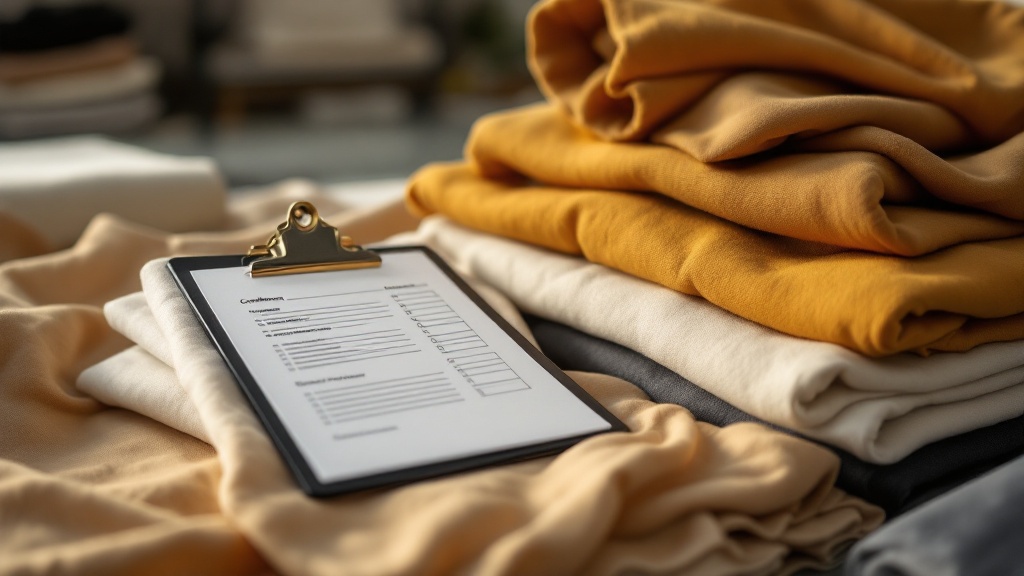
This is where brands most commonly get confused, and the confusion wastes time and money. The retailer says 'we need an audit' but doesn't always specify which kind. There are four main audit types in U.S. retail supply chains, and they're checking for completely different things.
- Social compliance audits (SMETA, WRAP, SA8000): These examine labour practices, working hours, wages, freedom of association, child labour, health and safety, and business ethics. SMETA (Sedex Members Ethical Trade Audit) is the most widely requested standard by U.S. and European buyers as of 2025-2026. It runs either a 2-pillar version (labour and health and safety) or a 4-pillar version that adds environment and business ethics.
- Quality management audits (ISO 9001): These assess whether the factory has documented, repeatable processes for quality control across production. It's less about the product itself and more about the system used to make consistent product.
- Product safety audits (CPSC requirements for textiles): These verify compliance with U.S. Consumer Product Safety Commission standards, covering things like flammability, restricted substances, and labelling for textile goods sold in the U.S. market.
- Environmental and chemical audits (GOTS, OEKO-TEX): GOTS (Global Organic Textile Standard) covers organic fibre certification across the supply chain. OEKO-TEX STANDARD 100 tests finished textiles and components for harmful substances. These are increasingly requested by U.S. specialty retailers and DTC brands, sometimes at the fabric level, separate from any social compliance audit.
Most wholesale requests from U.S. department stores and specialty chains are asking for SMETA or WRAP. WRAP (Worldwide Responsible Accredited Production) covers 12 principles including prohibition of forced labour, no child labour, safe working conditions, and legal compliance with customs and import/export regulations. It's particularly common in the Western Hemisphere manufacturing base. Know which one your buyer actually wants before you schedule anything.
What auditors spend the most time on inside the factory floor
People assume auditors walk the floor looking for obvious violations, unsafe equipment or children at sewing machines. That does happen, but it's not where audits are won or lost. The factory floor inspection is actually the faster part of the process.
Auditors do a physical walk to check fire exits, emergency lighting, extinguisher placement and service dates, machine guarding, ventilation, and first aid provisions. They'll check that the building isn't locked from the inside, that exit signs are lit, and that the layout doesn't block egress paths. They'll look at chemical storage, specifically whether hazardous materials are labelled, separated, and covered by current safety data sheets. They check whether workers are wearing appropriate protective equipment in areas where it's required.
They also conduct worker interviews, usually a small sample pulled privately from the line. These interviews ask about working hours, overtime voluntariness, pay frequency, whether workers feel free to raise complaints, and whether they know the factory's grievance mechanism. A well-run factory with good conditions still fails if workers can't describe the grievance process because nobody ever explained it to them.
Announced audits give you time to prepare. Unannounced audits don't. Major retailers including Target and Walmart have been shifting toward unannounced or semi-announced audits specifically to catch daily operating conditions rather than prepared ones. If your retailer hasn't specified, assume the harder version is possible.
The documentation failures that cause brands to fail audits on a technicality
This is the section that should make you nervous, because it's where the most preventable failures happen. You can have a clean, well-run factory with fair wages and nobody working excessive hours, and still fail an audit because of missing or incomplete records.
The most common documentation non-conformances include missing or incomplete payroll records, incomplete fire drill logs (no date, no headcount, no drill leader signature), unsigned or undated worker contracts, outdated chemical safety data sheets for substances used in production, and training logs that exist on paper but don't have worker signatures confirming attendance. Any one of these can generate a non-conformance finding.
It's not that the factory didn't do the fire drill. It's that nobody filled out the log consistently, and now there's a six-month gap in the record. Auditors have no way to confirm what they can't document. From their perspective, if it's not written down, it didn't happen.
What a corrective action report actually demands from you and your factory
When an audit produces findings, the auditor issues a report classifying each issue as a critical non-conformance (CNC), major non-conformance, or minor non-conformance. CNCs are the ones that hurt most. A single critical finding, such as evidence of forced labour, falsified records, or a blocked fire exit, can freeze a purchase order immediately.
Most major U.S. retailers require a corrective action plan (CAP) with documented evidence of remediation within 30 to 60 days before releasing the order. That's not 30 to 60 days to fix the problem. That's 30 to 60 days to fix the problem and produce written proof that it's fixed, often including photos, updated records, re-training logs, and sometimes a follow-up audit visit.
A CAP isn't just a promise letter. Each finding requires a root cause statement, a corrective action taken, a responsible party named, a completion date, and evidence of closure. The retailer's compliance team reviews each item. If they're not satisfied, the CAP gets bounced back. Meanwhile, your purchase order is sitting on hold.
This is why proactive auditing matters. A brand that schedules its own audit before a retailer requests one has time to identify issues, implement fixes, and complete a clean CAP before anything is at stake. A brand scrambling to pass an audit in six weeks because a $200,000 purchase order is on hold is in a much harder position.

How audit results affect retailer purchase orders and vendor approval
Retailer vendor compliance programmes typically classify factories into tiers based on audit outcomes. A factory with a clean pass and no findings, or only minor findings with documented closure, usually gets approved status, sometimes valid for one or two years before re-audit is required. A factory with major findings gets conditional approval, meaning orders can proceed but a follow-up audit is required within a defined window.
A factory with critical non-conformances gets suspended from the approved vendor list until the CAP is closed and verified. In some retailer programmes, two failed audits within a certain period can result in permanent delisting. That's a significant commercial outcome for a brand.
Audit results also travel. Sedex, the platform behind SMETA audits, maintains a shared database where brands and retailers can view audit history. A factory's past findings aren't automatically private. Buyers evaluating your factory as a new source may be looking at an audit report from a previous brand's order. This cuts both ways. A clean audit history is a real commercial asset.
What Colombian factories are typically audited against for U.S. retail compliance
Colombia's labour law framework under the Código Sustantivo del Trabajo aligns closely with ILO core conventions. In practice, this means Colombian factories audited for SMETA social compliance typically score well on freedom of association, working hours limits, and minimum wage compliance. These aren't areas where Colombian factories routinely struggle, which isn't true of every sourcing region.
For brands importing into the U.S. under the Colombia-U.S. Trade Promotion Agreement (the CTPA), duty-free entry is conditional on meeting rules of origin and compliance requirements. Customs and trade compliance is one of the 12 WRAP principles, and factories with organised documentation of their import/export practices, tariff classification records, and country of origin declarations are in a much better position on WRAP audits.
OEKO-TEX STANDARD 100 certification applies to fabric and finished goods, not just factory practices. Brands working with Colombian mills or finishing facilities can pursue OEKO-TEX at the material level. This is increasingly relevant for U.S. specialty retailers and DTC brands that want to make claims about harmful substance testing on their product, not just their supplier.
Audit costs are real and worth planning for. A basic SMETA 2-pillar audit at a mid-size factory typically runs between $800 and $2,000 USD depending on factory size, auditor firm, and scope. A 4-pillar audit, or one combined with an environmental standard, will run higher. Add travel and accommodation for the auditor if your factory isn't in a major city. These are known costs. Build them into your production budget rather than treating them as a surprise.
How to prepare your factory relationship before an audit request lands
The brands that pass audits smoothly are the ones who asked about audit readiness before they placed their first order. Not after a retailer asked for it, and not after a purchase order was on hold.
Start with a direct conversation with your factory's management. Ask whether they've been audited before, under which standard, and when. Ask to see the last audit report and CAP. A factory that's been through a SMETA audit in the past two years and closed all findings is a very different proposition from one that's never been audited at all.
If you're sourcing on a full-package basis, get clarity on who owns which part of the audit process. Who is responsible for maintaining payroll records, fire drill logs, chemical data sheets, and training records? Who coordinates with the auditing body? Who receives the report and manages the CAP response? These responsibilities need to be defined in writing, not assumed.
Consider scheduling a pre-audit or gap assessment with an accredited auditing firm before going for full certification. A gap assessment typically costs less than a full audit and identifies the specific documentation or process gaps you need to fix. It's effectively a practice run with written output you can act on.
And if you know which retailer you're targeting, get their vendor compliance manual before you're too far into the production relationship. Most major retailers publish these or provide them to new vendor applicants. The audit standard they require, the timeline, the CAP format, the approval criteria, it's all in there. Read it before the request lands, not after.
If you're sourcing from Procesarte and need to understand our current audit status, documentation systems, or how to prepare for a retailer compliance request, reach out to our production team directly and we'll walk you through where we stand.
Get a quote