Design & development
What Actually Goes Into a Luxury Swim Short (And Why the Price Difference Is Justified in the Fabric Room)
What separates a $180 swim short from a $40 one isn't branding. It's fabric, lining, hardware, and construction. A luxury swim shorts manufacturer explains it all.
If you're building a swim line for the resort and beach club market, you've probably noticed that the difference between a $40 short and a $180 short isn't obvious on a hanger. It becomes obvious in the water, after three weeks of salt and sun, when one garment still looks pressed and the other has gone limp and pilled. Working with a serious luxury swim shorts manufacturer means understanding exactly which decisions in the fabric room create that gap, and which corners you cannot afford to cut if you want retail credibility at the top of the market.
What the beach club and resort swim market actually requires from a garment
Beach clubs in Ibiza, Mykonos, and Miami are not selling swimwear. They're selling an aesthetic. The garments on their racks or in their boutiques are part of the environment, and a swim short that pills, fades, or loses its shape after one season is a brand association problem, not just a product failure. Buyers at these venues evaluate product differently from a typical department store buyer.
The price points bear this out. Premium swim shorts in this segment typically retail between $120 and $250. At that price, a customer expects a garment that holds its shape wet and dry, retains print colour through a full summer of sun and saltwater, and feels structured without being stiff. None of that happens by accident. It happens because of specific decisions made before a single seam is sewn.
What the market actually requires, practically speaking, is performance durability packaged as luxury. The garment needs to look expensive because it performs well, not just because the label says so. That means fabric composition, lining, hardware, and print method all have to work together, and any one of them being underspecified will show.
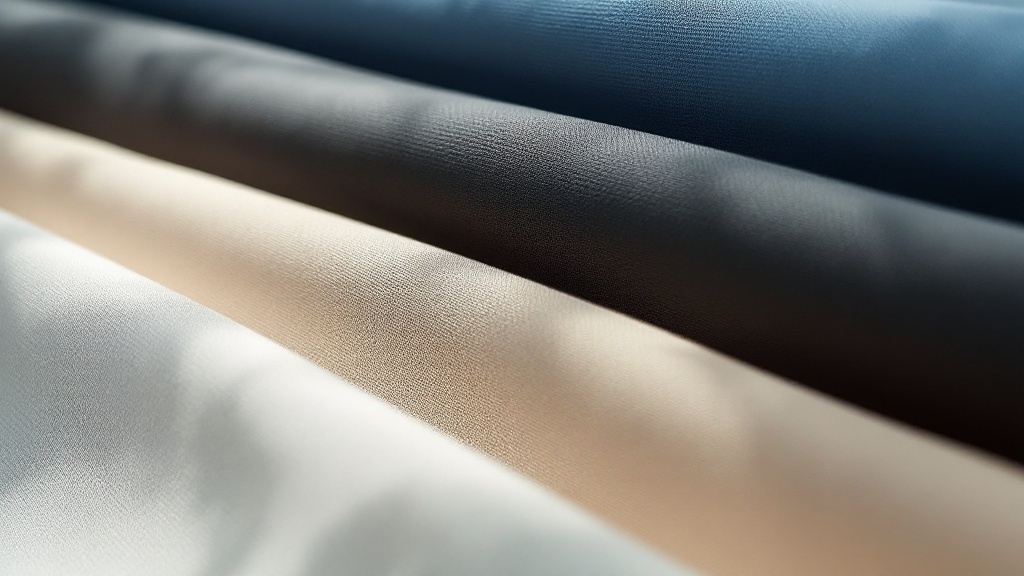
Fabric specs that matter: nylon content, elastane recovery, and oz/sq yd for swim
The standard blend for high-recovery luxury swimwear is Nylon 6,6 with 18 to 22% elastane. That's not arbitrary. Nylon 6,6 has better abrasion resistance and UV stability than standard nylon 6, and the elastane percentage in that range gives you meaningful shape recovery without sacrificing hand feel. Cheaper alternatives drop to 10 to 12% elastane or substitute a polyester base, and they lose shape measurably faster, typically after 30-plus exposures to saltwater and UV.
Chlorine resistance matters too, especially for a garment that's going to see pool use. A quality 82/18 nylon-elastane fabric should retain at least 90% of its original stretch after 200 hours of chlorinated water exposure under standard testing conditions. If your fabric supplier can't tell you their chlorine resistance test results, that's a problem. Chlorine degrades elastane fibre at the molecular level; there's no garment construction technique that compensates for a fabric that fails this test.
Fabric weight is the other number brands often overlook. For a structured swim short, the right range is 5.5 to 7.5 oz per square yard. Go lighter and the fabric feels soft in hand at the trade show, which is seductive, but it loses shape in water and drapes poorly when wet. That's immediately visible on the body, and it's the kind of thing a beach club customer notices on day one.
Why lining choice is where most mid-tier swim shorts fall apart
Mesh lining is one of the most commonly downgraded components in swim short production. It's invisible at point of sale, it's easy to substitute in a cost negotiation, and the consequences don't show up until the customer has already bought the garment and worn it a few times. That's exactly why it matters so much.
A 100% polyester mesh lining in a garment retailing at $150 or more is a credibility problem. Polyester lining chafes. It degrades faster than the shell fabric, particularly at the seam attachment points, and it doesn't move with the body the way a nylon-blend lining does. For a brand selling into resort or beach club retail, the result is returns, complaints, and the kind of word-of-mouth damage that's hard to quantify but easy to feel in reorder rates.
A nylon-blend mesh lining, matched in stretch and recovery to the shell fabric, costs more. Not dramatically more, but more. That cost difference is entirely justified when you consider the alternative. The lining is a functional component, not a hidden one, and the people buying $200 swim shorts often know exactly what to look for.
Waistband construction, drawcord hardware, and why cheap elastic kills the product
A beach club buyer evaluating a swim short line will pull the waistband elastic before they look at anything else. It's the fastest quality test there is. A quality waistband should use no less than 1.5 inches of flat elastic, and the attachment seam should run at a minimum of 40 stitches per inch. Anything less and the waistband starts to roll and distort after a few washes, which ruins the silhouette and signals cheap construction to anyone who knows what they're looking at.
The elastic compound itself matters. Chlorine-resistant elastic is not a premium option in this market; it's a baseline requirement. Standard elastic degrades in chlorinated water, losing its recovery and starting to fray at the edges. The difference in cost per unit is small. The difference in product longevity is significant.
Drawcord hardware is a visible quality signal at retail. Solid brass, coated alloy, or quality resin-tipped cord ends read as intentional and premium. Cheap metal hardware corrodes in saltwater, often within a single season. That's not a failure the customer will accept quietly, and it's one of the most preventable problems in the category. Specify your hardware. Source it properly. Don't let the trim package be an afterthought.

Colour fastness requirements for saltwater, chlorine, and sunscreen exposure
Colour fastness in swimwear is tested against three specific stressors: saltwater, chlorinated water, and sunscreen. Most brands test for one or two. The beach club market exposes garments to all three simultaneously, often in one afternoon. A swim short that fades or bleeds in combined exposure conditions fails the market even if it passes individual tests.
Sunscreen contact is particularly aggressive. The chemical compounds in high-SPF sunscreens, especially oxybenzone and avobenzone, interact with reactive dyes and can cause rapid, localised colour loss. This shows up as uneven fading rather than overall lightening, and it's visually jarring on a printed or brightly coloured garment. Brands building at the luxury price point need to be asking their fabric and dye suppliers specific questions about sunscreen resistance, not assuming it's covered by general wash fastness results.
Print method decisions: sublimation versus screen printing for premium swimwear fabrics
Dye sublimation is the standard print method for luxury swim shorts with all-over or complex print designs. On a nylon-elastane shell fabric, it produces sharp, saturated colour that's part of the fibre, not sitting on top of it. But it requires precise execution. The temperature window for sublimation on nylon-elastane blends is narrow, typically 375 to 400 degrees Fahrenheit. Go too hot and you get colour migration into the elastane fibres, which causes pattern distortion that becomes visible after the first wash.
The fabric also needs to be pretreated for sublimation. Not all nylon-elastane fabrics are, and using untreated fabric with sublimation inks produces inconsistent colour uptake and reduced fastness. This is the kind of thing that gets discovered in sampling, which is exactly why sampling needs to happen properly and not get rushed.
Screen printing on swim fabrics is used for placement prints and graphic elements on solid-colour shells. It works well with the right ink system, specifically plastisol or water-based formulations designed for stretch fabrics, but it's not the right tool for full-coverage pattern work on a swimwear shell. Knowing which method fits the design is part of the development conversation, not something to figure out after the fabric is already cut.
What minimum order quantities and lead times look like for a luxury swim short run
The production economics of a luxury swim short run are different from a basic cut-and-sew programme. The fabric is more expensive, the trims are more expensive, and the construction requires experienced operators who understand stretch fabrics. That all points toward a minimum order quantity that reflects the real cost structure, typically 50 units per style for an initial run at a factory equipped to handle the category properly.
Scaling up is straightforward. A run of 500 to 2,000 units per style is a normal production volume for an established swim brand, and production lead times from a well-organised nearshore factory run 4 to 6 weeks from approved samples. That's not aspirational; that's what the logistics actually support when the factory is four sailing days from Miami and working in the same time zone as your design team.
There's also the duty question. Under the Colombia-U.S. Trade Promotion Agreement, qualifying swimwear enters the U.S. duty-free. Standard import duties on swimwear from countries without a trade agreement with the U.S. run 10 to 28% depending on fabric composition and HTS code classification. On a $40 landed cost per unit at volume, that's a meaningful number, and it either goes into your margin or into your retail price.
How nearshore production changes the sampling and revision cycle for seasonal swim collections
Swim is a seasonal category with a hard delivery window. Miss it and you're holding inventory. The sampling cycle for a luxury swim short with complex print, custom hardware, and a full lining specification often runs 3 to 4 revision rounds before production sign-off. Each round is a fit comment, a colour adjustment, a hardware change, something. The question is how long each round takes.
Sample swim shorts from a nearshore factory turn in 7 to 14 days. That's not marketing language; that's what the geography and time zone alignment actually produce. When your production partner is reachable during your working day and a sample ships from Barranquilla to Miami in a few days by courier, a 4-round sampling cycle takes weeks, not months. That's the practical difference between hitting your seasonal window and missing it.
For brands launching a new swim line or expanding into the resort market, the ability to move quickly through sampling without sacrificing specification quality is the real competitive advantage. You get the print right. You get the fit right. You get the hardware sourced properly. And you do it on a timeline that doesn't force you to compromise on any of those decisions just to make a ship date.

The price point you're chasing in the luxury swim market is achievable, but it requires the product to earn it. That means fabric you can spec with confidence, lining that doesn't fail in the second month, hardware that survives a summer, and a print that looks as sharp after 20 washes as it did in the package. None of that is mysterious. It's just a set of decisions, made correctly, from the start of the development process.
If you're developing a luxury swim short line for the resort or beach club market, contact Procesarte to discuss fabric sourcing, construction specs, and what a sampling programme looks like for your timeline and volume.
Get a quote