Production basics
Screen Printing vs Dye Sublimation: What the Difference Actually Costs You Per Unit at the Factory Level
Screen printing vs dye sublimation for apparel brands: a factory-level breakdown of real per-unit costs, fabric rules, and which process fits your product.
The question of screen printing vs dye sublimation for apparel brands comes up constantly, and most of the answers floating around online are written by people who've never stood next to a press or pulled a squeegee. So here's the factory version: what these two processes actually are, what they actually cost at different quantities, where each one breaks down, and how to decide before you've committed to a sample and a fabric order you can't undo.
What screen printing and dye sublimation actually are at the production level
Screen printing pushes ink through a mesh screen onto the surface of a fabric. Each colour in the design gets its own screen. The ink sits on top of the fabric, bonds to the fibres through heat curing, and the result is a print you can feel with your fingertip. Plastisol ink produces a slightly raised, rubbery surface. Water-based and discharge inks absorb into the fabric more deeply and leave a softer hand feel.
Dye sublimation works completely differently. You print the design onto transfer paper using sublimation inks, then press that paper against the fabric under high heat, typically around 385 to 400°F. The ink converts to a gas and bonds directly into the polyester fibres. There's no surface layer at all. The colour becomes part of the fabric. Which is why, if you touch a sublimated garment, you can't feel the print.
Both processes produce decorated garments. But they are not interchangeable. The fabric, the design, the quantity, and the end use all determine which one is right. Getting that wrong costs you money and time.
Why fabric type is the first decision, not the decoration method
Before anyone talks about cost or colour count, fabric has to come first. This is the rule that gets skipped most often, and it causes the most expensive problems.
Dye sublimation requires a minimum of 100% polyester, or a fabric with a polyester content high enough that the sublimation inks have enough fibre to bond with. The industry threshold is roughly 80% polyester. If you try to sublimate onto a cotton-heavy blend, say a 60/40 cotton-poly, the inks have nowhere adequate to bond. The print comes out washed-out and faded from day one, and it typically fails within 3 to 5 wash cycles. Attempting sublimation on 100% cotton, or any cotton blend above 20% cotton content, is a production mistake. It's not a quality issue we can tweak. It simply does not work.
Screen printing, by contrast, works on cotton, polyester, cotton-poly blends, fleece, canvas, and most woven fabrics. It's the more forgiving process in terms of substrate compatibility. That said, screen printing on synthetic fabrics at high temperatures can cause ink adhesion issues if cure temperatures aren't managed correctly, especially with performance fabrics that have DWR coatings or moisture-wicking finishes.
The practical takeaway: if your product is a 100% cotton tee, fleece crew, or canvas tote, you're in screen printing territory. If it's a polyester jersey, a full-coverage activewear piece, or a swimwear panel, sublimation is likely your method. Decide the fabric first, then the decoration method, then the cost conversation.
What screen printing costs per unit across different run sizes and colour counts
Setup is what makes screen printing expensive at low quantities. Every colour in your design requires a film positive and a burned screen. That cost is fixed regardless of how many units you run. So at 50 units, you're spreading that setup across very few garments. At 500 units, you're spreading it across ten times as many.
For a 4-colour design on a standard 100% cotton garment, using plastisol ink with a standard chest-print placement, expect to pay roughly $2.80 to $4.50 per unit at 200 units. At 500 units, that same print typically drops by 30 to 40% on the per-unit cost as setup is amortised. So you might be looking at $1.80 to $2.80 per unit at 500 units, depending on the ink type and print area.
Add colours and the cost climbs. A 6-colour design is not simply 50% more expensive than a 4-colour one, but it does add screen costs, press time, and the possibility of registration complexity if colours need to align precisely. For small runs under 150 units, 5- and 6-colour designs can start to make the economics feel uncomfortable.
Ink type also changes the number. Plastisol is the default and the cheapest. Discharge ink, which removes the dye from cotton to create a softer, breathable print rather than sitting on top of the fabric, requires a longer cure time and specific fabric dye types to activate properly. It typically adds 15 to 25 cents per unit in processing cost, but the result on a 6 oz/sq yd cotton fleece is noticeably better hand feel. Plastisol on that same fleece produces a raised, tactile surface that a lot of streetwear buyers actually want. It reads as premium in that context. Both are legitimate choices, depending on what your product is trying to do.
What dye sublimation costs per unit and where the economics change
Sublimation doesn't charge per colour. That's the biggest structural difference in the pricing model. Whether your design has 2 colours or 200, the cost to print the transfer is essentially the same. The variables that move the price are print area, panel count, and whether you're doing all-over printing or placement prints.
A standard dye sublimation setup for an all-over print at 100 units can run $3.50 to $6.00 per unit, inclusive of transfer paper and press time. At 500 units, that typically falls to $2.20 to $3.80 per unit depending on complexity. This is before cut-and-sew costs, which add another layer to the total unit cost since sublimation all-over garments almost always need to be printed in panels and then assembled.
For swimwear and activewear brands doing all-over prints at 50 to 200 units, sublimation is typically the only cost-viable decoration path. Screen printing an all-over design means printing flat fabric panels before cut-and-sew assembly, which adds labour cost, alignment complexity at seams, and the risk of print distortion when the sewn piece comes off the machine. It's not impossible to do, but it's expensive and rarely worth it at those quantities.
Sublimation also handles photography, gradients, and continuous-tone imagery without any of the limitations that screen printing faces with those design types. There's no dot structure, no halftone pattern, no compromise on colour rendering. What you design is what you get, edge to edge.
Where each method fails and what that failure looks like after washing
Screen printing failures usually come from one of three places: undercuring, wrong ink for the substrate, or registration errors on multi-colour prints. Undercured plastisol cracks after washing, sometimes within a handful of cycles. You can often feel a print that's going to fail, it'll feel slightly tacky or uneven. A well-cured plastisol print on cotton, done correctly, will outlast the garment itself.
Halftone screening is another limitation worth understanding. Screen printing can approximate photographic imagery by using halftone dot patterns, but at small print sizes or low mesh counts, those dots become visible. It produces a distinctly graphic, vintage look, which some brands intentionally want. But if you're expecting photorealism from a screen print without discussing halftone specifications with your factory, you'll be disappointed.
Sublimation failures are almost always substrate-related or temperature-related. Print on the wrong fabric and the inks have nowhere to bond. Print at the wrong temperature or pressure and the transfer is incomplete. Both problems show up as washed-out colour, uneven coverage, or ghosting where the transfer paper shifted during pressing. Once a sublimation print is cured correctly on the right fabric, it's extremely durable. The dye is inside the fibre.
How wash fastness and colour vibrancy compare between printing methods
Wash fastness is measured on the ISO 105-C06 scale, which runs from 1 (severe colour loss) to 5 (negligible colour change). Dye sublimation on 100% polyester, correctly processed at the right temperature and pressure, typically scores 4 to 5. The colour is bonded into the fibre rather than sitting on the surface, so there's very little for water and detergent to remove.
Poorly cured sublimation, or sublimation on an incorrect substrate, can score as low as 2 to 3, meaning visible fading within 10 washes. This is why the fabric conversation has to happen before the production conversation.
Screen printing with properly cured plastisol on 100% cotton also scores well on wash fastness, typically 3.5 to 4.5 depending on the ink formulation and cure conditions. Water-based and discharge inks can score slightly lower but produce significantly better hand feel. For most retail applications, both methods, done correctly, perform well through normal consumer laundry. The difference is more in the feel and look than in long-term durability, assuming the factory knows what it's doing.
Which method fits which retail price point and product category
This is where it gets practical. Not every brand has the same answer here.
If you're selling a 100% cotton graphic tee at $35 to $55 retail and your design is 1 to 4 colours, screen printing is almost certainly the right answer. It's cost-efficient at 200 to 500 units, the tactile print surface matches what that customer expects, and discharge or water-based inks let you compete on sustainability claims if that matters to your buyer.
If you're selling all-over-print activewear, swimwear, or sublimated jerseys at $60 to $130 retail and your design is photo-quality or uses gradients and multiple tones, sublimation is the method. There is no cost-effective alternative for all-over full-colour coverage at 50 to 200 units. The polyester fabric requirement is non-negotiable, but for most technical performance categories, polyester is already the correct fabric choice.
Premium streetwear brands doing heavyweight cotton fleece, crewnecks, or hoodies with bold graphic prints are firmly in screen printing territory. The raised plastisol surface on a 6 oz/sq yd fleece reads as quality to that buyer in a way that sublimation simply cannot replicate on cotton.
And if you're launching a first run of 50 to 100 units just to test the market? Both methods are available at that scale, but know that screen printing setup costs don't disappear at low quantities. A 4-colour design at 50 units might cost $6 to $9 per unit in decoration alone. That's fine if your retail price supports it. If you're trying to sell at $30 with a 50% wholesale margin, the numbers get tight fast.
What to specify in your tech pack before the factory quotes either process
A vague enquiry gets a vague quote. If you want an accurate number from any factory, including us, you need to give the production team enough information to actually build a cost. Here's what that looks like.
- Fabric content and weight: 100% cotton, 50/50, 100% polyester, and so on, plus the oz/sq yd weight. This determines which process is even possible.
- Design file: vector artwork for screen printing (AI or EPS), or high-resolution files for sublimation (300 DPI minimum at print size). Low-res JPEGs waste everyone's time.
- Colour count and Pantone references: for screen printing, list exact colours. For sublimation, note whether colour accuracy at seams is critical.
- Print placement and dimensions: chest, all-over, sleeve, back, inseam. Give dimensions in inches.
- Ink type preference: plastisol, water-based, or discharge for screen printing. For sublimation, note if you have substrate preferences.
- Unit count by size and colourway: a 200-unit run split across 6 sizes and 3 colourways is a very different production problem than 200 units in one size and one colourway.
- Wash and care requirements: if your buyer has specific RSL requirements or wash-test standards, those need to be in the brief.
Sample timelines also vary by process. At Procesarte, a brand running 200 units of a 3-colour screen print on a standard crew-neck tee can expect sample turnaround in 7 to 10 days from approved artwork. A comparable dye sublimation sample on a cut-and-sew panel garment typically runs 10 to 14 days, because the sublimated panels have to be printed before the cut-and-sew work can begin. Those extra steps are real, and they're worth accounting for in your launch calendar.
Get the tech pack right before you engage the factory. Not after the quote. Not after the sample. Before. It saves at least one revision cycle, and in a nearshore production context where your lead time advantage is already compressed compared to ocean freight from further regions, every week you save in pre-production is a week closer to your retail window.
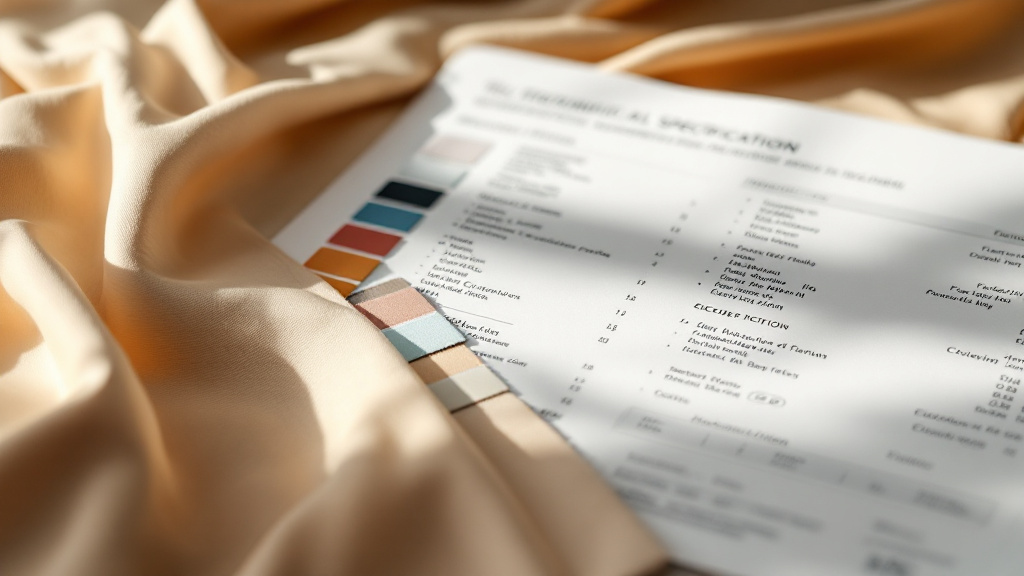
If you're deciding between screen printing and dye sublimation for your next run and want a straight quote based on your actual design, fabric, and quantity, send your tech pack or artwork to Procesarte and we'll come back with real numbers, not ballpark estimates.
Get a quote