Strategy
How Boutique Stores Actually Predict Best-Selling Styles (And Why Small Production Runs Make It Possible)
How boutique stores predict best-selling styles without overcommitting capital — and why nearshore lead times and small runs make the whole model work.
How boutique stores predict best-selling styles is a question that sounds like it belongs in a forecasting seminar. It doesn't. The honest answer is that the best boutique buyers don't predict much at all. They make a small bet, watch what actually sells, and move fast enough to reorder before the winning style runs out. That's the whole model. And it only works if your factory can keep up with it.
Why big retailers keep getting inventory wrong while boutique brands are quietly winning
Between 2023 and 2025, several major U.S. apparel chains filed for bankruptcy. Express, Rue21, and Joann Stores are on that list, and in each case, overstock and poor inventory forecasting were among the primary contributors. These weren't companies that ran out of product. They were companies that ran out of room to survive the product they couldn't sell.
Big retail runs on big bets. You commit to tens of thousands of units per style, six to nine months out, based on trend reports and gut instinct dressed up as data. When you're wrong, you're very, very wrong. Markdowns eat margin. Liquidators take the rest. And you're already locked into next season's commitments before you've figured out what went sideways this season.
Boutique brands don't have that problem, not because they're smarter, but because they can't afford to make it. A small brand ordering 150 units of something doesn't have the capital to absorb a 500-unit mistake. So they're forced into discipline that the big players can't or won't maintain. And that discipline, it turns out, is a genuine competitive advantage.
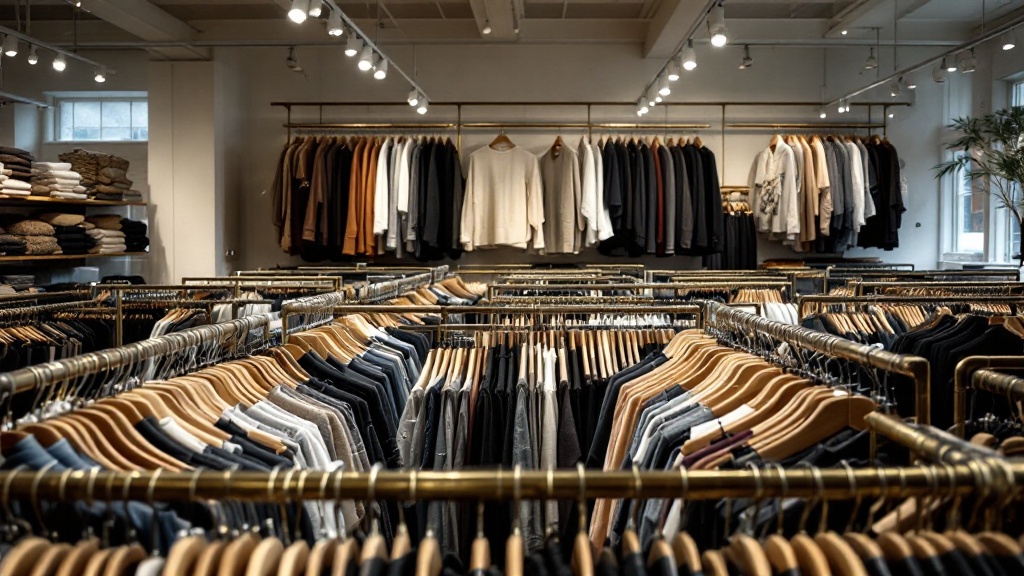
What boutique buyers actually use to predict which styles will move
Let's be honest about what prediction actually is at the boutique level. It's not a sophisticated algorithm. It's a combination of customer knowledge, sell-through history, and a willingness to trust small signals early.
The buyers who consistently get it right are tracking sell-through weekly, not monthly. That difference matters more than it sounds. A buyer who checks numbers every week catches a winning style three to four weeks earlier than one who waits for month-end reports. That's three to four weeks of reorder lead time recovered. At a nearshore factory with a four-to-six-week turnaround, that's the difference between restocking before you sell out and scrambling after the moment has passed.
Beyond cadence, the tools are pretty simple. Past sell-through by style category, customer return rate by product type, social engagement on new arrivals if you're posting them, and what your best customers are asking for that you don't carry yet. None of that requires a data scientist. It requires paying attention and having a short enough SKU count that you can actually see what's happening.
Boutique brands operating with eight to twelve active SKUs consistently outperform those chasing broad assortments. Fewer styles means cleaner signal. You know faster when something is working because it's not buried in forty other options.
Why minimum order quantities are the whole game
This is where the rubber meets the road. You can have the best instincts in the business, but if your factory won't run fewer than 500 units per style, your ability to test is severely limited. You either commit big or you don't play.
A factory with a 50-unit minimum changes the math entirely. A boutique brand ordering 150 units of a new style across three colourways is testing at 50 units each. That's a small, real-world test. And that brand has exposed roughly 60 to 70 percent less capital than a single 500-unit commitment to one colourway at a typical minimum from a factory requiring that kind of volume. That's not a rounding error. That's the difference between a bad season and a business-threatening one.
Dead inventory is not just an annoyance. It's a margin-destruction event. Product that doesn't move typically gets marked down 40 to 60 percent before it clears. On a 500-unit overcommit at a $38 cost per unit, that's $7,600 to $11,400 in margin destroyed on a single bad style call. Do that two or three times in a season and you're not just unprofitable, you're explaining things to your bank.
How a 4-to-6-week lead time changes the way you read sell-through data
Here's the thing about selling through 50 units of a new style in two weeks. That's a strong signal. But it only matters if you can act on it fast enough for the reorder to arrive while customers are still looking for it.
Nearshore production from Colombia to the U.S. runs four to six weeks. From Southeast Asia, you're looking at twelve to sixteen weeks under normal conditions, and longer when anything in the freight network gets disrupted. That's not a slight difference in lead time. It's a completely different business model.
With a four-to-six-week turnaround, a boutique brand can place a reorder based on actual sell-through data from the first run before the second run ships. You're not forecasting anymore. You're reacting to real demand with real inventory on the way. That's the whole point of the test-and-reorder model, and it requires a factory that can execute at that speed reliably.
The question isn't whether you can predict a best-seller before the season starts. It's whether your factory can move fast enough for that prediction to matter after the first two weeks of sales data come in. Those are very different questions, and most brands are still asking the first one while the second one is where the money is.

The test-and-reorder model: what it requires from your factory
The test-and-reorder model sounds simple because the concept is. The execution is where it tends to fall apart, usually because the factory isn't built to support it.
What you need from a factory to run this model properly:
- A minimum order quantity low enough to run a genuine test, 50 to 100 units per style.
- Sample production in 7 to 14 days, so you can hold and photograph a new style before committing to a run.
- Consistent four-to-six-week production lead times on reorders, not just on first runs.
- Willingness to hold fabric or block production capacity for fast-follow reorders when a style breaks through.
- Clear communication about what drives lead time variation, so you can plan around it.
- Full-package capability or clear à la carte options, so you're not managing five different vendors to get one style made.
The sample timeline matters more than most brands realise. If you can get a physical sample in 7 to 14 days, you can photograph it, post it, send it to key customers, and gauge reaction before you've committed to production. That's a free round of market research. Brands that build this into their calendar report significantly lower end-of-season markdowns compared to those forecasting full-season buys without any sell-through data at all.
What styles to bet on small versus what to scale when you have data
Not every style deserves the same test budget. Part of running this model well is being honest about which styles are genuinely unknown quantities and which ones are relatively safe based on what you already know.
Bet small on anything that's new in category, new in silhouette, trend-dependent, or colour-forward in ways you haven't sold before. These are the styles where your instinct might be right but the risk of being wrong is real. Start at 50 to 100 units. Watch the first two weeks. Don't reorder until you have reason to.
Scale when you have data. If a style sells through 60 percent or more of its first run in the first ten to fourteen days, that's your signal. A reorder of 150 to 300 units placed immediately will arrive inside the season window with a nearshore factory. Wait for a monthly report and the moment may be gone.
The styles that deserve a bigger opening commitment are proven performers in a new colourway, or core basics that your customer consistently rebuys. Even then, you're not going to 1,000 units on a guess. You're going to 300 with a reorder plan ready to execute.
The cash flow math: why 150 units at a time beats 1,500 units twice a year
Let's put some numbers on this, because the intuition is clear but the math makes it undeniable.
Scenario A: You commit to 1,500 units of a new style twice a year. Cost per unit is $38. Total capital committed per order: $57,000. If 30 percent of those units don't sell at full price and require a 50 percent markdown to clear, you've destroyed roughly $8,550 in margin per order. And you're sitting on that inventory for months before you know it's a problem.
Scenario B: You order 150 units to test. You spend $5,700. If the style underperforms, your exposure is limited. If it sells through fast, you reorder 300 units based on actual demand. Your capital is working, not sitting in a stockroom.
And here's something that often gets missed in this calculation. The Colombia-U.S. Trade Promotion Agreement eliminates duties on qualifying cut-and-sew apparel entering the U.S. For woven garments, duties from non-FTA sourcing regions typically run 12 to 17 percent of landed cost. That's a real number. On a $38 cost-per-unit garment, you're looking at roughly $4.50 to $6.50 per unit in duties that simply don't apply when you're sourcing from Colombia under the agreement. Across a 300-unit reorder, that's $1,350 to $1,950 back in your margin that you'd otherwise be handing to customs.
What to ask your factory before you build this model around them
This is the part brands skip and then regret. The test-and-reorder model only works if your factory can actually support it. Before you restructure your buying calendar around fast-follow reorders, you need honest answers to specific questions.
- What's your actual minimum order quantity per style, and does it apply per colourway or per style total?
- How long does a sample take from approved tech pack to physical sample in hand?
- What's your standard production lead time on a 150 to 300 unit reorder, and what can affect that?
- Can you hold fabric or reserve capacity if I commit to a reorder before I have final sell-through data?
- Do you offer full-package production including sourcing, or do I need to supply fabric and trim separately?
- What's your communication process when something in the schedule shifts? How early do I hear about it?
- Are your garments produced with cut-and-sew construction and eligible under the Colombia-U.S. Trade Promotion Agreement?
A factory that can't answer these questions directly isn't the right partner for a test-and-reorder model. You need a factory that runs production, not one that coordinates it from somewhere else. The difference matters when you need a reorder in four weeks and your rep is three time zones away and doesn't control a single machine.

The boutique brands that consistently outperform their category aren't doing anything mysterious. They're buying less, reading data faster, and working with factories that can move when the signal comes in. That's the whole model. And the factory relationship is the part you can't fake or work around.
If you're building a test-and-reorder buying calendar and need a factory with a 50-unit minimum, 7-to-14-day sample production, and 4-to-6-week reorder lead times, contact Procesarte to talk through your first run.
Get a quote