Strategy
How Boutique Apparel Brands Are Beating Fast Fashion by Ordering Less and Moving Faster
U.S. boutique brands are using 50-unit minimums and 4-week lead times to test faster, cut inventory risk, and compete with fast fashion giants.
Fast fashion isn't dead, but it's wounded. Forever 21, Boohoo, and Missguided have all filed for bankruptcy or restructured between 2023 and 2026. The culprit wasn't lack of demand. It was inventory. Thousands of units stuck in warehouses, marked down to nothing, because they bet wrong on what customers wanted. Meanwhile, a growing number of small apparel brands compete with fast fashion by doing the opposite: ordering less, testing faster, and reordering what actually sells. It's not about being smaller. It's about being nimble.
Why fast fashion's advantages are not what they used to be
Fast fashion built its empire on two things: rock-bottom unit costs and the ability to flood the market with hundreds of styles per season. The model worked when consumers wanted endless variety at disposable prices. But the economics have shifted. Air freight from Asia, once a backup option, is now routine for brands trying to hit tight seasonal windows. That adds $3 to $8 per unit, erasing much of the cost advantage. Then there's tariffs. In 2026, apparel imports from Asia face 16% to 32% duties entering the U.S., depending on category and country of origin. Colombian-made goods enter duty-free under the U.S.-Colombia Trade Promotion Agreement.
But the bigger problem is time. The average lead time from Asia in 2026 is 12 to 16 weeks, assuming nothing goes wrong. That's production plus ocean freight. It forces brands to commit to styles months before they have any sales data. By the time the goods arrive, the trend may have shifted, the season may be half over, or a competitor may have already flooded Instagram with the same silhouette.

The inventory trap that big fast fashion retailers can't escape
Here's the trap: to justify 12-week lead times and the cost of ocean freight, you need volume. Factories in Asia don't want to run 50 units. They want 5,000, 10,000, or more. That's how they keep their lines efficient and their pricing competitive. So a fast fashion brand commits to 5,000 units of a dress at $18 per unit. That's $90,000 in inventory before a single piece has sold.
If the style flops, they're stuck. They can mark it down 50%, 70%, or give it away, but the damage is done. The cash is tied up, the margin is gone, and they still have to pay for the next season's production. This is why so many fast fashion retailers have restructured or collapsed in the past three years. They couldn't get out from under their own inventory.
How 50-unit minimums and 4-week lead times change the test-and-scale model
Nearshore production from Colombia flips the math. Minimums start at 50 units. Lead times run 4 to 6 weeks, including production and freight to Miami. A boutique brand can test three or four styles in the same window it would take to commit to one bulk order from Asia. Each test costs $900 in inventory at $18 per unit. That's $3,600 to test four styles, vs $90,000 to go all-in on one.
If two of the four styles sell well, the brand reorders those in larger quantities. If one becomes a best-seller, they can scale to 500 or 1,000 units and still receive goods within 4 to 6 weeks. They're not guessing. They're responding to actual customer demand.
This is the model that lets small brands compete. They're not trying to out-volume fast fashion. They're out-testing them. By the time a fast fashion competitor commits to a trend, the boutique brand has already tested it, reordered the winner, and moved on to the next idea.
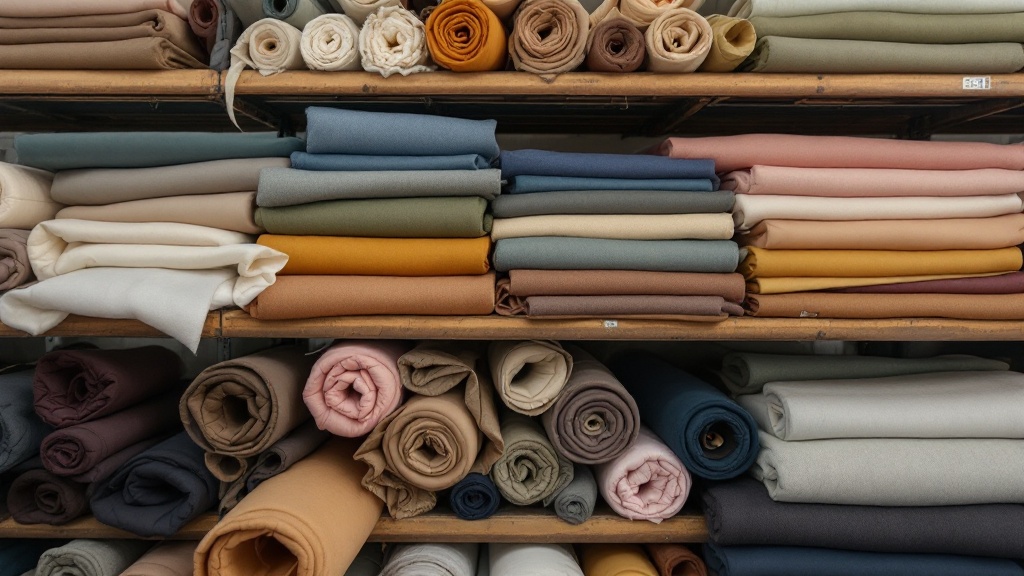
What boutique brands can do with nearshore production that fast fashion cannot
Fast fashion thrives on scale and repetition. Boutique brands thrive on agility and differentiation. Nearshore manufacturing amplifies the latter. Here's what becomes possible with 50-unit minimums and 4-week lead times:
- Launch a capsule collection without betting the business. Four to six styles, 50 units each, all tested in market before committing to depth.
- Restock best-sellers mid-season. If a style sells out in three weeks, reorder it and have fresh inventory in four to six weeks, while demand is still live.
- Test colourways and fabrications without retooling an entire production run. Swap a print, try a heavier weight knit, or add a new wash, all at small minimums.
- Respond to customer requests in real time. If your Instagram followers keep asking for a style in black, you can make it happen in weeks, not months.
Fast fashion brands can't do this. Their supply chains are built for volume and long planning cycles. They can't pivot mid-season without eating enormous costs. A boutique brand working nearshore can change direction as often as the data tells them to.
The real numbers: what a test run actually costs and what it proves
Let's use a real example. A U.S. boutique brand wants to test a new style of cropped hoodie. They order 50 units from a Colombian factory at $18 per unit. Total cost: $900. Freight to Miami is included in the per-unit price or billed separately at around $150 for a small shipment, depending on the arrangement. Duties: zero, thanks to the trade agreement. Samples arrived in 10 days. Production took four weeks. The brand received finished goods in Los Angeles six weeks after approval.
They listed the hoodie at $65 retail. All 50 units sold in two weeks. Gross revenue: $3,250. After the $900 in cost of goods, they netted $2,350 before overhead, marketing, and fulfilment. More importantly, they learned the style works. They reordered 250 units at a slightly lower per-unit cost due to volume, received them four weeks later, and sold through 80% in the first month.
Compare that to ordering 5,000 units from Asia at $16 per unit. Lower unit cost, yes. But $80,000 in inventory commitment, 14 weeks to delivery, and no idea if it'll sell until it's too late to change course. Boutique brands working with nearshore factories report 60% to 80% sell-through rates on tested styles, vs 30% to 50% on untested bulk orders.
Why same-timezone communication matters more than brands think
This one catches people off guard. Colombia operates in the same time zone as New York, Miami, and much of the eastern U.S. During daylight saving shifts, it aligns with the East Coast. It's never more than three hours off from Los Angeles. That doesn't sound like much until you've tried to approve a sample revision with a factory that's 12 hours ahead in Asia.
A question sent at 9 a.m. in New York gets answered by noon. A photo of a revised sample arrives the same day. If there's a problem with a fit or a print, you can get on a call during business hours, not at midnight. Design changes and approvals happen in hours, not days. Over the course of a production cycle, that saves a week or more of back-and-forth lag time.
It also means fewer mistakes. When communication is fast and direct, there's less room for misunderstanding. You're not waiting overnight to find out if the factory understood your notes. You know right away.
Where nearshore still can't compete (and when fast fashion still wins)
Nearshore isn't the answer for everything. If you're ordering 10,000 units or more of a proven style and you've got 16 weeks to wait, the unit cost advantage of high-volume Asian production is hard to beat. If you're selling basics under $15 retail and every dollar of cost matters, the math may not work. If your style requires highly specialized machinery that simply isn't available in the region, you'll have to look elsewhere.
Fast fashion still wins on extreme volume and rock-bottom pricing for commodity goods. They've built entire supply chains around that model, and it works for what it is. But it's a narrow lane. The moment you need agility, smaller minimums, or faster time to market, the advantage flips.
Boutique brands aren't trying to become the next Shein. They're building something different: a brand that responds to its customers, tests ideas quickly, and doesn't drown in unsold inventory. Nearshore manufacturing makes that model possible. Fast fashion's model requires you to be right the first time, at scale, months in advance. That's a harder bet to win in 2026 than it was in 2016.
If you're ready to test styles faster and cut your inventory risk, get in touch with Procesarte for a quote on your next production run.
Get a quote